Showing posts with label Bill Sonnett. Show all posts

Saturday, January 10, 2015

Deconstructing Old Ads with Bill Sonnett: The Heddon Meadow Mouse -- A Lure that Appeals to Fishermen, Bass and Cats


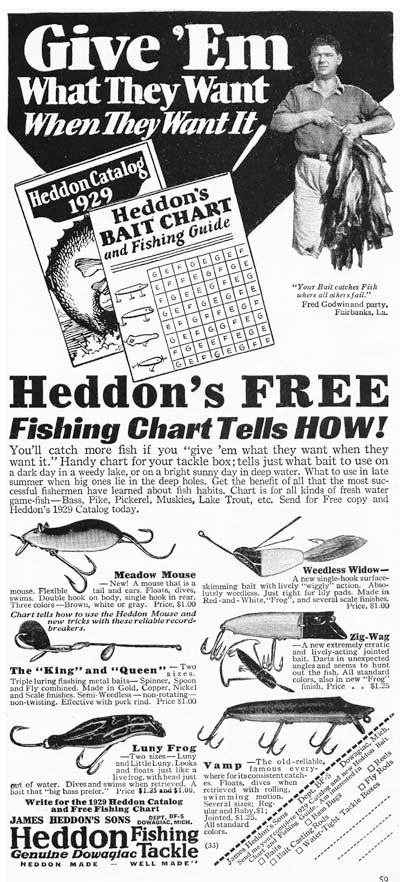
This ad from the May 1929 issue of Field & Stream introduces the Heddon Meadow Mouse. I recall as a youngster seeing the early version this lure for the first time in an older gentleman's tackle box. Its leather ears, leather tail, pointed nose and small beady eyes really impressed me. I thought now that really looks like a mouse. Apparently it impressed quite a few fisherman as despite being introduced at the beginning of the Great Depression, it is not particularly rare.
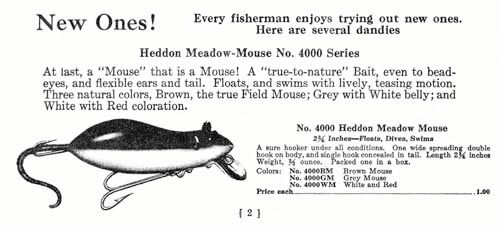


Caption to read: From the 1929 Heddon Catalog comes the introduction of a "Mouse that is a Mouse"


By the time I was old enough to buy one for my own tackle box (I’m thinking this was 1956) the lure was made of Tenite with molded ears. It still had a leather tail and with a gray flocked finish it looked more like a mouse than any other plug I had ever seen on the shelf at the local hardware store. That’s pretty much where my positive impressions of the bait ended. It did not have a particularly impressive wiggle as is swam across (or just under) the surface. I did not catch a single fish on it. I lost the lure a few years later and I was never inspired to replace it. As an avid reader of Jason Lucas, the fishing editor of Sports Afield, my opinion was bolstered in the early 1960s when he wrote in his column that lures that appeal to fisherman are not always the same ones that appeal to the fish. I believe in the article he was talking about the Pikie Minnow, a lure that keeps on catching fish despite a somewhat modest wiggle. Another example he used to illustrate the point was comparing two swimming mice lures. One looked very much like a real mouse (think Heddon here) and another mouse that didn’t look all that realistic (think Shakespeare here). He stated that the second was a far more effective bait than the more realistic looking version. I knew instantly which lures he was talking about and I have always found his observation to be absolutely true.

It has often been noted that the earliest version of the Heddon Mouse had a single hook on the rear rather than a treble and a much smaller metal lip than later versions. In fact it used the same metal lip as another bait introduced in 1929, the 110 wooden River Runt. I believe that the single rear hook was part of an effort to make this early version of the Mouse swim with a more pronounced wiggle as the shape of the wooden body, while looking very much like a mouse, prevented the kind of swimming action that the 110 River Runt demonstrated. Fairly early this problem was addressed with a new metal lip, one that was similar to the metal lip on Heddon’s successful Vamp bait. While appearing very similar to the Vamp lip, it is a downsized version, which you will find out if you ever try to replace one with the other. I found this out the hard way some years back when I acquired a large batch of experimental baits from the Heddon factory. These were baits that they had tried different hardware on, such as an SOS body with a 210 collar, a Zaragossa with a 210 collar and an 1800 Crab Wiggler with the standard diving lip on one end and a 210 collar on the other and a line tie on each end making it a reversible lure. Many other lures had holes drilled in them and impressions in the paint where one could tell what type of hardware they had tried out,then removed. There was a 110 River Runt body in the white that had been drilled to accept the second version of the mouse diving lip. Those were the only holes in the bait. I had and extra Vamp lip which I attempted to install and soon found out that none of the holes matched up. After comparing the lip of a Vamp with one on a Heddon Mouse it became instantly clear that the second was smaller than the first. It also told me that Heddon had experimented with using the new mouse lip on the wooden River Runt body. Sometime after the change in diving lips on the mouse, the rear single hook was replaced with a treble.
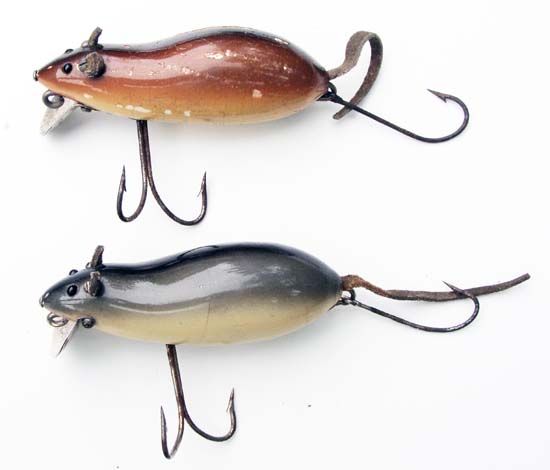
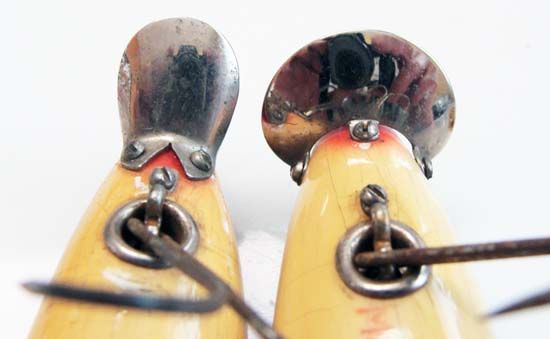


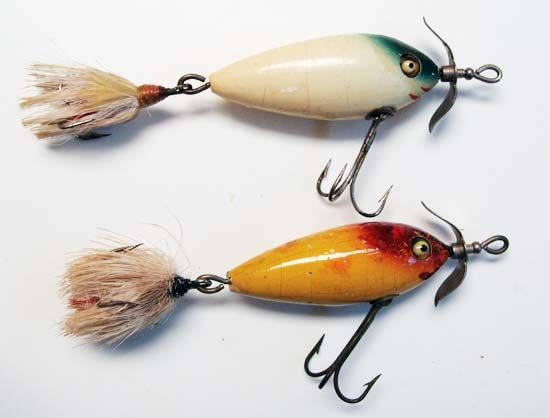
Here are presented the first two versions of the Heddon Meadow Mouse the older one is the brown one on top. There is not much difference between the two except for the diving plates. As seen from below the later gray example has the wider diving plate while the older brown model has the same plate as used on the Heddon 110 River Runt.


I visited the home of Heddon expert and collector Bill Roberts in Birmingham, Alabama about 15 ago. In addition to the greatest Heddon collection I’ve ever seen, he was showing me some beautiful antique cars in the basement of his home when I noticed a folding table with several well used Heddon Meadow Mice on it. I asked what the deal was with them and Bill said he regularly fished with them. I told him he was the only person I knew who fished with them. He said he had done fairly well on them and like me, he enjoyed fishing with antique baits. He then proceeded to tell me a very memorable story which I will attempt to do justice to here.

He and a friend were in their boat moving slowly along a lake shore casting around docks. Bill cast a Heddon Meadow Mouse very near the shore when out of nowhere a large “Tom Cat” dashed out and pounced on the bait and was immediately, solidly hooked. Bill said that after reeling this very irate cat through the water to the boat they netted it with a large landing net. The picture he verbally painted of he and his partner on their hands and knees pinning this cat to the floor of the boat with the landing net while trying with pliers to unhook the berserk feline is one I will never forget. I told him he should write up a complete version of the story as I had the perfect title for him ----”What Real Catfishing Is Like”

Tight Lines,

Bill S

Post script: Some time after writing this article I was thinking I should refresh my recollections of how a Heddon Meadow Mouse swims in the water. I proceeded to the end of the dock last evening and took three cast, the last of which is was devoured by a bass of 14 inches. Wondering if maybe my judgment on how effective this lure is was a bit hasty, I jumped into the row boat and drifted down the lake for an hour casting in all directions. I never received a hit. Pulling up to the dock at dusk I laid the rod on the dock while tying up the boat. Just as I got the first of two lines tied to a cleat a tremendous splash occurred just four feet away at the end of the dock. Investigation showed that I had laid the rod on the end of the dock with just enough line out that one fourth of the Meadow Mouse was hanging in the water where a bass had tried his best to make off with it. Apparently the jury is still out ---LOL

===========================================

BUY THE DECONSTRUCTING OLD ADS (VOLUME 1) BOOK BY CLICKING HERE!


Saturday, December 13, 2014

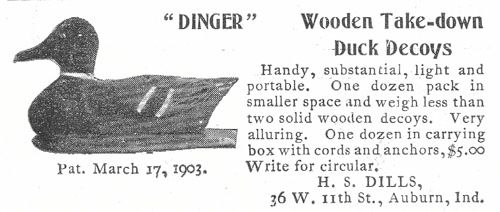
Deconstructing Old Ads with Bill Sonnett: Dill's Duck (1904)


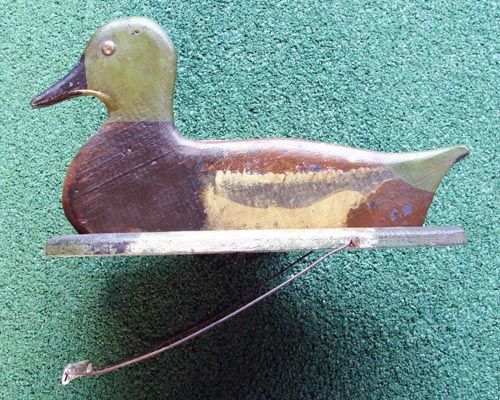
Several years ago I was sitting in a hotel room at a National Fishing Lure Collectors Club meet when I mentioned to my roommate Dave Budd that He might want to look through an August 1904 issue of National Sportsman magazine that I had picked up. Dave is a long time collector of tackle made in Indiana. His sharp eye soon picked up an ad that I had overlooked as it did not seem to be related to fishing tackle. It was for a duck decoy made in Auburn, Indiana. It was only after it was pointed out to me that I understood its significance as related to fishing tackle.


The inventor was H. S. Dills who was only 29 years old when he filed for a patent on this decoy in 1902. 14 years later he would become one of three men who founded the Creek Chub Bait Company, which would become one of the largest manufacturers of artificials lures in the world. It is also one of the most sought after companies when it comes to today’s collector of old lures.


Sometime later while Dave was appraising lures in Garrett, Indiana a gentleman walked in with an example of this decoy. It took a couple of years but Dave was ultimately able to purchase the decoy. It represents a Mallard. Since that time three more Dills decoys that were meant to represent Bluebill ducks were found in a barn near Garrett.


Reading the patent papers for this decoy is interesting in that they stress the light weight and compact nature of the decoys as well as ease of set up. The folding, hinged lead weight on the decoy is meant to steady it in the water as well as keep it upright. Staples along the front and sides of the base are there as tie points for the anchor cords. Shown here are two view of an actual Dills Decoy as well as the original 1902 patent drawings.

Tight Lines,

Bill Sonnett

===========================================

BUY THE DECONSTRUCTING OLD ADS (VOLUME 1) BOOK BY CLICKING HERE!


Saturday, November 8, 2014

Deconstructing Old Ads: Pflueger Luminous Tandem Spinner -- Was I Ever Wrong (again)!

Pflueger Luminous Tandem Spinner -- Was I Ever Wrong (again)!


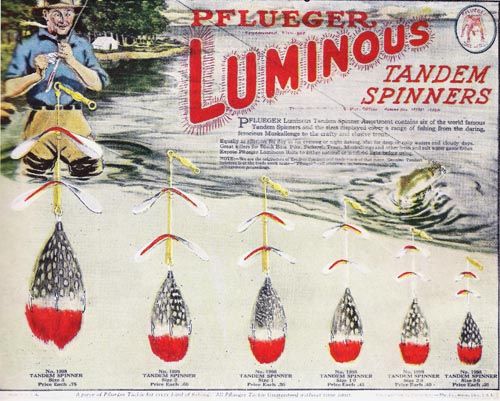
Counter display card of Pflueger Luminous Tandem Spinners as seen the the 1924 Pfluger dealers catalog.


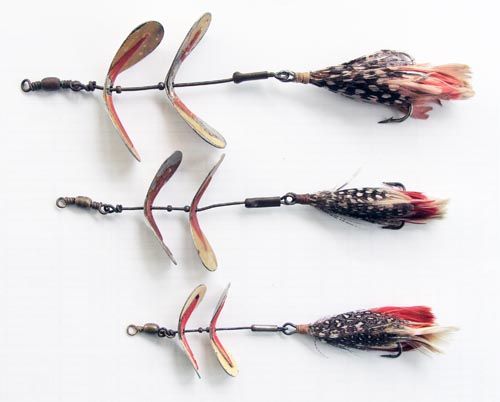
At the 2013 ORCA National Meet in Frankfort Kentucky the vintage tackle fishing contest was held on nearby Elkhorn Creek. I was paired with ORCA’s genial Vice President Bill Muth. We started down 6 miles of river by canoe with high hopes. Bill was using a Pflueger Palomine and I was using a Clark’s Water Scout, a bait that had a good reputation for river smallmouth in days gone by. After 2 miles and no action whatsoever, we both started digging in our tackle boxes for some different lures. I was a bit surprised when Bill held up a Pflueger Luminous Tandem Spinner. I remembered them being in the Hardware store as a kid and I even bought one in 1956. Older tackle boxes I’ve looked through over the years as often as not contained one or two. I do not recall ever seeing anyone use one. I know I never used mine other than to make one or two short casts to see how it worked. It seemed too light to cast well and didn’t have the kind of wiggle that gives young boys confidence.

My remark when Bill held up the Tandem Spinner for my approval was, “that thing has desperation written all over it”. We both laughed, but two casts later Bill’s bait was nailed by a nice river Smallmouth. Needless to say, I was very surprised. A picture of Bill holding that bass appears below. Bill then proceeded to land five more bass winning the contest going away with five more bass landed. Just as we were about to finish the trip Bill lost the biggest bass of the day right beside the boat and all of this on the Pflueger Tandem Spinner. Dang! sure looks like I was wrong about that bait. I made a mental note to pick up a few Tandem Spinners at the next few NFLCC meets that winter.


After acquiring a half dozen of the baits for a dollar or two apiece at the Milwaukee Antique Lure show in January, I set them on my desk. Sometime during the winter I polished the blades after which they were completely forgotten. I happened to notice them the following June and threw them in my tackle box, meaning to give them a try. Fishing was great all during June and early July and I really never thought about the Tandem Spinners again until a very slow (no fish whatsoever) evening on the 22nd of July. What the heck, I’ve nothing to lose, I’ll give one a try. I knew they were light but I was using a 6ft soft action glass casting rod from the 1950’s and a narrow spool Coxe 25 with an 8lb braided nylon line. If that outfit would not cast them, I can’t think of a vintage (pre-spinning) outfit that would. I was pleased on the first cast to see it sale out there about 50 ft. With the rod tip held high it ran a foot or so below the surface. To my pleasant surprise I actually received good hits on the second and third casts! I inspected the lure and as usual on many old baits the hooks were very dull. I took out the file and sharpened each of the three points. I was somewhat flabbergasted to catch three bass on the next five cast! Wow, where has this bait been? I can’t cast it more that 50 feet and unless one drags one’s thumb on the spool a little during the cast the line tends to loop around the first spinner. I hope I’m never too old to say I can’t learn something new!

Thanks to Bill Muth this one stays in the tackle box!


Tight Lines,

Bill Sonnett

===========================================

BUY THE DECONSTRUCTING OLD ADS (VOLUME 1) BOOK BY CLICKING HERE!


Wednesday, September 3, 2014

Deconstructing Old Ads with Bill Sonnett: The 400 Bucktail Surface Minnow


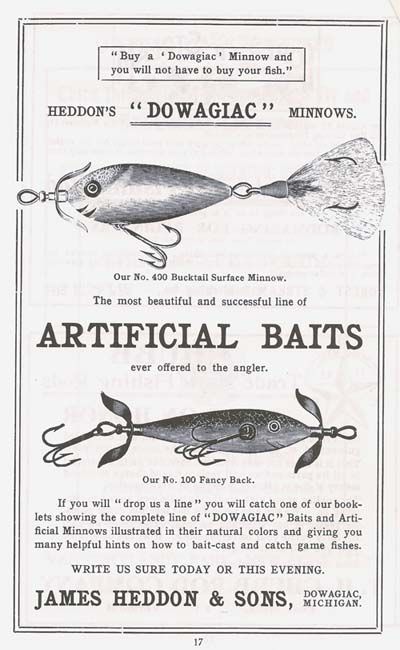
When I first started to seriously collect Heddon lures in the early 1980s, I was fascinated by a lure that collectors referred to as the “Heddon 402.” At that time it was considered to be a very rare bait. The bait was unmarked as were all of Heddon’s lures made before 1912 and it went unrecognized as a Heddon product by the majority of collectors. This probably helped establish its reputation as extremely rare. As time has passed the bait has proved to be scarce, but not nearly as rare as once thought. I acquired one in 1987 for what was considered a good price at that time -- $700. It is yet another example of a lure that has fallen in value as years have passed. Not only was it not quite as rare as had been assumed, but it was made in only three colors. In a world where color collecting has been on the increase and interest in early Heddon has “leveled off,” the days of “heady” prices for this bait seem to be in the past.

In the early days of our hobby, the best (and sometimes only) sources of information were old catalogs and advertising. In this case, the “402” appeared only in the 1909 Heddon catalog and seemed to be absent from magazine advertising. This led to the assumption that it was only made one year thus adding to its reputation as rare. Before World War Two, Heddon identified their lures with a product number but changed the last digit in that number to indicate the color of the individual bait. The lure illustrated in the 1909 catalog color plate was shown in yellow with a sienna crackled forehead. With this particular bait the color white with a green crackle forehead was listed as “0,” the rainbow color was “1” and the yellow with sienna crackled forehead was listed as “2,” Hence the pictured bait was prominently labeled “No. 402.”

It always seemed a little odd to me that this bait was only in one catalog. One day in early 1985 when looking through Cliff Netherton’s book on the history of tournament casting, I noticed a reprinted program for a casting tournament held in August 1908. There on page 17 of the program was a full page illustrated ad which included the “400 Bucktail Surface Minnow.”


I now knew that the bait was available in 1908 and more importantly, what the real name of the bait was. It must be remembered that no 1908 Heddon catalog has been found to date. It has taken many years to shake off the “402” collector’s name which still surfaces on occasion. About a year or so later, fellow collector John Romero sent me a write up he had located in the April 1908 issue of Field & Stream on the new “No. 400 series of Bucktail Surface Minnows” It read:

“There are perhaps no articles of fishing tackle more securely wedded to the affections of the devotees of the art of baitcasting than the very excellent “Dowagiac” minnows manufactured by James Heddon & Sons, Dowagiac Mich., and found on sale wherever fishing tackle is sold or used. The latest production of this factory is their No. 400 Bucktail Surface Minnow, herewith illustrated. The body of this bait is made of white cedar, the wood being chemically treated to prevent absorption of water, the enamel and finish of that super-excellent character which is found in all “Dowagiac” products. This lure is wonderfully successful for Spring fishing, being especially adapted to use on shallow water at a time of year when bass will readily rise to the surface...”

As the years have passed, I have become less interested in accumulating old lures and more interested in how these baits were fished and why their life spans in the product line were long or short. Needless to say I was not about to “fish” with the bait for which I had paid $700. With the emphasis on “mint condition” baits these days, many formerly expensive baits with a blemish or two have become so inexpensive that experimenting with them in the water is very affordable. One Winter day three years ago a 400 Bucktail Surface Minnow showed up on Joe’s Board that was a partial repaint and very affordable. After removing some nail polish and a few more fisherman “touch ups” the bait looked better than I thought it would. I placed it in my tackle box intending to give it a workout the following Spring. As a bait that lasted only two years in the Heddon product line, I didn’t expect it to be a “killer” on bass, but with a little surface manipulation I was sure that I could take a bass or two which not only would make for a great photograph, but surely would be the first bass in a LONG time taken on this 100+ year old bait.

Spring arrived and after an hour of fishing with some of my favorites antique baits, I spotted the “402” in the bottom of my tackle box. I had forgotten that it was there. Time to try it out! I started out with a modest cast so I could observe the bait more closely. I had always assumed that it would float with the crackle painted forehead riding above the surface. The next few minutes were ones I will not forget. The bait immediately turned nose down and sunk like a “rock in a sock” straight to the bottom. After observing it next to the boat, it was obvious that it wasn’t even close to being able to float. Very fast reeling with a high rod tip barely managed to keep it near the surface but any slacking of speed sent it straight for the bottom. I removed the long shank belly hook, which was standard on the bait, and put it back in the water. Same story, it refused to float. Disappointed, but “educated,” I put the bait back in the tackle box.

Since that time I have wondered if this was a fluke. I thought I needed to try out another bait to be sure that they really did not float on the surface despite what advertising had indicated. If not, this would certainly explain its short lifespan. In desperation I took out my “clean” example and placed it in a bucket of water. While it did not sink like a brick, it floated with its nose straight down and with less than ⅛ of an inch of the tail sticking straight up out of the water! Hardly the position that one would want a surface bait to rest in. I did not let it stay in the water long enough to see if it would still cling to the surface once the buck tail became saturated. I believe any sort of tug on a line or even the weight of a wet silk casting line would immediately pull the bait below the surface. I suspect that this is the answer as to why the bait was ineffective as a surface lure and so short lived in the Heddon line. In my eyes it remains a beautiful bait in any early Heddon collection ... though I’m sure it was disappointment to the folks who purchased it as well as the Heddon Company in 1908.


A pair of 400 Bucktail Surface Minnows


Tight Lines,

Bill Sonnett

===========================================

BUY THE DECONSTRUCTING OLD ADS (VOLUME 1) BOOK BY CLICKING HERE!

Saturday, March 2, 2013

Deconstructing Old Ads with Bill Sonnett: Vintage Bass Books–Where to Start


I've mention in the past that before I started to collect vintage tackle I collected vintage bass fishing books. I grew up in Ohio where there was no trout fishing within my reach and what little water that was in my immediate neighborhood consisted of a small stream and a couple of flooded limestone quarries. None the less, I was interested in catching bass but had little to go on. My first big break came when our pastor showed me a book that had just arrived at the local library. It was the 1952 classic, Black Bass Fishing by Robert Page Lincoln. I soon ordered my own copy and read and re-read it dreaming, as only a young boy can, of catching real bass myself. This was followed by Ray Bergman's 1942 classic, Fresh Water Bass, Erwin Bauer's The Bass Fisherman's Bible and Jason Lucas' Lucas on Bass Fishing. These books were scoured for any tidbit that could lead to my success.

Today I enjoy fishing with older tackle and using the methods suggested in those books. In the Winter here in Michigan a good case of fishing fever can usually be quelled by reading one of these classics. They contain a mix of well-told stories that usually illustrate a point the author wants to make. They also help me reflect on my many decades of fishing. I enjoy remembering past triumphs and losses while waiting for Spring and another fishing season. I want to encourage vintage tackle collectors to take the time to read some of these works as they are not only entertaining but give real insight into the “hows” and “whys” of using the vintage tackle we love so much.

With this in mind, I would like to suggest a short list of where to begin your reading. At one time some of these books were hard to locate but used book sites on the Internet have made the search very easy and in most cases more economical than it was only a few years ago. There is not a book listed here that with a little patience can not be found for $10 or less. We will start with just these seven.

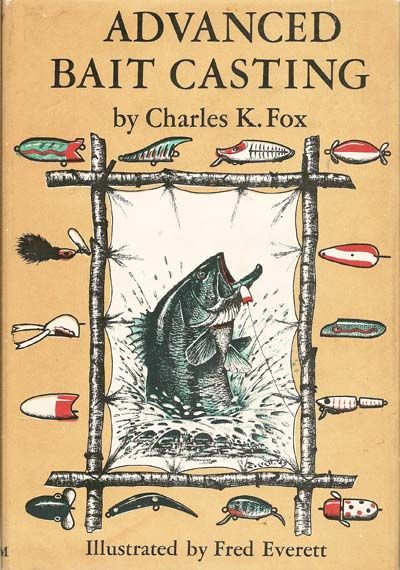
Charles K. Fox Advanced Bait Casting.(1949)

If there is a more entertaining book written on bass fishing, I don't know of it. Fox and his friends worked hard in the 1930's and 1940's trying to solve the problems of fishing for easily spooked Smallmouth Bass in the rivers of eastern Pennsylvania. A great writer is telling an interesting story. Some of my friends who are not readers have been amazed how interesting this book is.


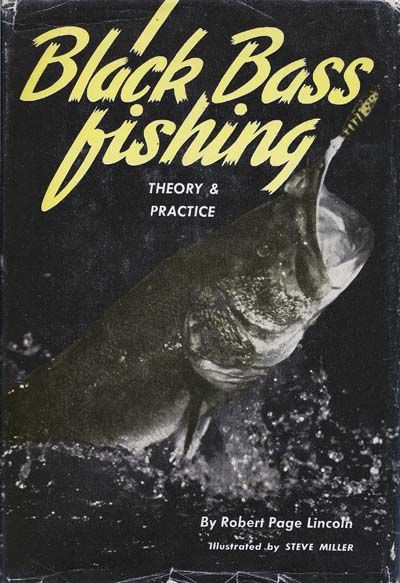
Robert Page Lincoln Black Bass Fishing (1952)

This book was written just before the author's death and comprises a lifetime of experience fishing for bass. There is so much information contained within, that despite the fact that I have been reading and re-reading this book for 60 years, I still find new gems each time I pick it up. It is one of the books I keep by my bed and often read a few pages after turning in. A good example is the chapter on casting lines. It is not only a great history but helps in understanding tackle of times past.


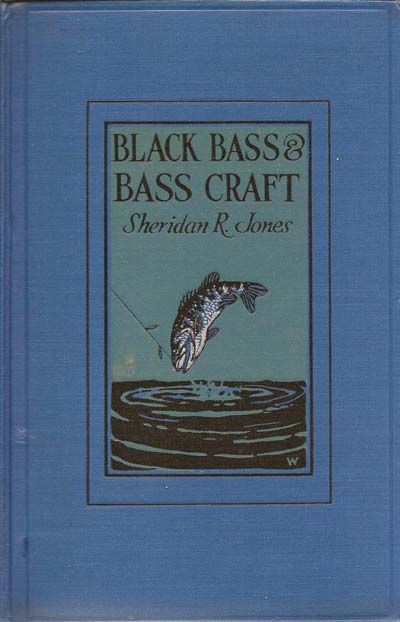
Sheridan R. Jones Black Bass & Bass-Craft (1924)

It is truly astounding how far ahead of his time Sheridan R. Jones was. If the cover and the photographs were removed one might think he was reading a book written 50 or more years after the 1924 publication. There is an entire chapter on the occasions and methods for getting a plug to land softly on the water with a “spat” rather than a "splash". Also covered are different approaches to bass in different habitats and seasons. Many writers today simply rehash what has been written before but Jones broke unplowed ground at every turn. One is hard pressed today to point out anywhere that he was wrong.


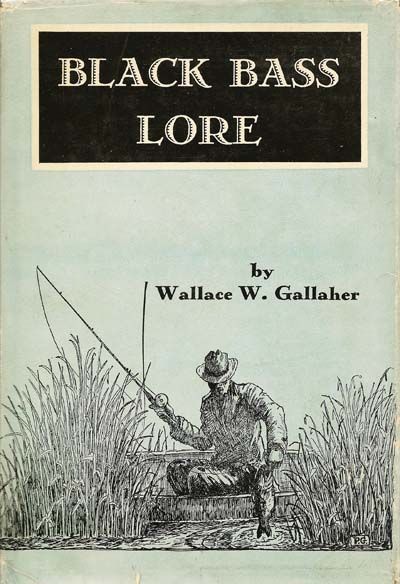
Wallace W. Gallaher Black Bass Lore (1937

This is a book one does not hear much about but it is one of my personal favorites. Wallace W. Gallaher was an old man when he wrote this book in 1936 and as such he gives us a personal look into the very early days of bass fishing. He was from Missouri and did much of his bass fishing with a flyrod. It soon becomes obvious in reading this book that Mr Gallaher was a gentlemen and after a lifetime of fishing has many stories to tell of incidents that illustrate his points. If there are funnier stories than the ones he relates about characters he has fished with, I have not seen them.


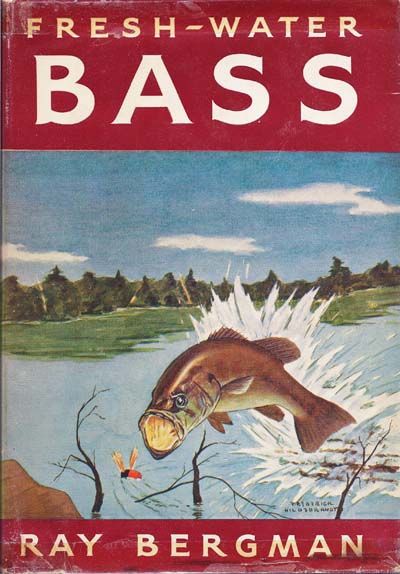
Ray Bergman Fresh-Water Bass (1942)

This classic is illustrated with many plates, painted by Fred Everett, showing bass lures of the day. In the back of the book Ray Bergman comments on each of the illustrated baits. For many years I read Ray Bergman's monthly columns in Outdoor Life and was always impressed with his easy going, matter of fact writing style. He would state a point then tell of experiences he had that bore out his conclusions. No vintage bass book library would be complete without it.


Ernst Radke New Angles to Bass Fishing (1955)

I do not like the dust cover for this book and the cover itself must be one of the ugliest ever designed. I don't like the title ether. BUT if you ever have a thought of fishing with vintage tackle there is no finer book to get you started. I have purchased more than a dozen copies and continue to do so each time I see it for $5 as I know I will soon pass it on to someone getting started in putting together a vintage fishing outfit. I always hear back from those folks that nothing has been a greater help than this book. As someone told me last week, “it is golden”.  Not only is it a great help in selecting vintage tackle to use, Mr Radke's enthusiasm makes me want to stop complaining about the weather, the bugs or anything else and go fishing!


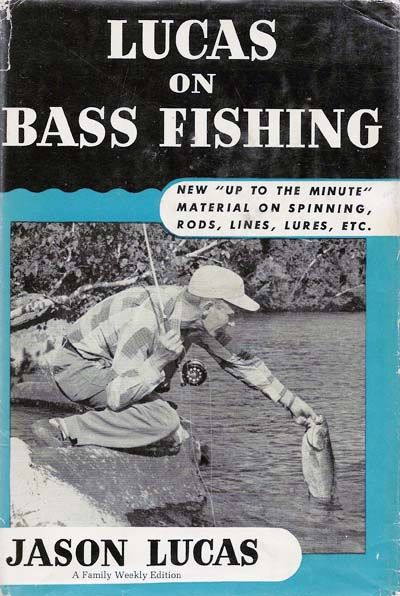
Jason Lucas, Lucas on Bass Fishing (1947, 1949, 1962)

It is difficult today to understand the jolt that Jason Lucas delivered to the Bass fishing fraternity when he wrote his first article for Sports Afield in March 1945. The following year he was made fishing editor and soon developed what Clyde Drury has described as a "following that bordered on cult". Lucas on Bass was published in three editions with each succeeding edition having a different dust cover, expanded content and updated material. He was a champion of light tackle, deep fishing and a sever critic of much of the everyday tackle that was being produced. There is no bass library that is complete without this book. I have shown below the cover of the third edition, followed by the inscription on the inside plate.


I have now completed 200 "Old Ads" columns and this will be my last. All good things come to an end and this has been a very good thing for me and I hope for my readers. I will be writing some more articles for the Fishing for History Magazine, some of which will expand on original “Old Ads” pieces. In the mean time I wish you all tight lines and as Jason Lucas did to me 50 years ago --- “Good Fishing”

-- Wild Bill 

Saturday, February 23, 2013

Deconstructing Old Ads with Bill Sonnett: Jacob Mick -- Mystery


Jacob Mick – Mystery
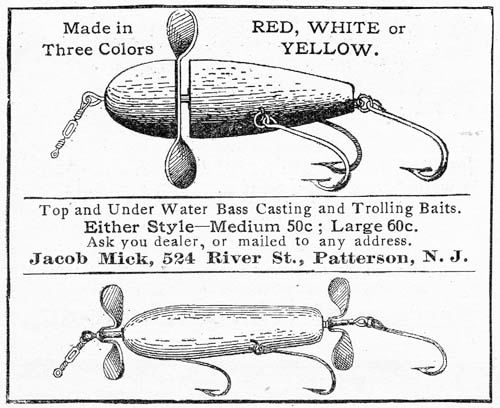
The ad presented here is from the June 1905 issue of National Sportsman. I wish I could present some definite conclusions based on what we know about this ad, but the fact remains that after several years of effort I can only present the evidence, give my own thoughts and let someone else out there take from here. There are at least three Jacob Mick advertisements that show up in National Sportsman in early 1905. I have chosen this one because it illustrates both his baits.


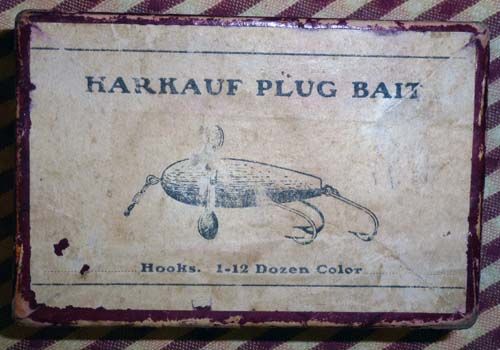
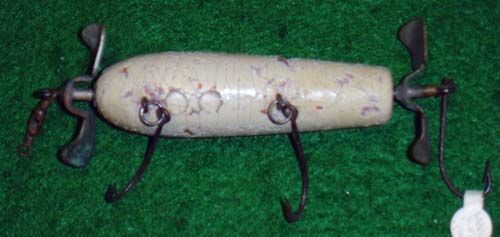
If anyone were to show the illustration of the top bait in this ad to a knowledgeable collector of early baits, most of the time the name “Harkauf” would come up. The shape of the bait itself along with that of the metal fins and the hooks hung by split rings on staples in the wood, are all the same features seen on the “Harkauf Plug”. There is an illustration of this bait in an early Harkauf catalog as well as on a few Harkauf boxes with illustrated labels. The illustrations used in these Harkauf sources are not just a similar illustrations to those used in Jacob Mick's ads, they are the same exact cut ! I will say that I never had reason in the past to doubt that Harkauf actually sold the bait, but it's construction seemed to have nothing in common with the well known Harkauf minnows that were produced by the company.


This early Harkauf Plug box uses the same engraved cut on the label as is found in the 1905 Jacob Mick advertisement. It is presented here courtesy of long-time NFLCC member Rick Edmisten


As to the second bait in the ad, it is an accurate picture of what is usually referred to as a “Decker Underwater Minnow”. When I first noticed this, I asked several knowledgeable collectors if they had ever seen this bait with the name “DECKER” on the spinners or on the body. No one said they had. One long-time collector told me that it had been assumed early in the hobby that this was a Decker as it was found laying in an open Decker box when folks went through the estate of a deceased NFLCC member. After this assumption was published in an early edition of Carl Luckey's Early Fishing Lures and Their Makers it seems to have been taken as gospel. Like the Floating bait, it has its hooks hung by split rings on staples. I do not know of a box that has this bait shown on the label.


his is the bait that is often called a “Decker Underwater Minnow” despite the fact that none have been seen marked as such. It is identical to the bait illustrated in the 1905 Jacob Mick advertisement and is staple rigged with split rings just as the Jacob Mick Top Water Bait. This picture is presented here courtesy of long-time NFLCC member Warren Platt.


Decker collectors do not graciously accept that this second bait may not have been made by Mr Decker. I would only say that if Mr Mick made both baits and sold the surface bait through Harkauf, but not his underwater, that would explain why the surface bait is fairly common and the underwater is very scarce. For those who would argue that Mr Decker made the underwater that Mr Mick was selling, I would ask why Mr Mick would only offer the poorly selling underwater and not Mr Deckers popular surface bait. To me a better explanation is that Mr Mick made both baits and Harkauf sold Mr Mick's surface bait to compete with the popular Decker, while declining to sell the fairly crude underwater, as the company already had a line of high quality underwater minnows.

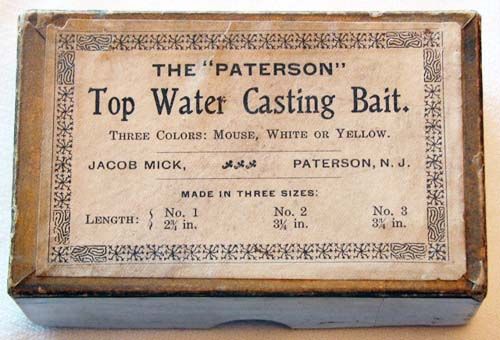
The fact that Harkauf was not the only outlet for Jacob Mick's surface bait is suggested by the box shown here courtesy of Joe Stagnetti. It is an original Jacob Mick box that was found over labeled with a label for the “Manhattan” top water bait.


This original Jacob Mick box was found over labeled with a “Mahattan Top Water” label. It is presented here courtesy of well known collector, Joe Stagnetti.


I'm hoping that sometime in the future more evidence will surface to clarify this picture. In the mean time I have a short story concerning the “Harkauf Plug”. Some years ago I bought a well used one in the smallest size at the Milwaukee show for $15. It was complete with original hooks but missing some of its paint. It had the look of an old bait that would catch fish. The following Spring my long-time fishing apprentice Warren Platt was visiting and I pointed to the bait that was hanging on the wall and asked how he would like to be the first to try out this 100 year old bait. He jumped at the chance and quickly caught and released 4 bass (all that tutoring is starting to pay off folks). He then turned to me in the other end of the boat with a puzzled look and said “something is wrong”. He showed me that the bait was sinking slowly rather than floating. After 100 years that wood was so dry that it sucked in enough water in 40 minutes to become waterlogged! After drying out for the rest of the season, I waterproofed it with some polyurethane and today it floats just fine and is still taking fish over 100 years after it was made.

Tight Lines,

Wild Bill Sonnett

Saturday, February 16, 2013

Deconstructing Old Ads with Bill Sonnett: Miscellaneous Tackle Box Surprises


I have been looking through old tackle boxes for thirty years. Many times I have been amazed by what one could read into the contents of a particular tackle box. Probably the person who has looked into more really early tackle boxes than anyone is know is long time collector Walter Blue. Walter lived in Kalamazoo Michigan and began looking for old tackle long before it became the popular hobby it is today. Walter held an annual garage sale in an attempt to get rid of the mountains of usable (but not quite collectible) tackle he accumulated. Walt separated items out to make it easier for the shopper to locate what he wanted. I remember large metal boxes that were brim full of metal spoons and were so heavy it was a real chore to move one. One box I recall was full of dozens of sharpening stones that had come from tackle boxes. There were many shapes and sizes. In the middle of these stones was one with a hole drilled in it. Having collected Indian artifacts for many years I recognized it as a perfect ancient Indian pendant made from Huronian banded slate. When I told Walt what it was he was somewhat shocked. I've often thought about the fellows who went fishing one day and found that artifact lying by the bank of a stream and threw it into their tackle box where it remained.


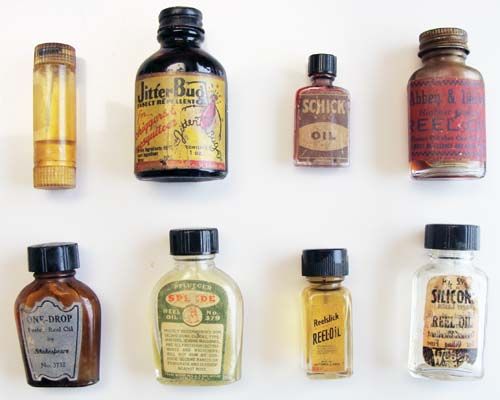
Poor man's oilers.


One very old box I found many years ago had only two, well-made “folk art” baits in it. Today they are in Carl White's book in the “unknown” section. What really made this box memorable was the rest of the contents. In the bottom were close to 40 whiskey corks. Cleverly hidden in the rest of the box's contents were several cork screws. My take on the box was that when this fellow went “fishing” he had a pint of whiskey with him and after rowing out of sight, he anchored and started to imbibe. When finished, he probably sunk the bottle in the lake, tossed the cork in the tackle box and went home to report to his wife that fishing had been slow. If she did suspect his real activities, there was little evidence to be found as most folks then used common corks for bobbers.


Any one who fishes at night knows the mosquitoes like the dark too.

 
A common item found in older tackle boxes is insect repellent. It came with many names but most contained citronella in some form. I find the smell of this substance somewhat pleasant. It immediately brings back memories of my Grandfather's utility room where citronella's sweet oder always permeated the atmosphere. Some years ago I attended an estate auction where I bought a well stocked tackle box with many baits from the 1920's. The auction ended on a Saturday evening. The next day I had to leave early and would be gone for a week on business. As I would be in Cincinnati the following weekend, I planned to attend the NFLCC lure show in Blue Ash, Ohio. I took the tackle box with me, intending to sort through its contents when things slowed down at the show. Around mid morning at the show I pulled the box from underneath my table and began to examine my finds. In the bottom of the box was a small glass medicine bottle of the very old type which used corks. I read the well worn, hand typed label. It said,“Oil of Pennyroyal”. The substance was the color of dark blue ink and I assumed it must be some sort of insect repellent. I don't know if it really was “Oil of Pennyroyal” or for that matter what it was, but when the cork was removed I immediately knew that I had made a BIG mistake. I jammed the cork back in as quickly as possible but the damage was done. Fellow collectors parted like the Red Sea in front of Moses and within a minute or two vacated the show room. I went out a side door and found the nearest dumpster. At that point I was told that there should be no repeat of what had just happened. I still wonder what was really in that bottle!


There is no end to the variety of old tins that fishermen used for hooks, sinkers, etc...


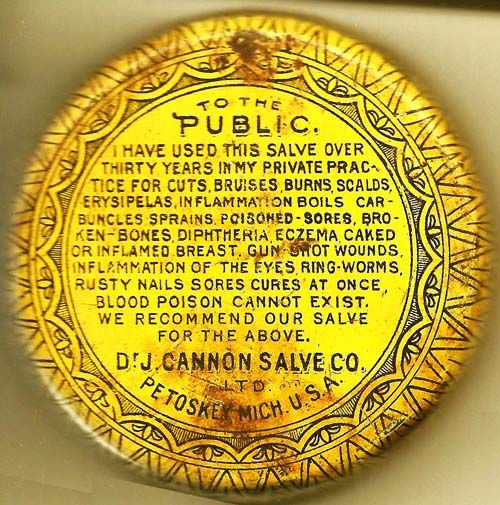
I am sometimes asked what is the most memorable non-tackle item I have ever found in a tackle box. My all time favorite is a tin of Dr Cannon's Salve. It is not in great shape and it does not contain (as most old tins in tackle boxes) hooks, sinkers or small spinners. What is great about this item is the write-up on the bottom of the tin. I have enlarged it here so you can read the entire description of its uses. It makes one wonder why so much time and money are put into medical research when Dr. Cannon discovered a cure for everything many years ago! LOL.


Tight Lines,

Wild Bill Sonnett

Saturday, February 9, 2013

Deconstructing Old Ads with Bill Sonnett: Railroads and Fishing


I recently read a story published in 1906 by some fellows from the nearby town of Napoleon, Michigan where I used to live. They traveled in the winter of 1905 to the central part of Michigan's Upper Peninsula (approximately 450 miles) to hunt deer. In 1905 that was an area that would be described today as “road-less wilderness”. They were able to travel the entire way by train and brought back quite a few deer in the baggage car. Today there are no longer train tracks that pass through Napoleon and as near as I can determine, no passenger service that would allow one to make that same trip by rail from anywhere in southern Michigan.

The lack of decent roads and reliable automobiles in those days meant that the train was the quickest and cheapest way to get to a sportsman's destination. Passenger service was viewed by the railroads as an important source of income and much advertising in “Outdoor” magazines stressed the quality of their service as well as the quality of the hunting and fishing available on their routes.

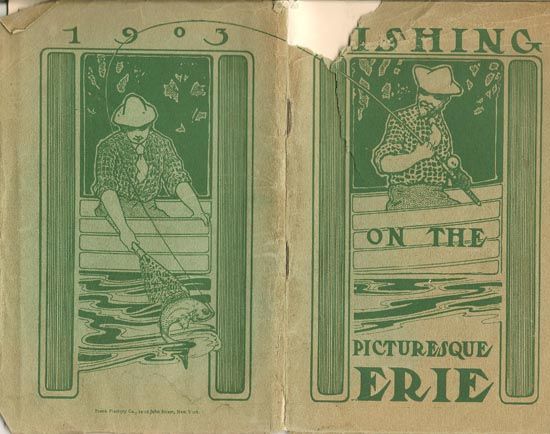
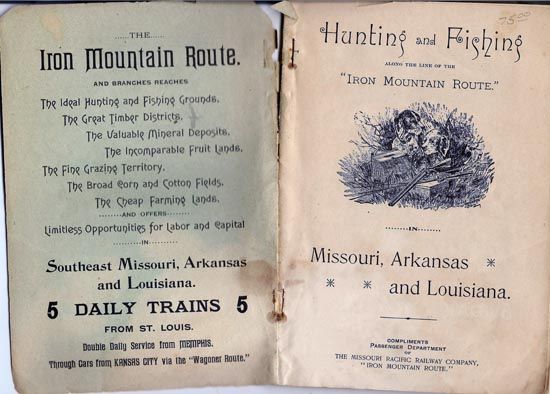
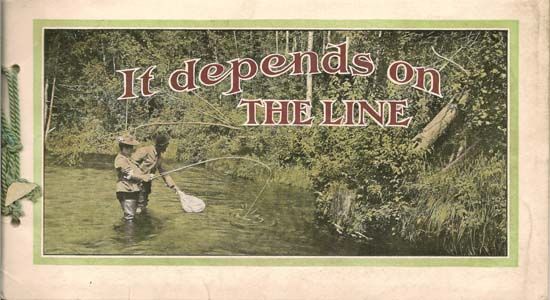
When it come to advertising and collecting old fishing related items, one area that seems to have been neglected is the advertising brochures given away by railroads early in the last century. They were meant to encourage folks to get aboard the train and and head for some good fishing. I have picked up several of these interesting booklets over the years at antique tackle shows. The asking prices for such advertising pieces were so low that only "lack of interest" could explain them. In addition to great pictures and historical information, almost all of them contain fold-out maps of the railroad's route and suggested fishing destinations. I thought it would be interesting to show a few here.


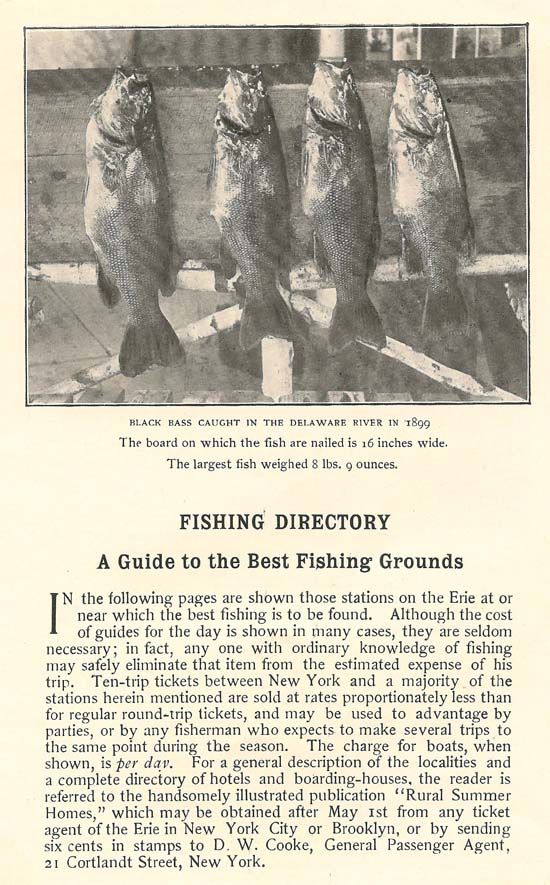
When I first saw this 1903, 88 page booklet, I thought it was about fishing in Lake Erie. Wrong! The Erie Railroad passed through some great country and this book is loaded with detailed information and high quality photographs. A couple are shown below.


Chautauqua Lake is well known to tackle collectors today as an early Musky fishing destination. It is also famous as the birthplace of the “Chautauqua Movement” which was an adult education movement in the United States, highly popular in the late 19th and early 20th centuries. As a matter of fact my Great Grandparents met there in the 1880's.


It is not often one sees a really nice string of Delaware River Smallmouth caught in 1899.


An 1893 Hunting and Fishing brochure given compliments of the Passenger Department of the Missouri Pacific Railway.


This very high quality brochure was put out by the Chicago, Milwaukee & St Paul Railway. It features many high quality pictures and descriptions. The one clue to dating the brochure is the following picture. It shows the only automobile seen in any of these handouts. That auto didn't look like much of a threat to the Railroads. Upon retiring as the long-time (1934-1959) fishing editor of Outdoor Life magazine Ray Bergman was asked what was the biggest change in fishing he had seen during his lifetime. His reply was, "the automobile".


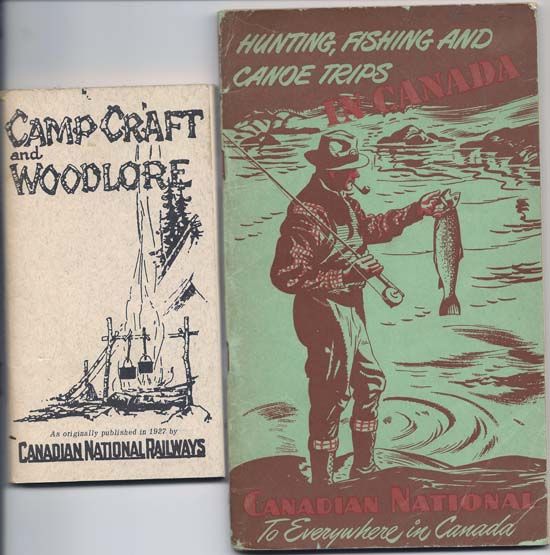
The Canadian railroads were not to be left out. The Canadian National Railway advertised heavily in “Outdoor” magazines and as shown here, also gave away brochures promoting camping, hunting and fishing along their routes. The smaller 1927 brochure is a reprint and the larger 1948 booklet is 112 pages long and covers all Canadian Provinces and the Yukon Territory.

 
By the way, those fellows who traveled all that way in 1905 to hunt deer would be surprised today to find that their home township of Napoleon and surrounding Jackson County now has one of the densest populations of deer in the the State of Michigan! The future has always proved hard to predict and no one could have foreseen that in 1905.
   
Tight Lines,

Wild Bill Sonnett

Saturday, February 2, 2013

Deconstructing Old Ads with Bill Sonnett: The Dardevle--Pork Rind Without The Grease


I had occasion last week to attend the “Ultimate Fishing Show” near Detroit Michigan. While wandering among the many booths I came across the Eppinger display which was somewhat larger than most of the exhibitors. I was astounded at the number of color combinations and styles that the Eppinger Dardevle name now appears on. The gentleman manning the booth was past middle age and stated that he had been with Eppinger for many years. I asked him if he knew the origin of the famous white stripe that appears on the back of the majority of Dardevle spoons. He stated that he did not and had never run into anyone who indicated that they knew how the color pattern came about. He was so fascinated when I told him what the stripe was suppose to represent, I thought it would be fun to let my readers know the story.

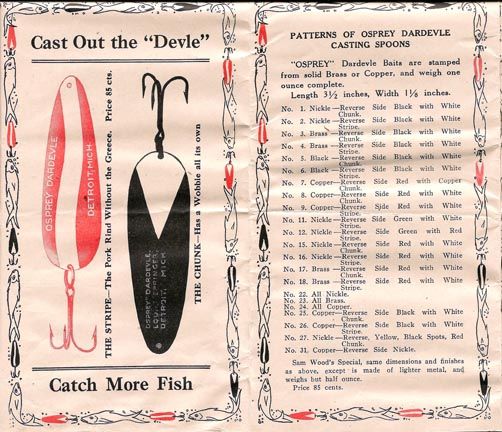
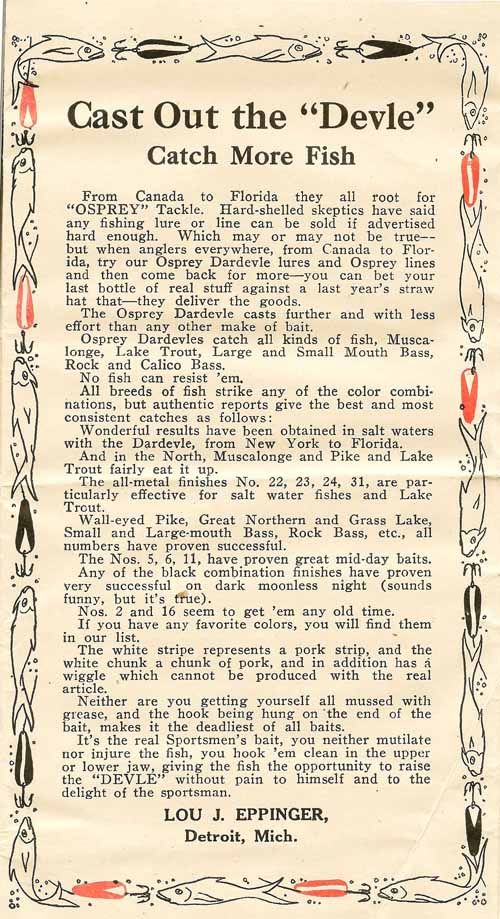
Great ads don't always come from magazines and in fact this one comes from the box papers of the oldest boxed Dardevle that I have seen. As near as I can date the papers they are from 1920 or 1921. I had always heard that some church groups had objected to seeing the word “Devil” use in advertising and this accounted for the Eppinger spelling “Devle”. The advertising slogan in the papers seen here is “Cast Out The Devle and Catch More Fish”. This play on words may have had something to do with the objections raised by these groups. What I found most interesting is Eppinger's explanation of the two color patterns offered. The ubiquitous and often imitated “stripe” was meant to imitate a pork rind strip and the white wedge at the bottom of many early Dardevle spoons was suppose to represent a pork chunk, both were popular bass baits of the day. The slogan attached to these two ideas was stated as “The Pork Rind Without the Greece”. Apparently the proof reader did not notice that what should have been spelled “Grease” was spelled “Greece”.


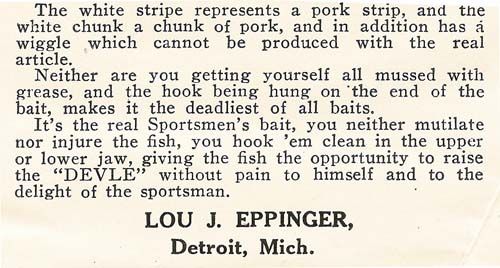
Below, I have blown up an interesting portion of the above text which explains not only the purpose of the two paint pattens common on early Dardevles, but also explains that the bait's hooks are at the rear, which gives the fish the chance to “raise the Devle without pain to himself and to the delight of the sportsman.”


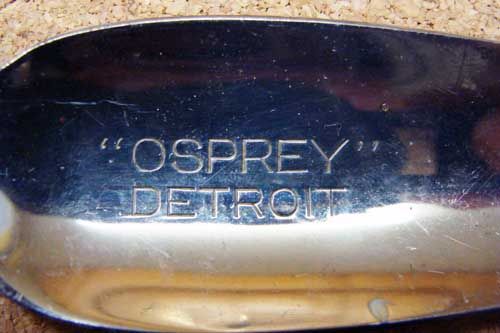
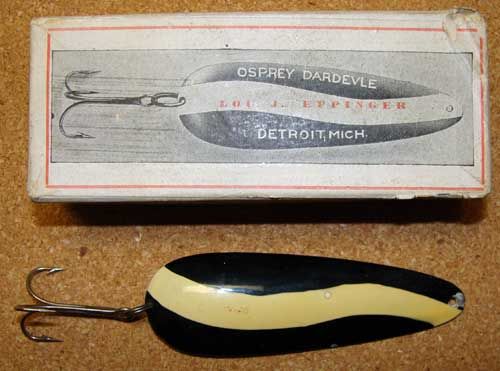
Shown below is an early hand-painted Osprey Dardevle with its box. The name “Osprey Dardevle” is stamped on the back of the spoon. In reading the complete and somewhat lengthy box papers, it is surprising to find that the two color patterns (stripe & chunk) are highly recommended in black & white combinations. There is little or no mention of what was to become the color combination most associate today with the Dardevle ---- red & white.


Tight Lines,

Wild Bill Sonnett