Showing posts with label features. Show all posts

Thursday, September 11, 2014

Dr. Todd Goes Pier Fishing: Part II – We're Gonna Need A Bigger Pier


Dr. Todd Goes Pier Fishing, or How I (Almost) Helped Win The ORCA Antique Tackle Fishing Tournament

By Dr. Todd E.A. Larson

©2014 The Fishing for History Blog

Part II: We're Gonna Need A Bigger Pier

As others struggled to put together their jury rigged fishing outfits, we noticed the elderly couple next to us was having great success, pulling in one Spanish Mackerel after another. We asked their secret and they told us the fish were only about four feet under the water, so Butch would only let the bait sink up to where the mono leader met the linen line, and was soon rewarded with the first fish of the day, an eight inch mackerel. It was a pretty suave catch considering he had to set the hook by pulling the line with his hand.
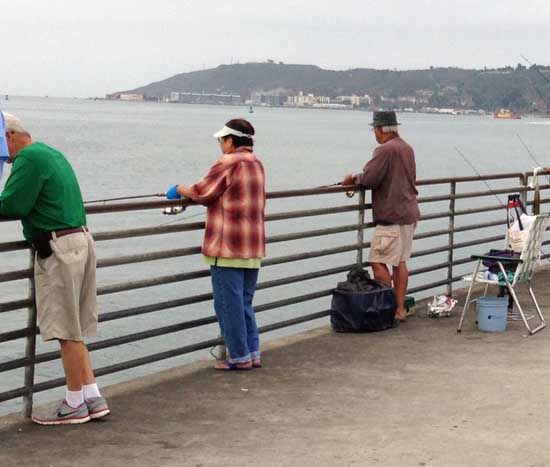


A nice elderly couple landed about 30 mackerel, and took home nearly all the mackerel the ORCA crown caught to boot.


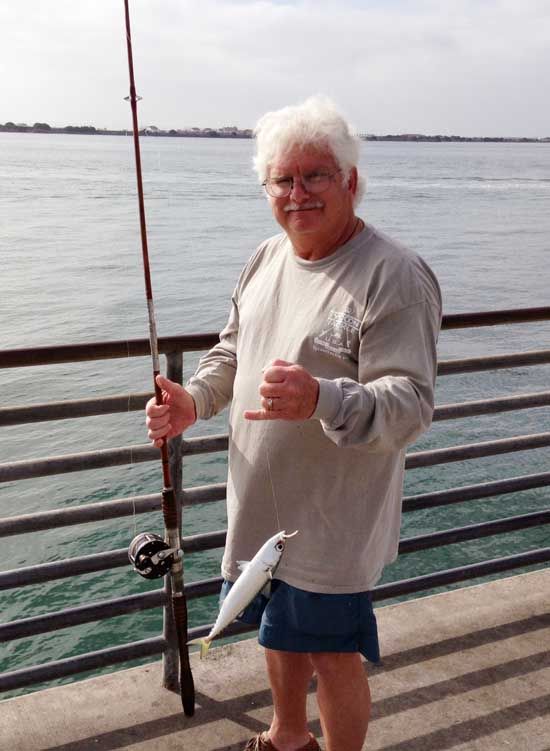
I decided to rig up the spinning rod. The ca. 1960 DAM Quick reel had about 20 pound test vintage mono which was about as stiff as a piano wire, but I was still able to do something few others could do that day: cast the line out. My first cast actually resulted in a fish.
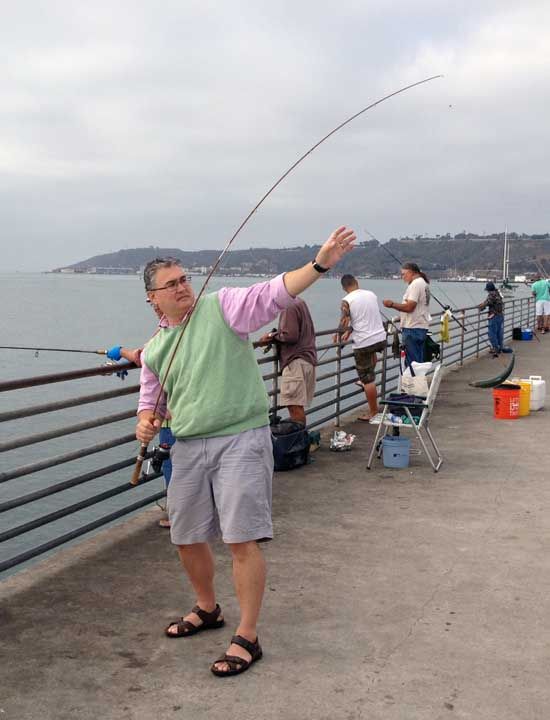
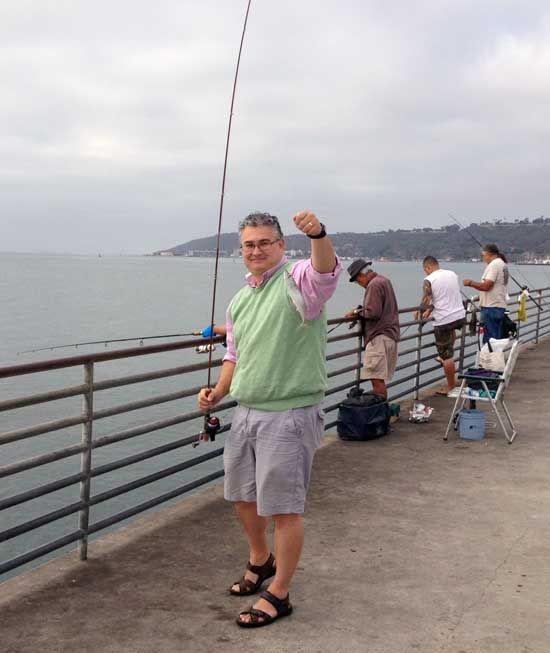

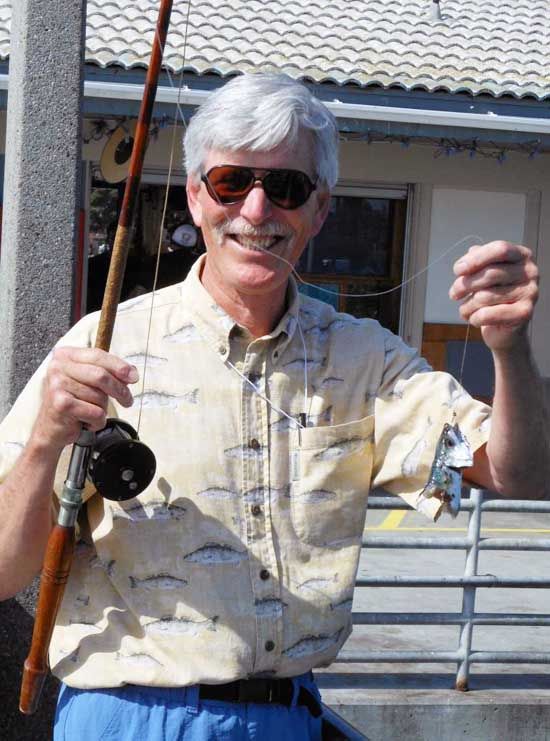
Proof positive that I can indeed catch fish.


A close up of my 7 inch mackerel.


Pleased with the results, I passed the rod on to another ORCAn. Over the course of the next hour or so, a number of fish were caught, mostly in the eight to ten inch range. Butch and Paul Berinson also managed to catch Calico Bass, which are very beautiful fish. Anglers down the pier caught a couple of Guitar Fish, a type of ray. Several anglers were keeping their mackerel alive in buckets with battery powered aerators. We were told these fish made incredible live bait.
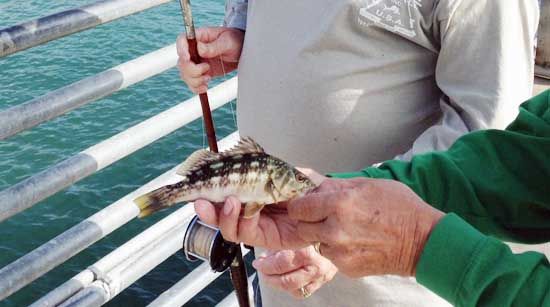

Butch became quite proficient at utilizing this pool cue rig to catch miniature fish.


We even caught a few beautiful Calico Bass.


As I watched these fishermen a thought occurred to me. With this many bait fish (there were massive clouds of anchovies everywhere), there just had to be a shark somewhere out there. I mentioned this to Clay Hood, who agreed and began to rig up the E.M. Holm surf rod (paired with the Penn trade reel) with a heavy sinker and a larger hook. I grabbed one of the smaller mackerel of around five inches, Clay baited the hook, and lowered the rig down to the bottom on the other side of the pier.
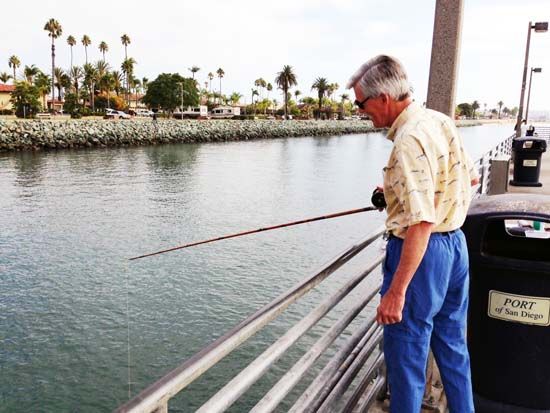


Clay Hood lowering down the mackerel bait below the peer. Remember later his thumb placement on the reel.


It was turning into a lovely day as we chatted about Clay’s tournament fishing history – he’s a really seasoned fishing vet who fished the Bassmaster Classic – when all of a sudden he noticed his bait going crazy on the bottom. As he began to reel the mackerel in, the rod quickly bent doubled and then suddenly snapped back. “Shark,” Clay said, as he reeled in the slack line. Sure enough, the line had been cut a foot above the hook.
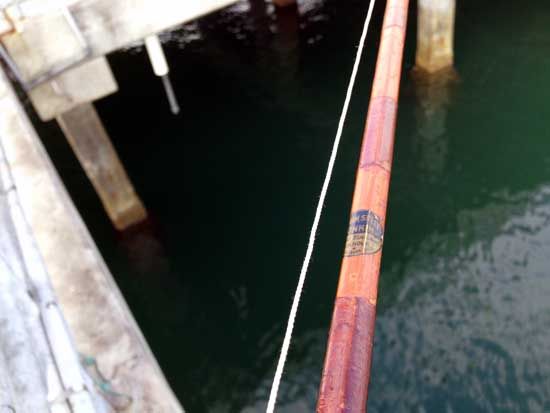


The E.M. Holm rod in action.


Something big lurked below the waters of the Shelter Island pier.

Undaunted, Clay rummaged through Brian Funai’s tackle box and found a steel leader, which he tied on. The problem was that, for some reason, the mackerel being caught were all around ten inches, twice the size of the original one Clay had used. Having no other choice, I brought a 10 inch mackerel over and Clay hooked it up to his rig and tossed it under the pier.
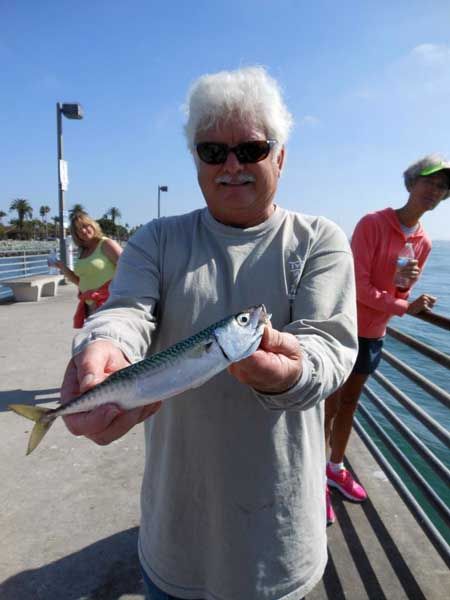


From Butch’s hands onto Clay’s hook went this nice mackerel.


Over an hour passed with no sign of a fish. We passed the time talking fishing reels, of course, and noted the primitive nature of reels like the Penn Deep Sea Angler model. It had no anti-reverse, no free spool mechanism, no drag, and was the very definition of a simple winch. It did not even have a leather thumb drag like most of the saltwater reels of the 1920s and 1930s.
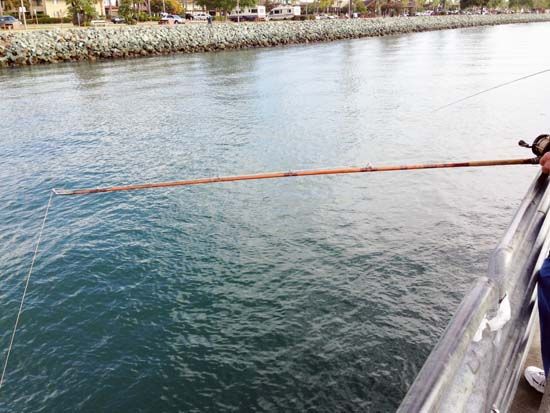

Biding the time …


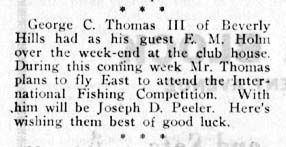
It was fascinating to recognize that the rod's maker E.M. Holm had spent time fishing these very waters back in the 1920s and 1930s; the blurb above shows he visited the Tuna Club, as reported by the Catalina Islander on August 31, 1939. He built a number of rods for the Hollywood elite including silent film actor Tom Trento.


As Clay lifted the minnow off the bottom, once again the Holm rod bent to the butt. For a second or two, I thought that he had hooked up, but once again the rod snapped back to straight and the line went slack. I thought he had been cut off, but when he pulled his line up, all that remained of that mackerel was a head cut off at the gills.
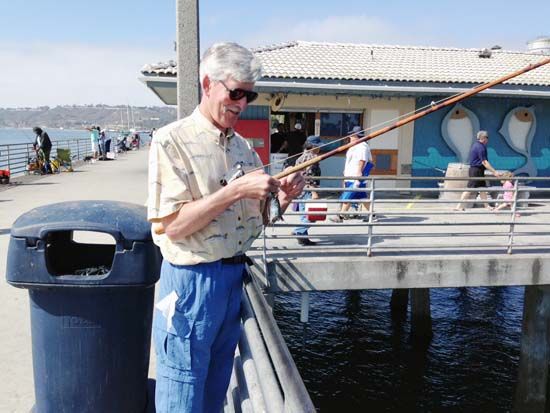

Clay looks at amazement at what remains of the mackerel.


Clay smiles for Richard Lodge as I implore him to put the bait back in the water.


“Throw the head back in!” I implored, knowing the fish was probably still down there. Clay dutifully dropped the line, and no more than two seconds after it hit the water, his line went from vertical to horizontal in an instant.

In all my days of fishing, I have never seen a fish hit so fast and so hard as the shark that hammered Clay Hood’s bait on that San Diego pier. The visual evidence was striking; since the Penn had no anti-reverse, the handle spun like a windmill in a hurricane. I had heard the term “knuckle buster” many times in conjunction with these old saltwater reels, but this was the first time I had ever seen exactly what they meant by it. Anyone foolish enough to try and grab the handle when a fish like this hits would have broken fingers in a heartbeat.

The only way to stop the fish was to thumb the line, and Clay dutifully planted his thumb on the revolving spool as the shark ran directly under the pier. The Holm surf rod bent to the butt, the reel sizzled, and then it was all over but the shouting. The shark had wrapped itself around the pier on the far side and threw the hook. In three seconds that fish had taken a hundred feet of line, which if my math is not off, is around 23 miles per hour. That’s a fast fish, folks, and a speed easily reached by Shortfin Mako and Blue Sharks, both commonly found in the area. I’m not saying it was either of these species, but there can be no doubt it was a shark of some kind that hit that mackerel.

As we stood in stunned silence, some joker in the back quipped, “we’re gonna need a bigger pier.”

It was insane. I have never, and likely will never, ever see such a vicious strike, especially in conjunction with a vintage tackle rig. The whirring of that Penn reel’s handle is an indelible memory.

Later that day, as we listened to Catalina Tuna Club historian Michael Farrior discuss the history of that esteemed organization, he noted that injuries on Catalina were so common in the first part of the 20th century from “knuckle busters” that there was a medical clinic on site to take care of the injured anglers. I looked back as soon as he said this and saw Clay staring at his thumb, which was developing a nice blister from his attempts to stop the rampaging shark. We both smiled.

So my first attempt at pier fishing was a memorable experience. Not surprisingly, Butch Carey won the contest with a 10.5” Spanish mackerel, fitting for someone with a lot of pier fishing experience. But despite the fact that everyone caught fish, it was the one that got away, once again, that formed the best memory. Having cobbled together fishing outfits from the most mismatched vintage tackle you could find, we were still able to catch fish, and have fun doing it.

That sort of the point of all this, isn’t it? And to think, I nearly helped win the 2014 ORCA Antique Tackle Fishing Tournament.

I don’t think for a minute that I am not already developing a plan to help (almost) win the 2015 edition …

— Dr. Todd

===================================================


PRE-ORDER DR. TODD’S NEW BOOK!


What do you get when you turn a Midwestern college professor loose on the Bassmaster Classic & Expo in New Orleans, Louisiana? You get Lost on the Bayou, the interesting and funny memoir of a whirlwind trip to the Delta to witness one of the greatest gatherings of bass fanatics in history. If you’ve ever wondered what it was like to see the Bassmaster Classic Expo from the other side – the side of the vendors and celebrity anglers – this book is for you. From anecdotes about some of the great bass anglers of all-time (including Glen Lau and Billy & Bobby Murray) to inside analysis of some of the great anglers on the B.A.S.S. tour today to inside details of some of the major tackle companies, this is much more than a “fish out of water” memoir, it’s a subtle and detailed commentary on the state of bass fishing in America.

Purchasers of this book will also be entitled to a free download for reading on tablets, phones, etc. You will receive instructions on how to claim your COLOR digital copy when your books ships.

PRE-ORDER YOUR COPY OF LOST ON THE BAYOU BY CLICKING HERE!

===================================================

Wednesday, September 10, 2014

Dr. Todd Goes Pier Fishing: Part I – The Iron Angler


Dr. Todd Goes Pier Fishing, or How I (Almost) Helped Win The ORCA Antique Tackle Fishing Tournament

By Dr. Todd E.A. Larson

©2014 The Fishing for History Blog

Part I: The Iron Angler

I knew the 2014 ORCA nationals, held from September 3rd through the 6th, would be something special from the moment I stepped on the airplane at the Cincinnati airport. Flying today is at best uncomfortable and at worst unbearable, particularly if, like me, you fly what the airlines generously call “economy.” There are many bad things about flying economy – no leg room, cramped seats, horrible television screens that can't be turned off ¬– but the worst is having to walk through first class as you board the plane. This is uncomfortable for everyone, as us economy folk look in envy at all the space in the first class cabin knowing we’ll soon be packed like sardines, while the first class passengers always seem to have a slight look of guilt on their faces as they steadfastly try to avoid eye contact with the hoi polloi as we are ushered to the back of the cattle car.

I am rarely on a plane these days that is not completely sold out, and my flight to San Diego is no exception. Since I booked late I could not get an aisle seat and was not looking forward to spending several hours stuck between a rock and a hard place. I dutifully plopped down in my middle seat next to a nice lady as I await the former NFL linebacker who will, undoubtedly, take the aisle seat next to me (and all of the arm rest). But a funny thing happened. The seat remains empty. Even as the stewards announce final boarding, unbelievably, the seat is unfilled. One of the stewardesses asks if anyone is sitting in the empty aisle seat. “I will be in about six seconds,” I say as I unbuckle, lift the arm rest, and slide over. For the next several hours I have two seats to myself (the lady on the window seat was already asleep and blissfully unaware of this incredible stroke of good fortune). I can only imagine the looks I am getting from my fellow economy passengers. I wouldn’t know. I steadfastly avoid eye contact with anyone for the remainder of the flight, as I stretch out like a Turkish pasha luxuriating on the royal divan.

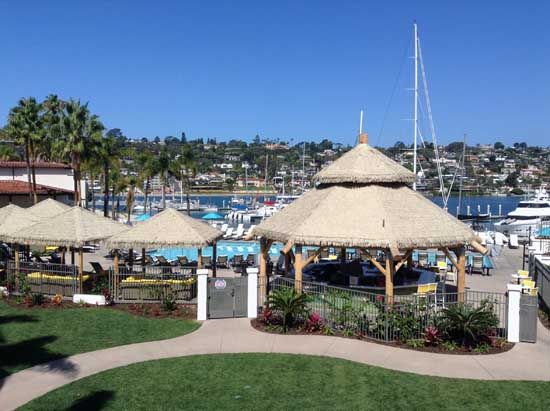
The San Diego convention was held at the Kona Kai Resort on Shelter Island right on the harbor and conveniently located about three minutes from the San Diego airport. My gloriously comfortable flight arrives an astounding 45 minutes early, and I am in the hotel by eleven a.m. Check in is supposed to be at three. Not on my lucky streak it isn't. A very friendly employee gets me a room overlooking the harbor with no wait. Unbelievably, I am unpacked and lounging on the deck while looking over the pool about the same time my flight was supposed to land.

This is going to be a hell of a show.


The view from my balcony. Tough life these San Diegans lead.


Dr. John Elder and Brian Funai are the show hosts and over the next three days everything will run so perfectly that it is almost surreal. This is one of those things that cannot be attributed to luck. There is so much hard work that goes into making sure that everything runs smoothly it is incredible, and all credit goes to John and Brian and the rest of the ORCA volunteers.

The show itself is memorable in every way. In all my years of collecting I have never seen so many rare reels in one place. Ever. Everything else – the weather, the food, the friendship, the speakers – was beyond expectations. It was incredible.

But this is not a story of the show itself. If it was I'd have to write tens of thousands of words about the late dinners with left coast denizens Terry Ow, Joe Connors, Dennis Buranek, and Steve Ellis; I'd spend days describing the lunches with Bob Douglas, Larry Lauve, Bud Chaddock, and others; I am not sure I could even begin to capture how much fun room trading was in Dave Gaustad’s room (where I bought two beautiful tiny brass reels for my little reel collection), or the meet-and-greets where Clay Hood, Randy Anderson, Willis Logan, and so many others dazzled us with rare and unique reels. As for the speakers? Alan Barracco, Nello Armstrong, and Colby Sorrels gave a brilliant talk on San Diego’s own Langley Corporation; Dan Brock dazzled with his display of mostly unseen West coast reels; Dennis Buranek gave a brilliant talk on Thompson fly reels; and as if that was not enough, Catalina Tuna Club historian, outstanding writer, and all around good guy Michael Farrior detailed the history of this legendary organization. Amazing.

But this is not a story about those memorable experiences. No, this is a story about fishing; pier fishing to be exact. This is an aspect of the sport of which I have almost no experience. Growing up in the Northland we have what you might call dock fishing, but this compares to pier fishing in the same way that sledding in your back yard compares to skiing in the alps.

Why I am pier fishing is an interesting question. Every year ORCA holds a vintage tackle fishing contest. The San Diego nationals posed a couple of problems when it came to this staple of the convention. First, there is no freshwater fishing within reasonable distance of downtown San Diego suitable for such a contest. Second, since it was on the West coast, lots of members would not be able to fly out with the requisite fishing tackle necessary for the salt.


Lots of wildlife, including Pelicans and (in the water) a cormorant that continued stealing bait from a pair of fisherman.


Enter Brian Funai. Brian is a native of Hawaii and well versed in all kinds of saltwater fishing. He helped put together the fishing kit (including apparently buying a bag of frozen seafood so we would have squid to fish with) so we would have the necessary terminal tackle for the contest. So at least half the battle was solved by Brian’s preparation.

But where to fish? The only suitable place to hold the contest was the Shelter Island fishing pier (the only one on the island by the way) and so dutifully on Friday morning at 7:30 a.m. I arrived to see what this pier fishing was all about.

Alas, only a couple of ORCAns brought their own gear; the Langley crew (not a surprise there, these guys are prepared for anything). What about the rest of us unfortunate souls? Well, the intrepid Dr. Elder brought us out a bundle of rods and a bag of reels from his room. Added to Funai’s tackle bag and Nello Amrstrong’s tackle box we could now go fishing. But not like any fishing I'd ever experienced before, however.

There is a famous television show called The Iron Chef. The premise of this show is to present contestants with a small set of bizarre ingredients (such as squid and spinach) and then force them to try and make an edible four course meal out of it. What was happening on that pier in San Diego turned out to be the pilot for a new show: The Iron Angler. Only instead of food, we were presented with completely mismatched rods, reels, and lines and were then expected to catch fish with it. To top it off, recall this mishmash was composed of tackle mostly ninety or more years old.


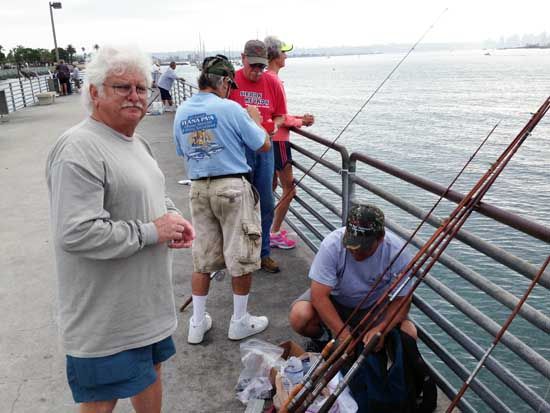
Butch Carey (wearing the "are you kidding me" look on his face) and Brian Funai (seated) go through Brian’s fishing kit. Paul Berinson, with his back to us, is ready to hit the salt.


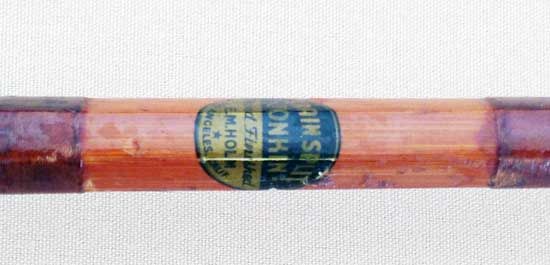
Let's discuss the rods first. All but two were vintage boat rods. For those who don't know, a vintage boat rod is a pool cue with as few as two guides designed to literally drag a fish out of the water. It bends about as easily as a baseball bat. They are about as useful for pier fishing as a microwave on Mt. Everest. There were only two non-boat rods in the mix; one was a really willowy bamboo spinning rod of about seven feet, and the other a really neat surf rod hand made by E.M. Holm of Los Angeles. It was a surprisingly collectable rod stuck amidst the other falderal John had brought us.


This E.M. Holm “Grain Split Tonkin” hand-finished rod made in Los Angeles in the 1930s.


If the rods were a bizarre mixture, so were the reels. There was a Penn trade reel marked Deep Sea Angler from around 1936, a Fox Gun Company surf reel, a Pflueger Interocean, and a couple of other similarly antiquated reels. Most still had the original line put on in the 1920s or 1930s. There was also an old DAM Quick spinning reel with some ancient monofilament on it as stiff as frozen piano wire and just as brittle.

Fortunately for us we had Butch Carey, a Floridian and self-described “Pier Rat” in his younger days. Butch knows his way around pier fishing and together we cobbled together a pool cue boat rod and a 250-yard surf reel filled with some ancient linen line to make a serviceable fishing instrument. I tied about six feet of monofilament from Nello Armstrong’s tackle box with a blood knot to the 18-thread line, put on a #8 Gamakatsu hook to the mono leader, and a single split shot. Baited with a piece of squid, Butch was able to lower the line over the side of the pier and into the water. Over time he perfected a method of setting the hook with his hand; he would have made a fine aboriginal fisherman, as it turns out.


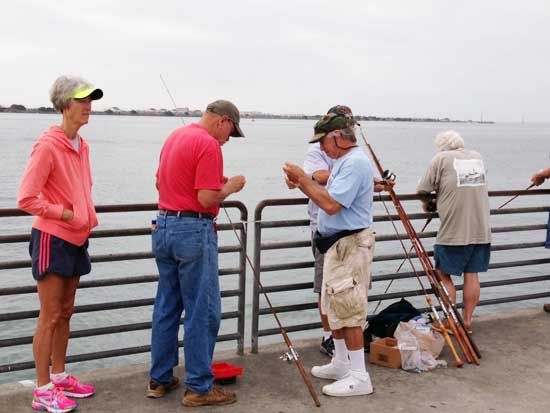
The ORCA gang matching up boat rods and ancient reels. To say we got strange looks from the regulars would be an understatement.


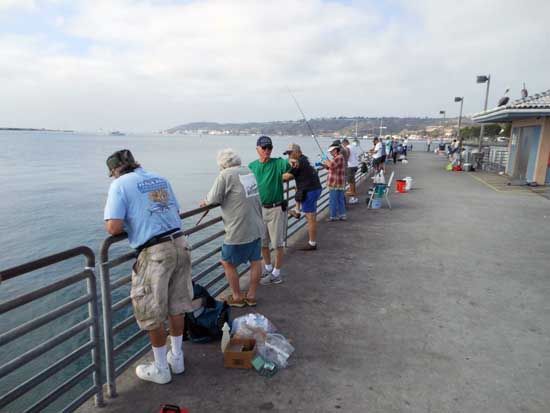
We were just a few in a long line of pier anglers.


The 2014 ORCA Vintage Tackle Contest was on!
Tomorrow: We’re Gonna Need A Bigger Pier …

— Dr. Todd

Tuesday, August 19, 2014

Dr. Todd Attends a Tackle Auction


For whatever reason, I never attend auctions. I'm not talking about the on-line varieties like Lang's and Crossroads, which I generally enjoy and participate in regularly. No, I am talking about the local auctions that occasionally feature fishing tackle. There's just something depressing to me about bidding on things you want, losing, and watching someone else walk away with the item in front of you. At least when I lose an item on eBay I'm not forced to watch it taken away like a spoil of war.

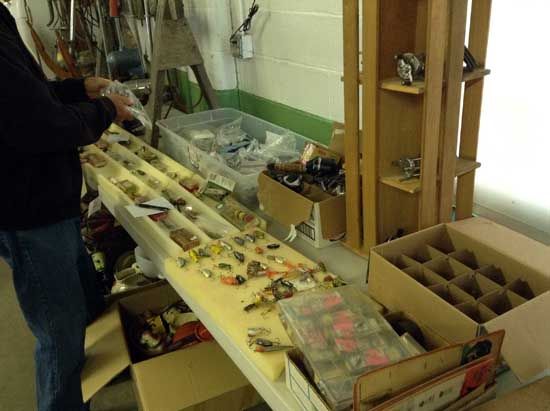
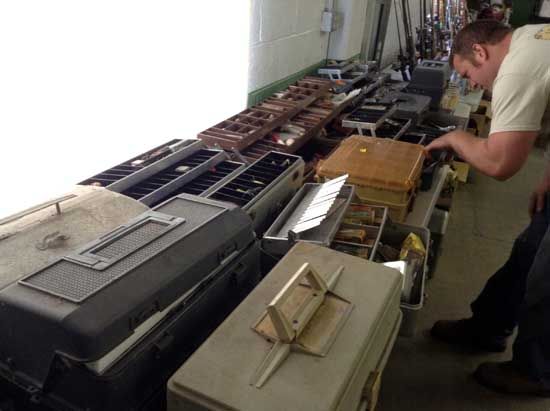
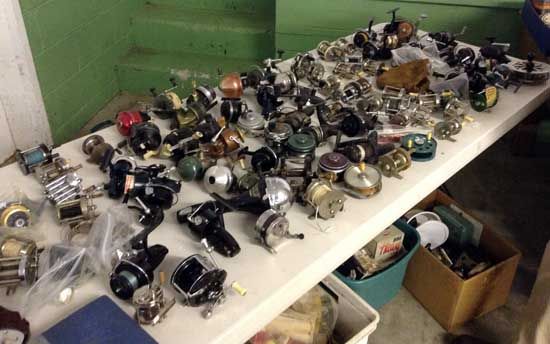
But when I got the flyer from a local auctioneer about the estate of Raymond Crowe, a former ORCA member, I figured I had to attend. I knew Ray in passing (I believe he was a former Coast Guard guy) but hadn't seen or heard from him since around 2007. I knew him to be a pack rat, and sure enough the flyer discussed over 500 reels, dozens of full tackle boxes, etc. Lots and lots of tackle, including 34 outstanding Kentucky and Kentucky-style reels.

I called my friend Buck on the phone and we decided to drive over together. Buck's literally an expert on auctions, and attends several a month. He's always showing me unbelievably rare items he's picked up for $10 at some auction in the middle of nowhere. I tell him every time I attend an auction, I'm sitting between Warren Buffet and Bill Gates, both of whom have decided they want the exact items I want.

I know I can't afford the Meek #4 and other rare reels, so I concentrate on trying to pick up one good reel. Today I have my sights set on a Talbot. I don't have one and would like a nice, honest, original Talbot to put in my collection. There are five Talbots in this auction so I have five chances, I figure, to be disappointed.

We head out early on Saturday morning and make the 75 mile drive to Madison, Indiana, where the local auctioneer Mike Taylor will be holding the auction at the Jefferson County 4H Fairgrounds. It's not the best labeled place I've ever been, and we blissfully drive right on by the first time before realizing that we've gone to far. We arrive about an hour and a half before the auction begins and only see about ten cars. Will this be my lucky day? Will I be returning home today like a pirate pillaging a helpless village?

I walk on to the auction floor and the first people I see are all ORCA members. In fact, there are so many ORCA members that it's like a mini show. I run into Bill Muth, who's here to check out all the Horton Bristol reels, and Carl Schaum, who I figure is looking for Indiana reels. Soon I meet and greet fellow ORCAns Randy Anderson, Jerry Schemechko, Willis Logan, Jerry Soete, Neil Kauffman, Mike Hines and Doug Carpenter, among many others. Some have come from as far away as Oklahoma and Wisconsin.

It's really refreshing to see so many friendly faces, even if it means there will be no bargains today.

I preview the auction with Buckley and see a lot of interesting reels, but only a few that I'm going to set my sights on. Believe it or not one of the reels I'm most interested in getting is a Union Hardware "Samson" take-apart reel marked Horrocks-Ibbotson. I have five different versions of the Samson and this is one that has eluded me. It's not a high value item but I'd be very happy to add it to my collection. I also see a couple other items I'd like to get.

The auction flyer did not lie. There is tackle literally everywhere – tackle boxes, fishing rods, lures, minnow buckets, etc. are overflowing from every crevasse. From a 16/0 Fin-Nor to a palate of Heddon Sonics, there is something for everyone. By the time the auction is set to begin, there are about 75 people in attendance, split pretty much 50-50 between locals and ORCA members. Ray Crowe's estate will do pretty darn well.


The auctioneer Mike Taylor precedes the auction with a commentary. He says in his forty years of auctioneering, he has never (and he emphasized never with "not once") come across a more helpful organization than ORCA. He literally heaped praise on the Old Reel Collector's Association, and it made me feel good how many members stepped up to help him and to publicize the auction on short notice (he had a very limited time to clean out the estate and get the sale ready).

The auction begins with non-tackle items and there is a palpable sense of disappointment in the air. Not for Buckley, though, as he has a series of booths at an antique mall and is very knowledgable on all kinds of antiques. He's picking up bargains left and right while the reel collectors are throwing all kinds of side eyes at the auctioneering, ready to get into the tackle.

The auctioneer makes a bold choice by starting with the rods first. There's some nice rods in hindsight I probably should have bid on, including a really rare Harnell black spun glass fly rod, but the only one I bid on is a Tracey-Wells trade spinning rod. I drop out at $20. It's too early to get crazy, even if it is a cool rod.


The first big reel to come up is the Fin-Nor 16/0 and it brings a healthy price. It's a sign that there will not be a ton of bargains today. The rods don't bring a high price, though, and a couple sell well below their actual value (the best being a really nice Browning Magnum bait casting rod which went for nearly nothing).


The reels come up in huge table fulls and it is "choice" bidding, meaning the high bidder gets to pick as many reels as they want off the table. The first bidder is in at around $90 and plucks off a couple of nice reels, and the number slowly declines as the pile of reels gets smaller. Buckley jumps in and picks up two very, very rare spinning reels in boxes at about half their value. Maybe there will be some bargains after all …


I look over the pile remaining and see the one reel I wanted still there, so I join the bidding. I drop out at 40 but the guy doesn't choose my reel. I'm back in again, but for some inexplicable reason the bidding goes up to 60. Weird. This guy also chooses another reel from the one I want. I bid again, and lo and behold, I win at 40. I quickly pluck the minty L.W. Holmes fly reel in a leather bag from the table and show the auctioneer my number. If I am patient, I could pick this reel up in this condition for $60-$70 on eBay, so I come out ahead. I'm going to fish this reel. Buckley tells me I've done good, so I'm happy.

Two or three tables full of stuff go quickly to the rabid collectors in attendance, but I refrain from bidding as although there are many nice reels, I am holding all my cash to take a run at a Talbot. Besides, I'm not a good reseller. I buy reels to resell, take them home, start to like them, and … well, that's how you get a basement full of reels.

About an hour in I am staring at a reduced pile of reels, when I see a rather amazing sight. An item I figured would have gone for $100 on choice is still on the table. I impulsively decide that although it wasn't something I marked, I'm going to try and pick it up. I get in at the bidding and there is not much interest left. I win at $25, and cackle as I take away a Heddon Spin Pal first model box. I am sure people were put off by the fact that the wrong reel was in the box, but the first generation boxes are super, super rare. I know I can pick up the proper reel for about $25, and Ben Wright has the combo going for $200+ on numerous occasions, so I know I've done well. Neil Kauffman, who has the best collection of Heddon reels this side of anywhere, says I have done very, very well.

I do the same thing again when I see an item I was sure would be gone sitting on the table. It's an Airex Spinster Deluxe kit, and I jump in impulsively and excited by the auction atmosphere, keep bidding beyond where I should have. I end up going $20 over what I wanted to, and pick up the combo. The main reason I wanted it was that it has a Sears sticker on the side of the Mark 5 Bache Brown reel, which I've never seen before. Afterward, Bob Halver the Airex expert tells me it's only the second Airex "trade" reel sticker he's seen, so although I probably overpaid for the set I did get a rare if not very desirable trade reel for my collection.

Finally, the table lot with the Samson Utica reel comes out and is quickly depleted by bidders. Not surprisingly, the Samson is still there. I don't want to pay a lot for this reel, and am afraid the auctioneer will drop the ball and auction the remainders off in one lot. But I get a lucky bid accepted at $15 – I think the only time the auctioneer dropped below $20 on choice all day – and come home with it. I am very happy.

The heavy hitters come out next. A hush comes over the place as the Meek #2 hits the auction block it comes in at $900, which is a solid place. The Crowe estate is going to do well today. I had the pleasure of having Talbot expert Randy Anderson help me to identify which Talbot reel to go after; it's #28 on the list so I have some waiting to do. A nice Talbot #3 ($1100) is followed by a B.C. Milam Frankfort #4 ($900) and Talbot Niangua ($700) and B.F. Meek & Sons #3 ($700). A Meek #3 Freespool ($675), Talbot Niangua ($350), and a B.F. Meek & Sons #25 Louisville ($450) hit the gavel before the first big surprise.


It's a Kentucky Line Dryer in a two-piece box from Shelbyville, Kentucky, and I am a bit shocked it goes for $500. A Meek & Sons #25 ($300), Horton Meek #4 ($375), B.F. Meek & Sons #4 ($350), Bluegrass Reel Works #3 ($700), and Bluegrass Reel Works #4 ($600) finish. One of the best reels in the auction, a B.F. Meek & Sons serial number #2039 ends at $700. It's a nice deal.


The belle of the ball comes up in the form of a Talbot #2 (Serial #145) tournament special. It has the tournament handle but also the original handle. It attracts a lot of interest before ending at $2300. The new owner is happy and deservedly so – it's a rare, rare reel and a great buy. I'm very happy for him.

More reels hit the gavel: Milam & Son Rustic ($150), Meek Bluegrass #33 ($125), Meek Horton #3 ($200), B.C. Milam #3 ($400), Meel Bluegrass Reel Works #3 ($300), Bluegrass Reel Works #3 ($275), Bluegrass Reel Works #3 Jeweled ($400), South Bend 1131A ($75), a B.F. Meek #5 ($900), and somewhat surprisingly, a Gayle brass fly reel for $125.


It's time. Lot #28 comes up, my German Silver Talbot Star. The bidding starts at $50 and I'm in from the beginning. By $100 it's me and one other bidder. I have silently told myself I won't go past my predetermined limit for it, and my heart begins sinking as it begins to reach that number quickly. The bidder in the back goes right to the edge of my limit. I sit and think for a second before raising the bid $10. Nervous silence … and it's mine! I ended up paying about retail for it, but unlike eBay I was able to hold this one in my hands, and have it checked out by others, too. It's all original which is important to me, and runs like a fine watch. I am super happy.

After a weird Pflueger Skilcast ($45) is sold, we come to the most interesting reel of the Crowe collection. It is a tournament casting reel that has everyone baffled. I spend a lot of time looking it over, and conclude it has the end plate of a Meek bait casting reel, but the front plate and internals are familiar but not easily placed. It's clearly been put together by a supremely talented reel maker. I figured it would bring $200 but the bidding pushes it to $650 before the lucky winner gets it. I get a chance to see it again and while kibitzing Neil Kauffman exclaims, "This is an early Jack Welch!" He's absolutely right, of course. It all falls into place. There was something very familiar about the workings of the front plate, and as Neil points out all the Heddon hallmarks it becomes clear this is a reel made by Welch after he left Meek for Heddon (and took a bunch of parts with him), which explains the Meek end plate. The lucky buyer (you make your own luck in this game, folks) has gotten the true bargain of this auction. It's just an incredible reel, and I'm super happy for him for recognizing the quality before the identification came through. Properly identified, who knows what this would have brought?

We end this auction with a Talbot Star with the wrong handle ($200), a Meek #2 ($350), two tiny Dillenders from Lexington ($60 each) and a Bourne & Bond in an unmarked box ($90). All in all not a bad day.

I get up to pay for my four items and am very happy. I got my Talbot, got a chance to spend the morning with a bunch of old friends, and got to see Ray Crowe's estate do well with his tackle. Not a bad auction after all!

-- Dr. Todd

Thursday, August 9, 2012

Videos of the 1931 Keeley Fishing Tackle Trailer Rig

Video of the 1931 Keeley Fishing Tackle Trailer Rig

Yesterday, we gave you some photos -- historical and current -- of this incredible rig. But you have to see it in video to understand how truly cool it is. Here's a 360 degree tour of the car and trailer's external.


Donnie Gould, the president of Auctions America, was kind enough to answer a few questions about this incredible combo for us. It is well worth a listen.


Many thanks to Donnie and the team at Auctions America in Auburn, Indiana for taking this out of storage and allowing us access to it.

This rig goes to auction on Labor Day weekend, so we'll be watching very carefully to see what it goes for. Remember to check out the 1931 J.M. Keeley Car and Tackle Trailer photos on the Auctions America web site!

-- Dr. Todd

Wednesday, August 8, 2012

1931 J.M. Keeley Car and Tackle Trailer

1931 J.M. Keeley Car and Tackle Trailer

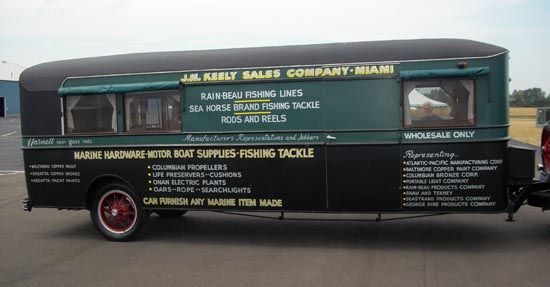
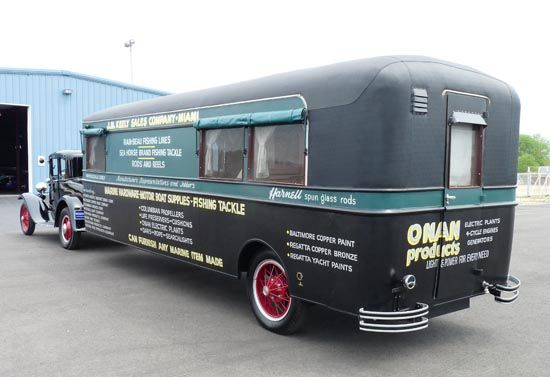
As promised in a previous post, I said I would give everyone a better look at the incredible J.M. Keeley fishing tackle car and trailer. Here is a photographic tour of the outside and inside of the trailer and car, courtesy of Donnie Gould and his incredible team at Auctions America in Auburn, Indiana. Donnie pulled out the car and trailer from the auction building and gave us a private tour, and it was as awe-inspiring as you can imagine!

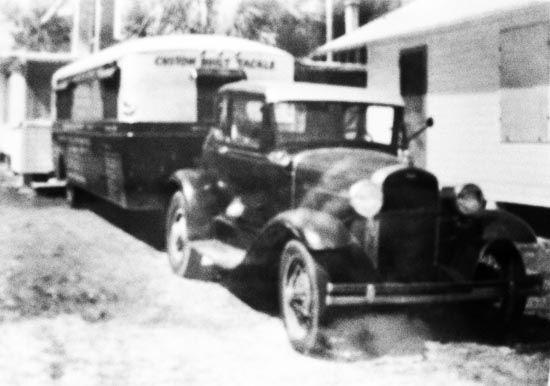
The rig as it appeared in the early 1930s.

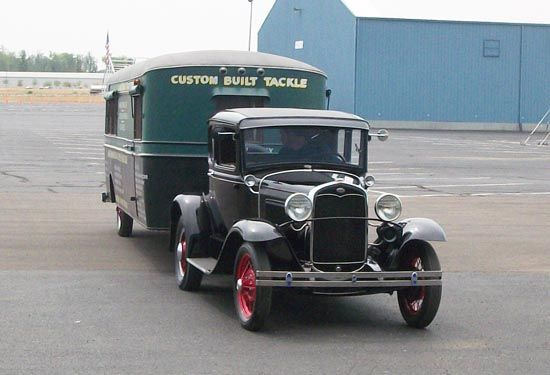
The rig as it appears today, fully restored.

Seeing the Keeley trailer in person is just awesome. I cant imagine a cooler tackle-related item in history. The restoration was just amazing.

Close up of the custom-built 1931 Ford car.

Nice side shot of the trailer.

A photo of the other side.

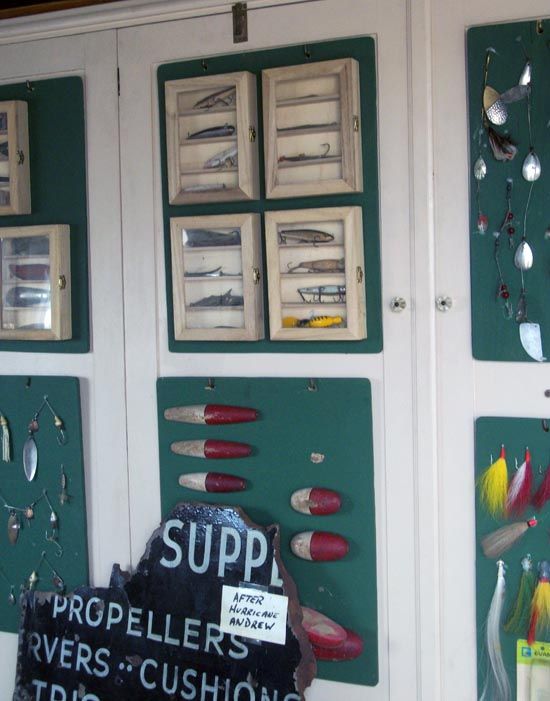
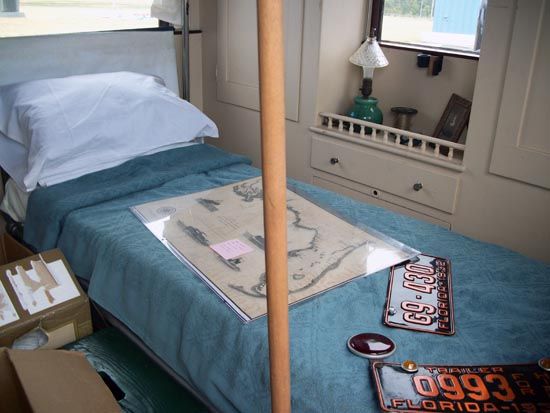
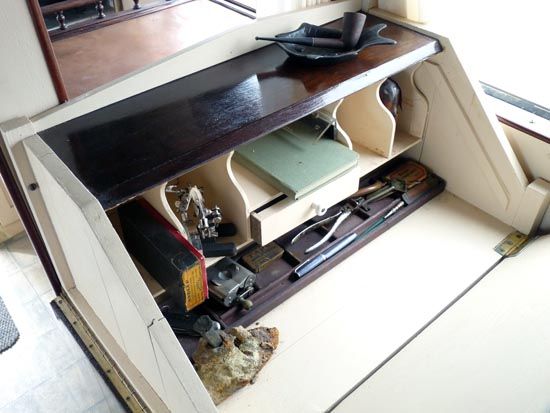
The inside of the trailer has been restored, but was full of the original tackle items awaiting the new owner to put in what they desired. Here are a few internal shots showing how cool (and how customized) this trailer was.

The walls are full of tackle displays for prospective buyers, including the neat H-I bobber and L&S baits display.

J.M. Keeley had a bed put in so he could sleep while on the road.

The trailer had a kitchen, dining room, and even a fly tying bench and table.

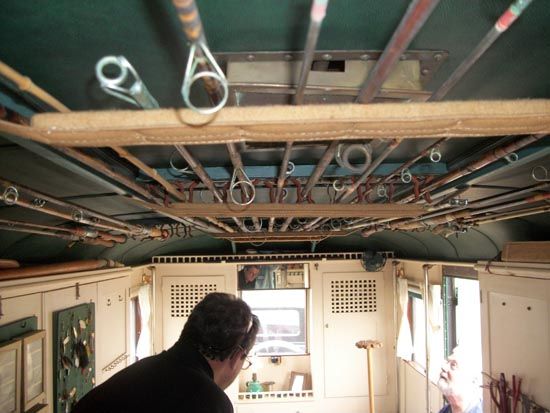
Even the ceiling was converted to hold fishing rods.

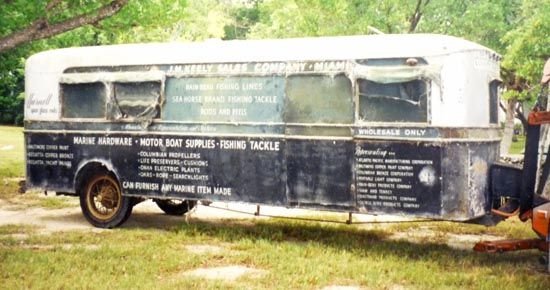
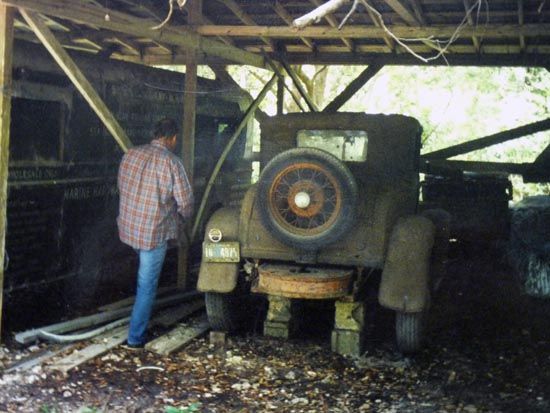
The restoration of this car and trailer was a truly daunting project. Below are a couple of "before" photos. The combination was found in the Florida Keys, and looked like this when it was discovered:


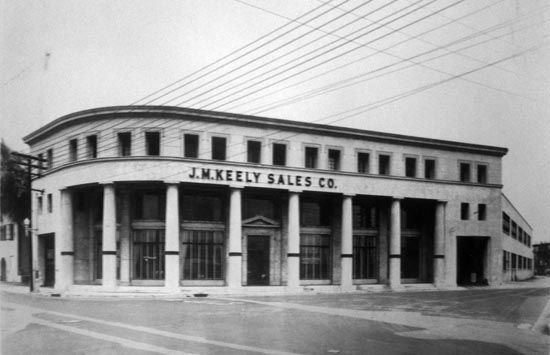
J.M. Keeley himself was a prominent tackle and marine products representative based out of 2380 NW 23rd Street in Miami, Florida.

The Keeley building was used as a showcase for their product line.

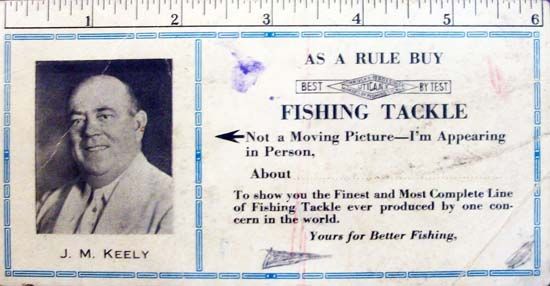
Keeley himself promoted his company through such things as this Horrocks-Ibbotson ink blotter and ruler.

It was an incredible experience seeing this in all its glory, and my thanks go out to Donnie and Auctions America for letting us get a look at it.

Our final view of this incredible combination.

Tune in tomorrow where we'll post a couple of videos you'll definitely want to see.

Check out the auction photos for the 1931 J.M. Keeley Car and Tackle Trailer yourself!

-- Dr. Todd

Wednesday, April 18, 2012

The Fishing Themed Magazine Cover, Part II

I got such a nice response to last week's article on fishing-themed magazine covers, I decided to put up another dozen of my favorites. It includes my all-time favorite fishing magazine cover (saved for last, naturally).


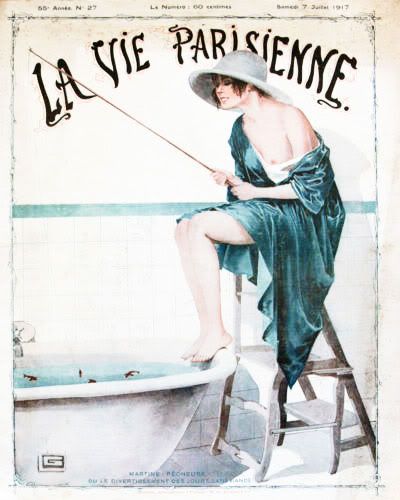
1917 Parisian magazine with risque angling cover.


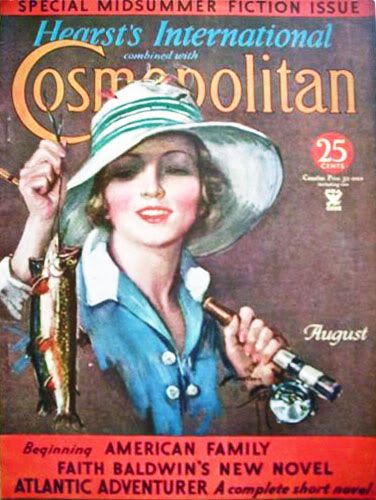
Lovely 1910s Cosmopolitan magazine cover.


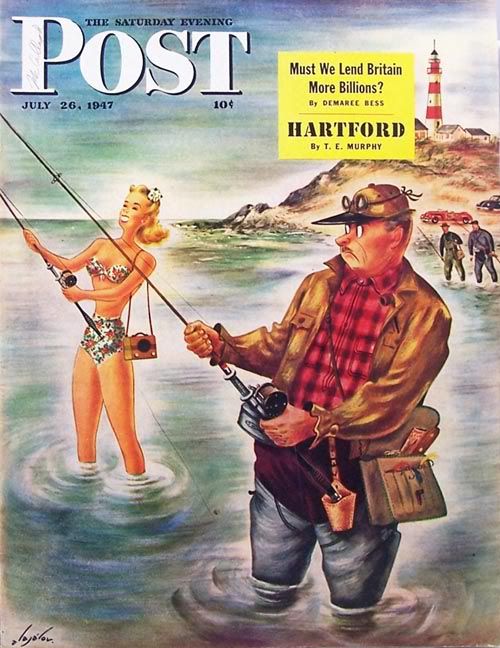
A Saturday Evening Post fishing cover.


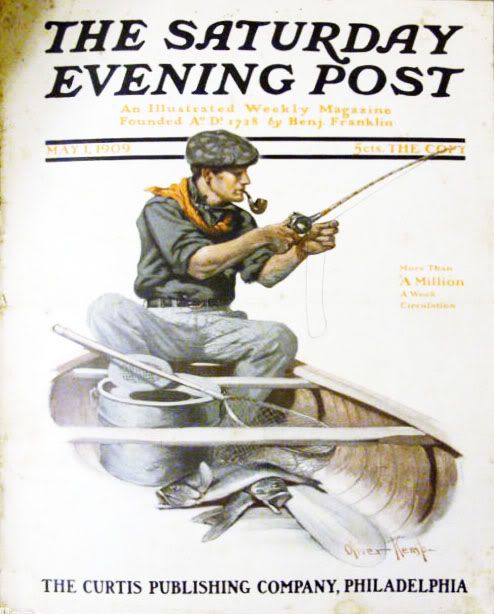
Another Saturday Evening Post fishing cover.


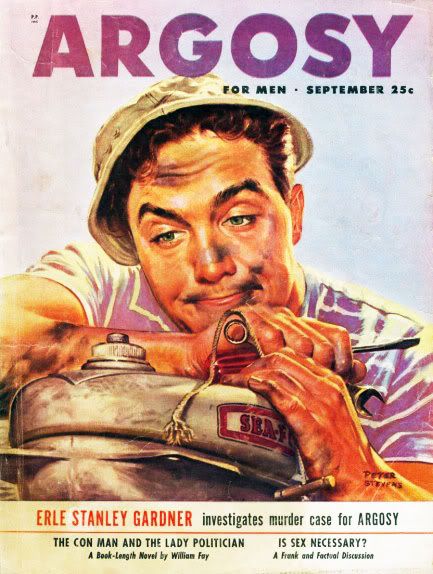
Argosy was a popular magazine that often featured fishing articles and covers.


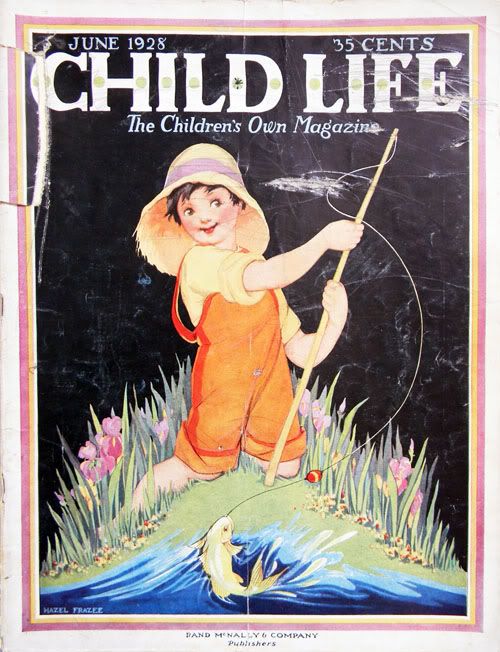
Child Life gives us a nifty 1920s angling cover.


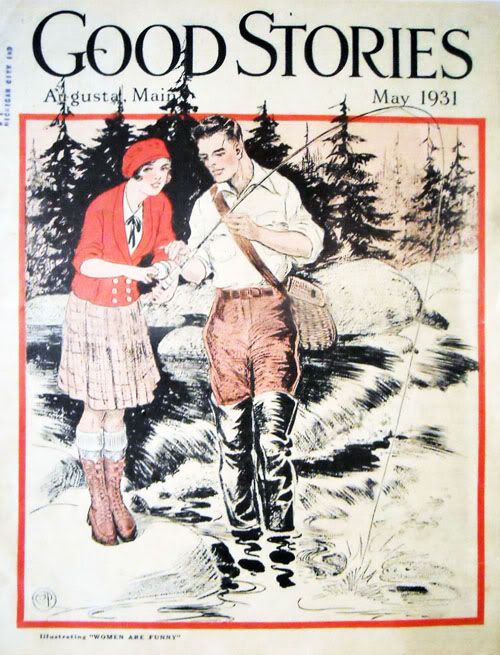
Even obscure magazines, like Bangor's Good Stories, could have wonderful angling covers.


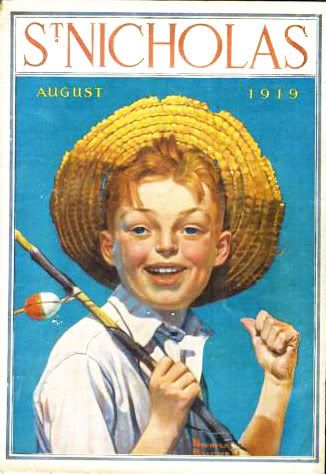
St. Nicholas was an old and established magazine.


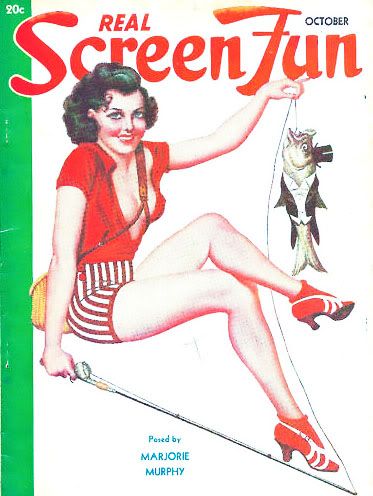
This 1950s Screen Fun cover came from a pin-up or girly magazine.


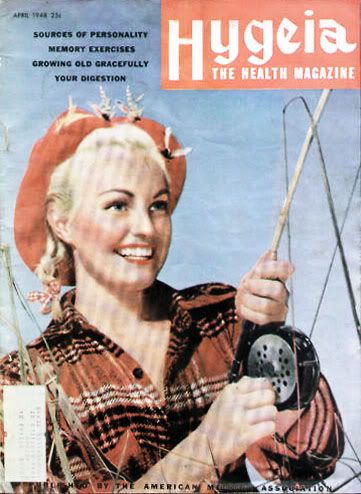
Hygeia was a 1950s physical fitness and health magazine.


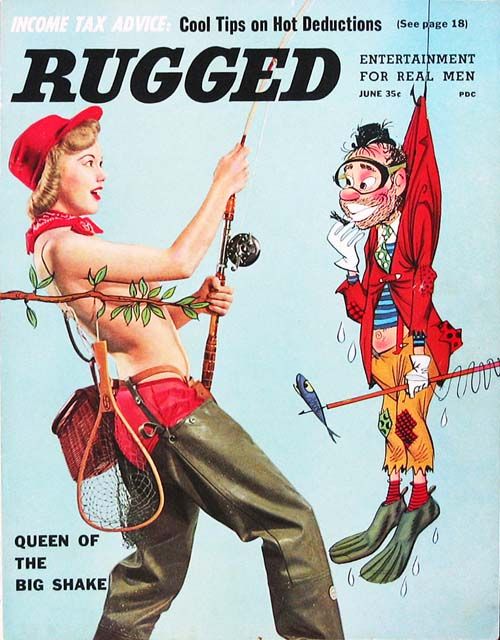
Rugged was an obscure 1960s men's magazine.


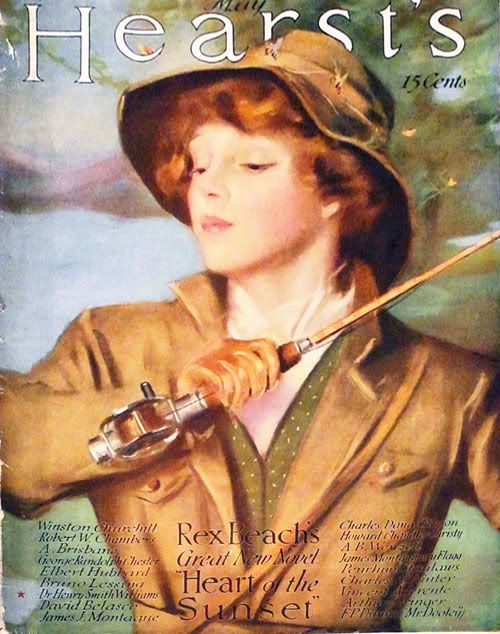
This Hearst magazine cover is my all-time favorite angling cover.


-- Dr. Todd