Thursday, May 22, 2008

Texas Fishing Lure History Update #1

My little two part article on the fishing tackle companies of Corpus Christi, Texas was very well received, so I thought I'd occasionally add an update on new information when I find it. Just yesterday, I received a stack of vintage magazines in the mail, and to my surprise found a copy that contained not one but three vintage Nichols Bait Co. ads. As I'd searched fruitlessly for pre-1951 Nichols ads prior to this, it was a welcome find. While I'm sure these ads are no revelation to the legion of Lone Star collectors, I thought I'd share them with the rest of the fishing world in an effort to better inform them of the many gems that this great state has produced. These ads all ran in the October 1947 edition of Hunting & Fishing magazine.


This first one is for the Nichols Shrimp, and I think its interesting because it states that "it has recently been equipped with a metal lip." I had wondered when that happened and it appears that 1946-1947 is the likely date for the introduction of the metal lip variant.


The Nichols Flirt is one of the most overlooked of the Texas baits. What a wonderful bait, in essence a Texas take on the River Runt, Millsite Wig Wag, and Paw Paw 9100 Series lures. Notice also the Ab Saint step lip, which revolutionized the River Runt Spook Go-Deeper. Imagine getting a color collection of these in all 16 available colors!


Here is the classic Texas coast bait--made in variations by Pico, Hump, Bayou Boogie, etc. This is the "Piggy Perch" and it also came in 16 colors. Trying to differentiate between the various makers of this style of bait can be maddening, so pay close attention screw and hook placement, as well as the style of eye. Colors can be deceiving as many Texas firms painted lures to match what was popular at any given time. Its one of the most maddening and delightful things about Texas lures--the incredible color variations.

Hope this helps a few collectors out there get a better idea on the Nichols Bait Company offerings in the immediate post-war era.

-- Dr. Todd

ADDENDUM By Colby Sorrels

I thank Colby Sorrels, one of the truly knowledgeable gentleman on all aspects of Texas tackle history (and most other tackle too, I might add) for sending me the following note, which he graciously allowed me to tack on the end of this update as an addendum.

You are correct. Nichols had very few ads. Furthering the information from the last post it is really interesting that Nichols chose to advertise their three plastic lures but production of these same lures seems to have been so low. The Flirt/Peppy bodies were sent to the AB Saint location in Oklahoma for the lip to be inserted into the lure. Saint would not send the lips to the Texas factory. This further slowed production which may be one of the reasons the production numbers were so low.

There is one early Nichols color catalog. It shows the different lures and colors available. One interesting thing is it shows the Nichols production plastic shrimp with legs yet to date none have been found with the legs. This style of legs were used later on the FENCO (Fred E. Nichols Company) Shrimp. This was Fred Nichols second attempt at a lure company.

One interesting story about Nichols, he was a bait fisherman. According to his son Harold his father never fished with lures!

Wednesday, May 21, 2008

Voices from the Past: George H. Christy


Here is an article from 1897 from an unusual angler--one who admits his mistakes. I found it entertaining and informative, just like all good angling literature.

SOME MISTAKES THAT I HAVE MADE


By George H. Christy


It would take a long while to tell them 
all. Two or three will suffice for the present.


It was just below Devil Rapids on the 
far-famed Nepigon. The water flowed 
swift and deep close under an overhanging 
bank, and we knew from previous experience 
that this was a resort where the 
big trout congregated. I had good clear 
standing room close to the brink, but the 
surrounding bushes, which at that spot 
somehow grew and flourished on stonier 
ground than any our Saviour could have 
found in all Gallilee, as well as the overhanging 
limbs of a tree which had got 
well rooted in the bank, rendered fly-casting 
impossible — that is, in any direction 
except backward. One back cast could be 
made with comparative ease.


I had repeatedly and carefully tossed in 
my gang of flies — on a six-foot leader — 
and payed out the line, letting the flies 
float down stream, and as often and carefully 
had reeled them back — all to no purpose, 
except wear on the reel bearings. 
The fish were not hungry, at least not for 
artificial flies. I had no live bait with me, 
nor any artificial lure except a phantom 
minnow. In despair — for we were nearly "
out of meat" — I reeled in, leaned my rod 
against the tree, removed the tail fly and 
substituted the phantom. Rather than 
run the risk of getting the "measly" thing 
fouled in the bushes by trying to cast it 
out by the rod, I dropped it into the water 
a foot or two down over the edge of the 
bank, and, still retaining hold of the leader, 
began paying it out slowly hand over 
hand. And that is just where I made a 
mistake.

An immense trout, apparently 
the mate of Hallock's seventeen-pouncler, came up like a flash of light, grabbed the phantom and as quickly darted off. For aught I know he is going yet. But at the very start, and before I had time even to think about letting go, he ran the leader through my hand, and, the upper fly-hook catching it as it went through, he drove the hook — a 2.0 Sproat — full depth, barb and all, into the forward fleshy part of the palm of my right hand. The torture was something exquisite. A lively, robust trout, going it wild at one end of a leader and a stout barbed fish hook well driven home into the palm of one's hand at the other end, make a combination which, for refinement of torture, is unexcelled since the halcyon days of the Spanish Inquisition; at least that was my opinion at the time. Fortunately, after the trout had given a few vigorous jerks, the leader broke. If it hadn't I am not prepared to make affidavit that I would have had a dry shirt on three seconds later. As it was, that fish and I parted company, —

"without the least regret, Except that we had ever met."

Moral: Don't pay out a gang of flies hand over hand. It is a bad practice.

I might add that I went to the Nepigon the next year loaded with phantom minnows. I furnished them to other members of the party. I thirsted for revenge, but didn't get it. Though we caught an abundance of trout with the fly, we could not persuade one to come within biting distance of a phantom minnow. Evidently that particular fish had been laying for me — and he got me, too. It was the finest piece of piscatorial strategy I ever knew a fish to indulge in.

I made another mistake one day when 
fishing in the Fox River, Wisconsin. I 
was alone, paddling about in one of those 
canoe-built, duck-shooting boats so common 
in the West, stopping occasionally 
where "surface indications" were favorable 
for small-mouth black bass, which, 
pound for pound, I consider the gamest 
fish that swims. At one place, while 
dropping down the river on a moderately 
swift current, I observed a "hole" which 
looked as if worth trying for a cast or two. 
Quickly picking up the anchor, I tossed it 
overboard, and then noticed for the first 
time that, through the carelessness of 
somebody, the anchor rope had been secured to the boat nearly amidship, instead 
of at the bow.

Before I could get my 
paddle again into the water the rope became 
taut, the boat swung around broadside 
to the current, and of course rolled 
over on its beam ends. I got out — rather 
quickly, in fact. What occurred thereafter 
is not material to the present purpose, 
except, perhaps, that on arriving at the 
club house one of my fellow members 
rather dryly remarked that a wet suit of clothes was not essential to membership in that club. Mentally cursing him for his impudence, I went upstairs and put on a dry suit.

Moral: In a swift current, the better plan is to anchor by the bow. Having tried the other way, I am prepared to certify that it was a mistake.

Another mistake I recall, and, though it occurred when out duck-shooting, it may be of interest to those who, like myself, resort to shooting when angling is out of season. I was concealed in a blind in the marshes bordering Puckaway Lake, Wisconsin. A flock of mallards came from "off the starboard quarter," but were not within range until well around and back on my right. I had not then trained myself to left-hand shooting, and so, taking the gun in my right hand as I would a pistol, I raised it well up, swung it around in the best aim I could get, and pulled the trigger. Haec fabula docet: This fable teaches that a man's jaw-bone is not a good "backstop" for a light shotgun when loaded with a mallard charge.

Experience is a dear school, but there is a certain class of people who can learn in no other.


-- Dr. Todd

Tuesday, May 20, 2008

The First Fairy Wand?

The First Fairy Wand?

I am a nut for the small fly rods, referred to as Fairy Wands by many. Lots of speculation floats around the rod community about who made the first short sticks--Fairy Wands around 7 to 7 1/2 feet long. Of course they became popular for the first time in the 1920s, so one can imagine my surprise when I saw this notice in the November 1892 American Angler for the following rod:

For sale: unique rod. The lightest and shortest fly rod made. It is a split bamboo and only seven feet in length, and weighs three ounces; designed for small stream work when open and brush fishing alternate. It will cast forty to fifty feet with ease, and, owing to length, has sufficient backbone to kill a three-pound trout. By chance I have two of these rods, and will sell one, for want of use, at $7.50; cost $15 at first hands. Can be seen at office of AMERICAN ANGLER. Address J. W. H., care of this magazine.

I believe the gentleman selling the rod was J.W. Hoxie of Rhode Island, who ran a large trout farm and advertised in the magazine regularly. But the question still remains: who was making 7 foot, three ounce split bamboo rods in 1892? Any speculation? By the way, it is the equivalent of a $350 rod in today's monetary terms. Regardless, it is neat to know that a few people saw the merits in the Fairy Wand long before they became popular.

-- Dr. Todd

Monday, May 19, 2008

News of the Week: 19 May 2008


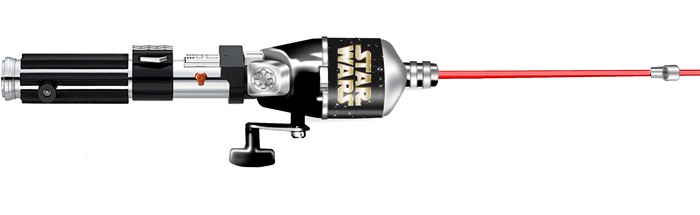
New Star Wars Fishing Tackle hopes to bring a whole new segment of the population to angling (and out of their parents' basements)...the dangers of ghost nets...how to avoid seasickness...chartreuse is in...the bowfishing revolution...an interview with the owner of Reef Runner Lures...Gary Loomis retires from G. Loomis rods...a treasure trove of Charlie Wheeler material is uncovered...it must be THE NEWS OF THE WEEK!

The Big Lead: No joke: Star Wars themed fishing tackle is about to hit the market, including the light sabre shaped fishing rod.


On the Star Wars theme, don't be a padawan; use the force to develop your own Jedi Bite Detection.


Are ghost nets responsible for destroying the Atlantic's prize fisheries?


Dave Richey gives us tips on how to avoid seasickness.

When Nature Calls, and it's not about what you think: there's more to fishing than catching fish.

The joys of collecting your own bait.

The Concord Monitor reports that charteuse is the new hot color. Next week: ice is cold to the touch.

The Fort Worth Journal Gazette tells us of the bowfishing revolution.


New England fishermen are unhappy with the ASA.

Some additions to the Fishing Lure Hall of Fame?


Young angler's get hooked on fishing.

The Cape May Herald survives a rare May Nor'easter, and finds the fishing is fine.


Kansas City is getting the new Pure Fishing warehouse.

Britain's Stonaway Gazette relates their Magnificent Fish of the Month.

Jennifer Koski writes from the perspective of an Opening Day Fishing Widow .

Canada launches program designed to eliminate hate crimes against ethnic groups while fishing called "Fishing Without Fear." Here's a crazy idea: arrest and prosecute the idiots committing the crimes in the first place.

The IGFA releases a spate of new fishing records.

Vote Yes Minnesota, a group aspiring to promote the need for cleaner waters, uses promotional bobbers to get their point across.

The Port Clinton News Herald profiles a couple hooked on fishing lures: the makers of Reef Runner Lures.


New fishing gadgets, including the Avila Trolling Motor Boat (18 inches) and a product review of the infamous Fishing Pen (guess what: it doesn't work).


Controversy is afoot over the PA state record Golden Rainbow Trout..

From the Obvious Files: Apparently, Ladies make good fisherwomen.


The Colony Courier-Star reports on a local who lands a 65 pound catfish.

Gary Loomis retires from G. Loomis, Inc.

From the No Kidding File: 54 pound King Salmon reportedly hit like "a ton of bricks."

Singapore soccer star Tengku Mushadad is also a fishing nut.

Missouri Musky tales has this angler's interest piqued.

Wisconsin angler ends up landing his own truck.

Death of California surf angler is a lesson for all fishermen to above all else be safe.


Finishing with a Flourish: Local estate yields treasure trove of information on Maine's enigmatic rod maker Charlie Wheeler.

-- Dr. Todd

Friday, May 16, 2008

Friday Funhouse

THE Friday Funhouse

Video of the Week


All right, these kids are punks, no doubt about it. But how many people have actually had this thought run through their head?


Things I Would Buy If I Could Afford Them


How about an awesome Meier & Frank Umpqua trade rod by Harnell.


This Henry Loftie gang spinner doesn't come to market very often.


This is a very interesting Moonlight Flashhead Wobbler.


Wm. Bingham Uncle Tom baits are hard to find, especially the boxes.


The classic Kent Frog is always very popular.


This Pflueger 3-hook underwater minnow in the box is a rare bird.


This Kent-Pardee minnow is going to be the belle of the ball. Watch this one closely...


This is a cool A&F Tom Cat 25 Old Pal spinning reel.


This JVH fly reel is proof that younger brother Julius could make a reel as good as his older vom Hofe sibling Ed.


CCBC 5-hook minnows like this do not show up every day.


Heddon River Runt Spooks in Goldfish Shore Minnow are very, very rare, but in No-Snag they are almost impossible to find.


The above bait would go nice with this Punkinseed.


The Greider Retreating Minnow is a very scarce bait, especially in the box.


A Paw Paw Bait Co. metal sign is going to bring a wheelbarrow full of cash to some lucky seller.


A K&K Animated Minnow is on the short list of all-time classic lures.


This Ed. vom Hofe 4/0 621 reel is one of the classic big water reels.


This Nichols Shrimp is referenced in my two-part article on Corpus Christi, Texas bait makers.


CCBC Gar Minnows are always very popular.


This image of the J.T. Buel factory was used on a variety of post cards.


That's all for this week. As always, be good to yourself, and others.

-- Dr. Todd

Thursday, May 15, 2008

Thursday Review: Fish Posters of the World

Today we review a web site that most of you have not heard of before, on a collectable that most people don't give a second thought: Fish Posters. A comprehensive web site has been created that profiles several hundred different fish posters. Fish Posters of the World is a simple yet highly informative resource containing information and scans of almost every fish poster you could ever want to see. Here is a small selection of my favorites:


I have seen this last poster at shows, it dates from 1948.


Visit the site and click around, but be warned: it is addictive. I particularly got lost in the section on international fish posters.

-- Dr. Todd

Wednesday, May 14, 2008

Dr. Todd's Mailbag: 14 May 2008


Dr. Todd's Mailbag

Here at Fishing for History we get all kinds of questions, some of them simple and others incredibly complex. We'll start publishing them once a month--the good, the bad, the asinine alike. Here's a great lead off question (and yes, all of these are real).

Dear sir,

We are heading out with the kids to do some river fishing this week and my daughter stumped me with the question, "why do they call it 'tackle'?" I can't find the answer, and ran across your site, do you know the origin of the term "tackle" as it refers to fishing gear? Any input would be fascinating to our fishing quest this week! Thank you.

Katy B.


Dear Katy,

A terrific question! And one that not many people have stopped to think about.

Fishing Tackle derives from Middle German word "takel" which referred to the rigging of the ship. It was first brought into English sometime in the middle ages (around 1200) and is still with us in the term "Block and Tackle" which is a reference to the mechanical workings on the rigging on a ship (the "block" in this term comes from "Bloc," the French term for a stump, related in this case to a ship's mast). "Tackle" soon came to encompass the entire set of gear that went with sailing, which included fishing gear (lines, hooks, nets, etc.). As the sport of fishing developed in the 15th and 16th centuries, the term was then brought into use to refer to "a fisherman's kit" or what we call today fishing tackle. Interestingly, "Fishing Tackle" and "Fishing Kit" were basically interchangeable terms up until the 1920s, when the later term disappeared from common use. We are left with fishing tackle in all its wonderful forms.

* * * * * * * * * *

Dr. Todd,

I heard there was a book on G.M. Skinner coming out. Do you know anything about it? What do you think is the rarest Skinner bait?

Jim F.


Dear Jim.

I had not heard that there was a Skinner book coming out imminently, but I did know that Steve Hays in New York had been working on one for many years. If it is ready then we will all be in celebration mode, as it would promise to be a huge contribution.

As for the rarest Skinner bait, many would probably answer the classic Turkey Foot and Turkey Wing. But there are at least two Skinner baits I know of that are far, far rarer than these two highly sought after metal baits.

The first is the hinged clevis blade patented by Skinner in 1891. This bait is ultra rare simply because it didn't work very well; I took one of mine out to the lake to see how it worked and it fouled on about every third cast. So it didn't sell well and wasn't offered very long, and I would surmise for every 30 Turkey Foot and Turkey Wing blades, one of these comes to market. It is marked "Pat. U.S. & Canada, 1891" on the blade. (I'll add a picture later when I get to my other computer).

But I don't think that is the rarest Skinner. The rarest Skinner I know of is the first known G.M. Skinner trade spinner--made well before the patent expired in 1891 (the same date old G.M. tried to corner the fluted spinner market a second time with the above patented blade). This is the only trade spinner I've found marked with the Skinner patent date and someone else's markings. Pictured in the 1882 American Angler and the 1883 Abbey & Imbrie catalog, this awesomely rare bait is marked "Abbey & Imbrie, New York" on the left side and the standard Skinner patent on the right. It's pictured in front of an 1882 ad below.


I know some might think the Skinner fish-shaped spoon is rarer, or even the early Gananonque marked Skinner, but I've seen dealer cards of the fish-shaped bait and a couple of dozen Ganananque blades, and only have seen TWO of these A&I Skinners ever (I bought them both--lucky me). They are really, really rare, and my vote for the rarest of all Skinner blades, and one of the rarest New York metals around.

* * * * * * * * * *

Dear Doc,

Do you consider vintage fishing tackle a hobby or an investment?

Marc L. in Minnesota


Neither. I consider it an invobby. Or a hobvestment. Seriously, why does it have to be one or the other? Of course, I fall more along the lines of a hobby, but then I didn't lay out $100,000 for the Haskell at Lang's either. I can afford to consider it a hobby because I can't afford baits that would make it an investment. The truth of the matter is that anything you put money into is an investment--some better than others. How you anticipate what will be done with that money is where you fall on this question; if you anticipate a high rate of return, you look at primarily as an investment. If you look at it and don't really worry when or if you'll get your money back, its a hobby.

* * * * * * * * * *

Prof. Larson,

Can you explain to me The Mayflower Compact? I can't find it in my notes.

Charles B.


Charles,

Well, the Mayflower Compact was the first democratic document in American history, signed...HEY! No class room questions please.

* * * * * * * * * *

Doc,

Would would win in a fight, Hiram Leonard or Jim Heddon?

Tony


Tony,

Wow. A serious inquiry like this requires a serious answer. Let's look at the Tale of the Tape. Hiram Leonard was a backwoods guide and hunter from Maine noted for his superhuman strength, epic endurance and for shooting Bull Moose from close range with a freaking pistol that he designed himself. Jim Heddon was a beekeeper. You make the call, but keep in mind Vegas has already closed the books on this one.

* * * * * * * * * *

By the way, you think I am making that last question up but I can assure you it is so surreal I couldn't even if I wanted to. All of these are questions I've fielded over the past six months (some have been edited down).

So...having exhausted the mailbag, please send your queries to me on any subject (preferably fishing related) and maybe you'll be featured in a future mailbag column. Email me at whitefishpress@yahoo.com.

-- Dr. Todd

Tuesday, May 13, 2008

Voices from the Past: Guy Herne


Don't know much about Guy Herne, only that he contributed occasionally to the outdoor journals of the late nineteenth century. This poem, from The American Angler (1892) is one of my favorites.

The Music of the Multiplying Reel

By Guy Herne


They tell us of the music of the spheres, 

How the morning stars together sang so well;

How Orpheus bravely overcame his fears 

And fiddled his fair lady out of hell; 

How David smote his harp so tunefully 

That he drove the black-blue devils out of Saul. 

How the Siren's song came sweetly o'er the sea 

And tempted all the seamen to their fall.

They tell of Wagner's wondrous harmonies, 

How with joy they strike their hearers deaf and dumb;

Of the singing of the songbirds in the trees, 

Of the spirit-stirring military drum; 

They all are very fine, I do not doubt, 

But to me they don't so potently appeal

As the dashing of the brook and the splashing of the trout, 

And the music of the multiplying reel.


-- Dr. Todd

Monday, May 12, 2008

News of the Week: 12 May 2008


Infamous world record bass is found dead...former president Bush lands record Tarpon...VHS disease is still spreading...apparently anglers have brand loyalty...two of my favorite bait shops get profiled...the ugliness that is the monkfish...Rapala is now making beer...Kansas state bass record broken by 13 year old boy....debates rage on circle hook and barbless hooks alike...the return of the two-handed fly rod...the centenary of The Tent Dwellers...Australian special ops soldier killed in Afghanistan buried with his fishing rod...a new John Gierach book...it must be THE NEWS OF THE WEEK!
The Big Lead: Potential world record bass Dottie is dead. Long live the Queen!


Swiss government bans catch-and-release.

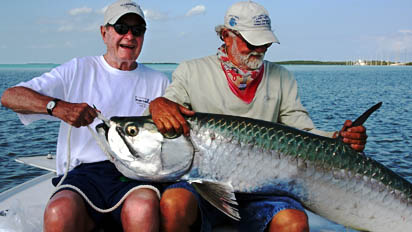
Former president and war hero George W. Bush lands record tarpon George W. Bush lands record tarpon.


Wisconsin officials are worried about the spread of VHS disease.


The Barre-Montpelier Times-Argus informs us it's time for crankbait season

The Washington Times reports on the Rodney Dangerfield of fish: the carp.


The American-Statesman tell us that anglers have brand loyalty that would make NASCAR fans blush.

The Fargo Forum reports on a run on shiners on Otter Tail Lake. Plus, the article is about Ken's Tackle Shop, one of my favorite bait shops around.


The Minneapolis Star-Tribune profiles another of my favorite bait shops, Vados Bait & Tackle Shop in Spring Lake Park (co-owned by my friend Eric Stokes).

This is Derbyshire reports that anglers find enjoyment in old relics...

Minnesota is looking for that elusive catch: new anglers.

Holy Mola Mola, batman!

Off Montauk, they hunt the ugly Monkfish.


The Duluth News-Tribune reports that the Minnesota Pollution Control Agency is strongly urging anglers to give up all lead tackle.

The Curry County Reporter reports on local fishing legend Johnny Briggs.

Rapala has gotten into the beer business by launching its "Lakemaid Beer" line. I'll bringing some of these for Chris Labuz to try at this year's nationals.


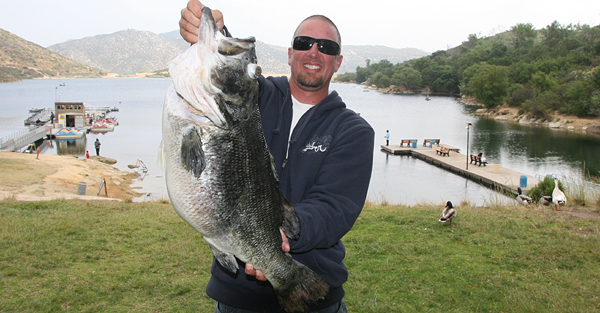
14 year old Kansas boy better angler than you, lands 11 pound 12.8 ounce bass to set Kansas state record.

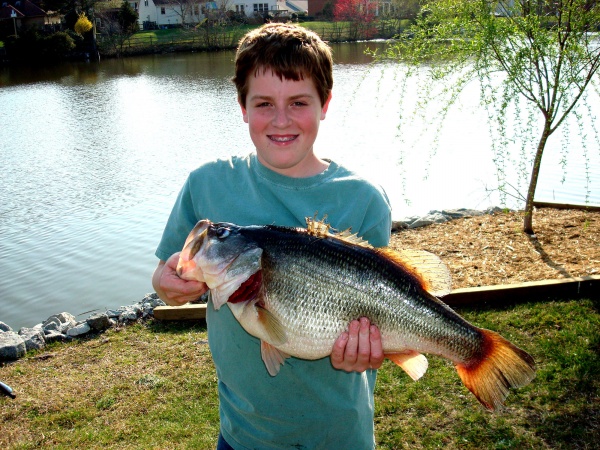
13 year old Virginia boy also better angler than you, catches and releases 13 pound bass on 6-pound test line.


On-line video game Voyage Century launches new deep-sea fishing rod for 500 credits. And I had to have my college students explain to me what the hell all this means.

Massive rainbow trout released by UK's Department of Agriculture, Fisheries & Forestry on the Isle of Man was caught ten days later, weighing in at 19 pounds, 15 ounces.


The Circle Hook debate still continues, despite evidence that they are superior in reducing fish mortality.


The barbed vs. barbless hook debate also rages, at least in Canada. Somewhere William Jamison is rolling his eyes.

The Canadian Press reports that two-handed fly rods are becoming more popular.


The Cape Breton Post celebrates the centenary of one of the neatest books on trout fishing, The Tent Dwellers by Albert Bigelow Paine. Best quote from the book is reprinted: "or a hundred years, if I live that long, this crumpled book and these worn-out flies will bring back the clear, wild water and the green shores of a Nova Scotia June, the remoter silences of the deeper forest, the bright camps by twisting pools and tumbling falls, the flash of the leaping trout, the feel of the curved rod and the music of the singing reel."

Illinois native bags 92 pound carp with bow-and-arrow.


Australian Special Ops soldier Jason Marks, killed by Taliban terrorists, is buried with his favorite fishing rod.

A new John Gierach book is always cause for celebration.


Finishing with a Flourish: On this Mother's Day Weekend, some angler have to choose: fish or mom?


-- Dr. Todd