Showing posts with label tournament casting. Show all posts

Wednesday, February 20, 2013

Harry English, Billiards, and Tournament Casting


Tournament casters are an interesting lot. For most of fishing history, they were among the best known of the American angling fraternity, but in the past thirty years the trend has been to lionize the professional bass fishermen, and to a lesser extent, professional anglers in other fields. It's gotten so bad that even people who profess to have knowledge of our sport are badly ignorant on the notion of tournament casting history and its participants.

That most major tackle makers were tournament casters is not a revelation. Bill Jamison, Fred Arbogast, Al Foss, Hiram Leonard, et al. competed in local, state, and national contests. Men like James Heddon and William Talbot actively supported the sport (Heddon even wrote a monthly column for several years on the subject). But the vast majority of competitors, especially the ones who didn't find success in the tackle field, have been forgotten. I'm going to start profiling a few of these gentlemen.

Today's biography is of a long-time Chicago tournament caster by the name of Harry English. English was a member of the Illinois Bait Casting Club, which numbered several dozen members, the most famous of which was William Stanley, a national champion caster and tackle maker of renown. One of their members, H.E. Rice, was the first treasurer of the National Association of Scientific Angling Clubs (NASAC). When the International Fly-Casting Tournament came to Chicago in 1908, English dutifully served on the Entertainment Committee (he was a good tournament caster but not of national reputation). Two years before he had traveled with his friend Charles Antoine, of Von Lengerke & Antoine fame, to Kalamazoo, Michigan to witness the famous casting tournament of 1906.

One of the reasons I like Harry English is that he was not a famous tackle maker. Instead, he was the enormously popular manager of the Reynolds Club at the University of Chicago -- a sort of predecessor to the Student Union idea of the 1930s and beyond. Born on Sep. 7, 1865 in Brooklyn, New York, after numerous odd jobs he gravitated towards club management. According to a 1922 edition of The University of Chicago magazine, on September 29th, 1904, he was appointed manager of the Reynolds Club, about ten months after it was opened. He had previously been in charge of the billiard room (more on that later), and became its first General Manager. English carefully stewarded the Reynolds Club (which required membership) from 300 to over 1,500 members in a short time.
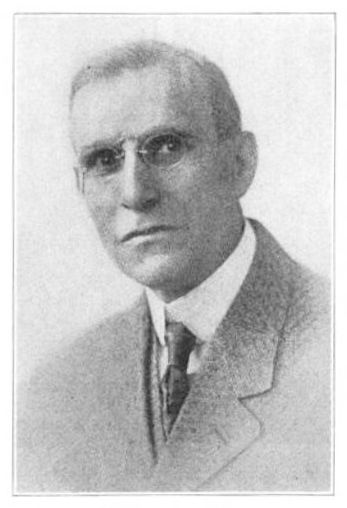


Harry English ca. 1922


But Harry English was an angler at heart. Even his beloved U of C acknowledged his true passion. "Harry English, of course, possesses a hobby -- fishing. If he could only collect, at one time, all the big ones that 'got away,' the English Fisheries, Incorporated, would be the world's largest firm--maybe. When he retires he expects to do considerable fishing on his Indiana farm."

One of the reasons Harry English is of interest to me is that my job at the University of Minnesota was student manager of the Coffman Memorial Union Recreation Center -- so, like Harry English, I ran the billiards room. One day I will write a book about my experiences there, as I spent an inordinate amount of time shooting pool and meeting interesting people, but one thing I well remember is the general manager of the Rec Center was a grizzled old veteran named Harvey Patzwald. Harvey was in his 70s when I started and a fascinating, if brusque, guy who I got along with splendidly. He reminds me very much of Harry English.

I became a keen student of billiards history as an undergraduate, and read as much about the history of the sport as I could. I learned early on that the famous University of Chicago physicist Albert Michelson -- the first American to win a Nobel Prize in physics in 1907 -- was a dedicated billiards player. As an aside, billiards differs in many ways from pool, as it is played on a larger table that has no pockets with three larger balls. The object is to shoot so that you hit both of the other balls in the same shot, and keep shooting until you miss. It's all about caroms and bank shots and angles. When I ran the Coffman pool room, which in the 1980s had three of the only remaining full-size billiards tables in Minneapolis-St. Paul, the game was popular with Vietnamese gang members who called it Three Ball and wagered huge sums of money on it. I played it often but was never as good at is I would have liked to have been, and not as good at it as I was at nine-ball and eight-ball (which at the time I thought I was better at than I actually was).

Michelson was a brilliant billiards player, just a shade under the quality of the truly great players like Willie Hoppe. He was an intimate friend of Harry English and spent many, many hours shooting billiards in the Reynold's Club pool room. English was, in fact, the confidant of many illustrious figures in University history. The University of Chicago Magazine profile noted, "[University] President Harper…would frequently visit him, and sitting up late at nights in the billiard room, ask all kinds of questions about the Club's affairs and progress."


Michelson poses for a photo in the billiards room of the Reynolds Club.


I don't know if the subject matter of fishing came up, but I do know that Harry English tangentially influenced a very, very important piece of American fly fishing history. In 1928, a young Montana fly fisher came to the University of Chicago as a graduate assistant in English by the name of Norman Maclean. Of course, many decades later Maclean would become famous for his love letter to his Montana youth, A River Runs Through It, but at the time he was a young instructor with lots of time on his hands. He soon made his way to Harry English's Reynolds Club billiards room, which left a lasting impression on him. It is dead certain that he met Harry English (who was famous for greeting the students who frequented his club), and it would have been shocking if there shared love of fly fishing did not come up on a regular basis.

For his part, Maclean would later recount his Reynolds Club billiards days and how he had come to know Dr. Michelson in a wonderful piece written in his inimitable style.

He describes watching the 75 year old Michelson (Harry English would have been 63 when Maclean arrived) shoot billiards, although only "once did he hand me his cue and ask me to shoot, so once must have satisfied him that, although I wasn't good enough to play with him, he could turn to me now and then and lift an eyebrow."

Maclean recalled one time watching Michelson miss a shot, put down his cue, and calculate in his mind the string of successful shots that led up to it until he found where things had started to go wrong. Once he did, Maclean wrote,

He was through for the day. He locked his cue into the rack on the wall, and said, either to me or himself or the wall, “Billiards is a good game.”

He made sure that his tie was in the center of his stiff collar before he added, “But billiards is not as good a game as painting.”

He rolled down his sleeves and put on his coat. Elegant as he was, he was a workman and took off his coat and rolled up his sleeves when he played billiards. As he stood on the first step between the billiard room and the card room, he added, “But painting is not as good a game as music.”

On the next and top step, he concluded, “But then music is not as good a game as physics.”


A beautiful thought, but I'm sure if Harry English had overheard, he would have added, "But then physics is not as good a game as fishing."

The beauty of it is that Norman Maclean lived long enough to realize the wisdom in that final thought. And to that, he owes some small bit of credit to Harry English, the manager of the Reynolds Club and a tournament caster worth remember.

-- Dr. Todd

Saturday, September 1, 2007

Chicago Casting Tournament, Sept. 07-08

The response to my coverage of tournament casting has been terrific. I appreciate the nice words and comments, and it would definitely appear that there are far more "closet" collectors of tournament casting gear than I would have believed, as well as more than a few people interested in reading about it.

For this reason, I'd like to alert you to the upcoming Chicago Angling and Casting Club 2007 All American Casting Tournament held in Lincoln Park in downtown Chicago and Chesterton, Indiana on Saturday, September 07 and Sunday, September 08. It is a great opportunity to witness a terrific event, and if anyone is near Chicago you will not be disappointed.

Full details on the event cane be found by clicking here.

If anyone goes and wants to write a report (with some photos), send them this way!

-- Dr. Todd

Thursday, August 23, 2007

The 1938 NASAC National Tournament, by Warren Platt

We are fortunate today to get a submission from Warren Platt, who writes about the 1938 NASAC National Tournament. Tons of cool information in this little piece.

The 1938 NASAC National Tournament

by Warren Platt

I've really enjoyed your review of the ACA tournament.  I was lucky enough to acquire a photo of the 1938 National Tournament held in Columbus, Ohio. It's a large photo (the frame is 50 inches wide) and behind glass, and I'm sure all the great casters are in the photo somewhere. The only problem is none are identified.  I think I know some of them and will try to point out a few.  Hope you enjoy.


There's approximately 300 in this photo


Henry Fujita, Sr. was a champion caster and father of Dick Fujita


Tony Accetta was a very popular tournament caster who founded his own tackle company (after being a rep for Shakespeare for a number of years)


Tony Accetta is shown here hawking Shakespeare tackle just three months before the 1938 NASAC National Tournament


Jack Sparks


Campers and Autos shows this was a true festival event


Photo Caption from right side of photo

Two more photos will round off this little display. The first is an original photo of Edwin Sutter during a distance casting event.  On the back it reads:  "Ed "Break" Sutter at Columbus 8/19/38 before the blow-off."  Sounds like someone had a good sense of humor.


Sutter breaking off a casting weight

The second photo is of a commemorative casting weight from the tournament.  The tip of the line tie is broken off.  These are hard to find items.


A very rare marked 1938 National Tournament Casting Weight

As an aside, tournament casting was very popular up until the late 1950s.  Kansas City hosted the 1965 tournament, but by 1971 all of the clubs here had folded.  I've collected a wonderful amount of K C tournament history, and hope to someday find a good place to have it displayed for the public.  The Kansas City Bait & Fly Casting Club was one of the charter club members.


A terrific article and some super rare photos. Many thanks go out to Warren for taking the time to send this my way.

-- Dr. Todd

Wednesday, August 22, 2007

Dr. Todd Attends a Casting Tournament, Part II

This is the second of my two-part report on the recent 99th American Casting Association National Tournament.

Dr. Todd Attends a Casting Tournament, Part II


Fujita, Seroczynski, and a number of others were competing in the senior division, but there were many talented younger casters too. Perhaps the greatest of them today is Steve Rajeff. Rajeff is a senior rod designer for G. Loomis, and in fact was utilizing a hand-made 13-foot custom rod he built from a single Loomis blank, which he used with a Shimano Calais 100 with the level-wind removed. He holds a number of American casting records and finished as Grand All-Around Champion at this year’s nationals.


2007 U.S. Grand All Around Champion Steve Rajeff

Another champion caster was Pam Peters, who began casting competitively about fifteen years ago, and is currently the American women’s record holder in eight categories as well as a member of the U.S. National Casting team. Pam is the daughter of ORCA member Bill Peters, who holds the vintage casting tournament at the ORCA nationals. Pam used a stock surf casting rod and ABU Garcia Pro Max 1600 in this competition, both less than a year old.

Pam Peters waiting in the 5/8 Oz. Spinning Spool distance category


Peters showing off textbook form

Being particularly interested in the history of fishing, I was fascinated by the vintage gear still being used by tournament casters today. Rajeff, for example, explained that some casters still like the Langley Lurecast because it is direct-drive, light weight, and has a flanged spool. He explained that casters would remove the level wind, narrow the main drive gear to half its original size, and drill six to eight holes to lighten the weight even further, all in an effort to make the spool turn faster. George McCabe further explained that the tear drop shaped Shakespeare 1973D direct drive model was a very popular reel among tournament casters in its time and could still be found being used even today. Early ABU reels are still widely utilized, and one particular ABU Record model had the level wind removed and a custom magnesium spool installed. I was told that some competitors still use Meek and Talbot reels for accuracy events.


Bill Clement's ABU Tournament Casting Reel


1950s ABU Record Reel with Titanium Spool

Two of the most popular vintage spinning reels used by spinning spool casters are the Mitchell 308 and 408 models. Rajeff explained that their enduring popularity comes from their shorter stem length and narrower spools, which makes feathering the spool with the index finger much easier than with new spinning reels. But not everyone believed in using vintage reels; no less an authority that Richard Fujita declared that “these modern reels are just amazing” and far superior to vintage tackle, even for accuracy events.


The New: "Cajun" Bill Clement's Pflueger 8-Ball Bearing Casting Reel

All of this lead me to discover a completely unexpected controversy in the ACA—whether to allow the use of vintage tackle in ACA tournaments. Some ACA members believe that the use of vintage equipment is a disincentive for tackle manufacturers to promote the sport of casting; remember, the connection between the tackle manufacturing sector and the ACA was once so close that a separate division was created by the ACA just for manufacturer’s representatives. Current ACA members such as John Field seek to reestablish this connection by creating opportunities for manufacturers to use the sport of casting as a proving ground for new equipment and see vintage tackle as a barrier to this goal. Opponents to this view point out that casters like to use equipment that is familiar and functional, and sometimes this equipment is 20, 30 or even 50 years old. Besides, what better advertisement for Shakespeare than to see someone competing at the highest level with a 30 year old Model 1973D? From the opinions on the subject I surveyed, there was little unanimity on the subject.


The Old: Cajun's Classic Shakespeare 1973D Tournament Casting Reel

There were many memorable moments such as interviewing Dick Fujita, but one that stands out in my mind was that I got to be a Pegger for “Cajun” Bill Clements, a powerful 65-year old caster from California competing in the 5/8 oz. two handed revolving spool competition. Cajun was using a vintage ABU 2500C with the level wind removed and a competition Japan spool installed. A Pegger’s job is to watch the entry make his cast and then walk along side them as they wind up the line, making sure to try and point out the direction they should be going so that they do not pick up the slack and inadvertently move the casting weight. When the weight is found, the Pegger sticks a numbered Peg into the ground at the far end, which later is surveyed with a laser distance measuring tool. Cajun let loose an epic cast, and we seemed to walk and talk for about five minutes before finding his weight. Later it was discovered the cast went 344 feet, breaking the existing record by over 20 feet (and only 19 feet short of the Open Men’s Division record held by Rajeff).


"Cajun" Bill Clement's 344-foot record cast

Can you imagine pitching a Jitterbug that far on a moonless night?

Overall, the experience was unforgettable. In addition to the people mentioned, I would like to thank Andy and Beth Statt, Dale Lanser, Gord Deval, and Bill Burke, among others, for their hospitality. I wish I could make the 100th Anniversary Tournament in San Francisco, California!

A more detailed report will appear in the September edition of The Reel News.

-- Dr. Todd

PS For those interested in learning more about the sport of casting, or who wish to join the ACA, Click Here.

Tuesday, August 21, 2007

Dr. Todd Attends a Casting Tournament, Part I

This is the first of my two-part report on the recent 99th American Casting Association National Tournament.

Dr. Todd Attends a Casting Tournament, Part I


Sixty-seven years ago, if you were lucky enough to be in attendance at the 1940 National Tournament sponsored by the National Association of Angling and Casting Clubs (NAACC), you would have been lucky enough to meet some of the true legendary figures in American fishing; men such as Al Foss, Fred Arbogast, Tony Acetta, Sid Liotta and others were still active casters as well as titanic figures in the sport of fishing. At the time, national casters all maintained sponsorships from the leading fishing tackle manufacturers, ranging from Heddon to Shakespeare to Creek Chub. Indeed, many prominent tackle companies were founded by tournament casters (even E.A. Pflueger was a part-time competitor).


Fred Arbogast at the 1918 NASAC Nationals

I was reminded of this fact as I attended the 99th American Casting Association National Tournament held July 30 to August 04. This fine event was hosted by the Cincinnati Casting Club at the Lebanon Sports Complex about twenty miles north of Cincinnati. The ACA is the successor to the NAACC (and its predecessor the NASAC) and the standard bearer of the sport of casting in America, and the tournament was an absolute delight to witness.

The sport of casting is integrally tied to the history of fishing in America. Some of the founders of the sport include such legendary figures as Reuben Wood, Seth Green, Fred Peet, and Eddie Mills, and reel makers who constructed special tournament casting reels included Talbot, Meek, and Welch, all of whom worked on numerous tournament specials that deeply influenced their craft. Many tackle manufacturers used tournament casters to test out new equipment, and thus the sport of casting left an indelible print on angling in America as a whole. I have been working on writing some of this history when I am not busy writing about fish hooks and blogging.


Fred Peet with Talbot Reel ca. 1900

What was conspicuous by its absence at the 99th ACA Nationals was much of a presence by modern tackle manufacturers. This is a shame, as there are probably few people more attuned to what makes a good rod and reel than the current crop of casters who plied their craft under the balmy Cincinnati sun. One can hope that this link—so integral in the history of sportfishing in America—can be reconnected in the near future, as both manufacturers and the sport of fishing stand to benefit greatly from a renewed relationship.


A Shimano GT7000 Spinning Reel—evidence of how manufacturers could use tournament casters as testers for new equipment.

There were numerous events and categories held at the nationals, including distance and accuracy in fly, spinning spool, and revolving spool competitions for youth, men, women and seniors. The morning I visited was the 3/8 and 5/8 ounce one and two-handed spinning and two-handed revolving spool (baitcasting) distance casting competition.


Andy Statt is a mirror image of himself in the before and after shots of his 3/8 oz. Spinning Spool attempt

For those who have never seen a casting event before, it is almost surreal to watch a casting weight travel over one hundred yards in a single cast. You read that correctly. These weights travel well over three hundred feet, or the length of a football field. The casters put so much torque on their reels and rods that they have to use a shock trace and are constantly retying their traces and weights after every second or third cast. This still does not stop them from occasionally breaking off a weight, which as one caster noted wryly, would "probably go right through you" were you unlucky enough to get hit by one. Not surprisingly, I observed the competition from behind the casters.

With my guide, the genial ORCA member George McCabe, I made my way down the rows of competitors, stopping to introduce myself and chat about the events and particularly the tackle used.


George McCabe was the ACA's designated photographer

The highlight of my day was meeting the legendary Richard Fujita of Cleveland, who was competing (and doing extremely well I might add) in his 69th national tournament at the youthful age of 81. Fujita’s background is fascinating; the son of champion caster Henry Fujita, he began casting at the age of 10 originally as a way to get out fishing more often, but soon discovered that he enjoyed casting more than catching fish. He entered his first national casting tournament in 1939 at the age of 13, and in 1944 won his first national championship for accuracy. His gear at the time was a bamboo rod and Bluegrass Kentucky NLW casting reel, and his competition included such titanic figures as Arbogast, Liotta, Foss, and Accetta. Some of Fujita’s records still stand today.


Dick Fujita, Legendary Caster


Fujita shows off championship form at age 81

Another legendary figure was John Seroczynski of the Chicago Casting Club—the same CCC that founded The Izaac Walton League. This was his 50th national, and he regaled me with tales of growing up in Indiana and being tutored in his youth by caster Wally Krause, who used to regularly take him over to see the legendary reel maker Jack Welch. Best remembered for his work at Heddon, Welch was a big supporter of tournament casting and made many custom reels for prominent casters. Seroczynski fondly recalled visiting Welch’s basement workshop, where Welch would turn out all his reel parts on a tiny jeweler’s lathe.


Jack Welch Tournament hand-made reel, from Tom Greene’s antiquereels.com


TOMORROW: A World Record Cast!

-- Dr. Todd

The Home Page of the American Casting Association (ACA) can be Found Here.