Showing posts with label Espen Olav Sjaastad. Show all posts

Thursday, October 13, 2011

Chiswick Blues by Espen Olav Sjaastad

Today we have a wonderful treat -- a detailed look at a European tackle auction.

Chiswick Blues

by Espen Olav Sjaastad

Angling Auctions’ October sale of fishing tackle and related items at the Chiswick Town Hall is worth a visit under any circumstance. Even better this time with London in the midst of a heat wave, temperatures reaching 29 Centigrade and shorts and T-shirts adequate even into the small hours. Summer in the city? In Northern Europe we don’t complain, especially when it’s supposed to be Fall.
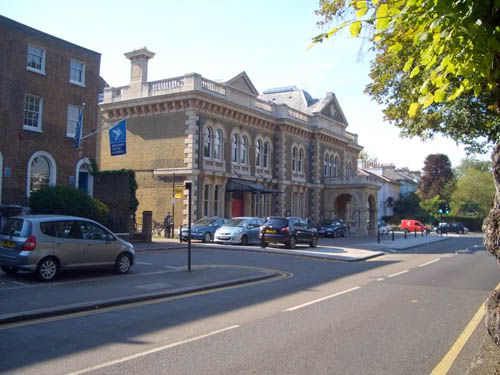

Friday morning, I’m sitting with coffee and auction catalog at a crowded outdoor café on Chiswick High Road when a lady plops down into the seat across from me. Her dog – a riesenschnauzer? – is a little worn around the edges but in otherwise fair condition. The lady, fortyish and blond in a very English way, probably rates an excellent plus but her enormous shades make the assessment tricky. She’s a real estate agent, and the people who move to Chiswick, she says, are mainly people downgrading from posh areas of London such as Chelsea or Mayfair. People who need to free up some funds or who are looking for more space. The real estate prices she quotes – £450,000 to £650.000 for a two-room, a million and a quarter or more for a small house – make downgrading seem like a very relative concept. “All my clients are at least a hundred years old,” she says. I suppose it represents an odd form of gentrification and explains why Chiswick most of the time seems like such a peaceful little area of London.

The viewing starts early Friday afternoon. This is the best opportunity to spend some quality time with the tackle. Just a handful of people around and hundreds of reels to play with. I’ve brought my camera, and in an attempt to get better shots, I start moving some of the rarest examples around the room. This generates a brief discussion among the staff about the trustworthiness of Scandinavians, but I manage to take my pictures without slipping any reels into my pockets.

After the viewing, I walk west for about 15 minutes until I reach Kew Bridge, then turn south along the Thames to the inviting string of pubs on Strand on the Green. With the sun blasting down, the outdoor seating is woefully inadequate, so people are leaning against walls and balustrades with pint glasses in hand.

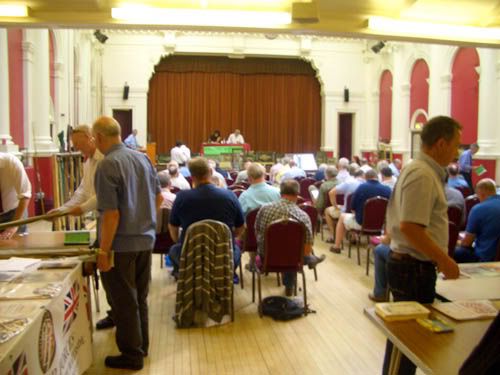
The day of the auction is Saturday, October 1, and it’s the hottest October day ever recorded in England. So if the crowd of bidders is sweating inside the Grand Hall, it’s not just because of the neurosis that comes with trying to spend absurd amounts of money on stuff designed to kill fish.

That crowd is the smallest I’ve seen at Angling Auctions, so maybe some of the normal participants have chosen the seaside instead. The impending bankruptcy of a handful of European Union countries, and apprehension about the long-term implications, may also have kept a few people away, including some dealers. In consequence, you can pick up some nice deals on the lower-end stuff. Some of the prices paid for rods, in particular, turn out to be laughable. “Come on, ladies and gentlemen, I can’t give it away,” pleads auctioneer Neil Freeman. Unfortunately, I normally buy rods only to fish, so I don’t travel to Chiswick with a suitable tube for old bamboo. After seeing what transpired this time, however, that might change.
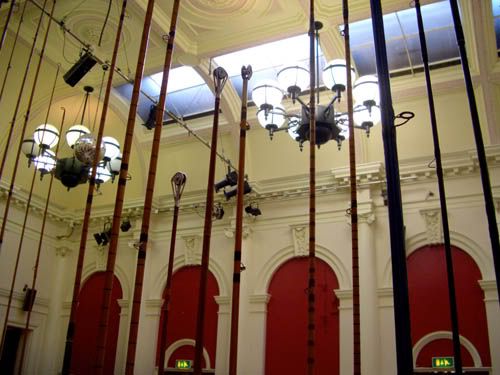

Never mind. Angling Auctions is mainly about reels. The stuff in the low to middle ranges generally goes below or within estimate this time. But heat waves, imploding Mediterranean economies, and small crowds won’t worry Neil Freeman too much as long as he can offer some exceptional reels and as long as the big hitters show up, in person or by phone. Here’s a non-random selection of lot numbers and hammer prices in pounds sterling (excluding 15 percent premium), with low and high estimates in brackets:

30 EVH Restigouche 6/0 1300 (1000-1500)
50 Hardy Bougle 3.75” 2800 (1500-2000)
100 Hardy 1896 Houghton brass Perfect 2600 (1800-2600)
150 Allcock Aerial Roller Back 4” 2500 (2000-3000)
180 EVH Restigouche 4/0 1800 (1000-1500)

This 4/0 EVH is a peach, with drag adjuster on the headplate. All the three Restigouches on offer (see also one below) look to me to have filed or altered feet, so I was hoping at least one of them might go cheapish. Nothing doing.
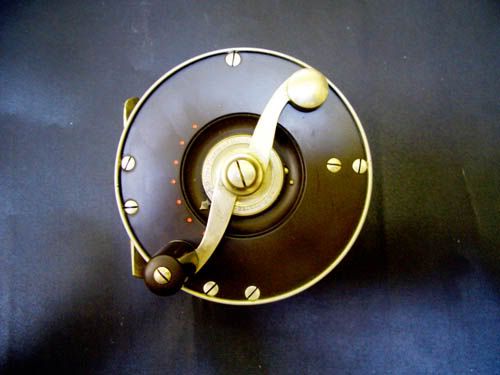

200 Allcock Aerial Roller Back 5” 3400 (3000-4000)
250 Ustonson & Peters 3” folding handle 3800 (2500-3500)
270 Hardy Silex Rex multiplier 2600 (1600-2400)

I think Phil White once described the Silex Rex as “Supreme-looking,” and in many respects the Rex is obviously a copy. It looks OK, and has the typical Hardy metals, but it’s not a reel I would want to fish. Only 94 were produced, which is why it now commands such ridiculously high prices.

275 Otto Zwarg 4/0 salmon 1500 (1200-1600)
280 Hardy Bougle 3” ca 1980 1800 (1600-2400)
281 A. Evatt folding handle ca 1845 1650 (1300-1800)
298 Hardy raised pillar 4” brass winch 3600 (2500-3500)
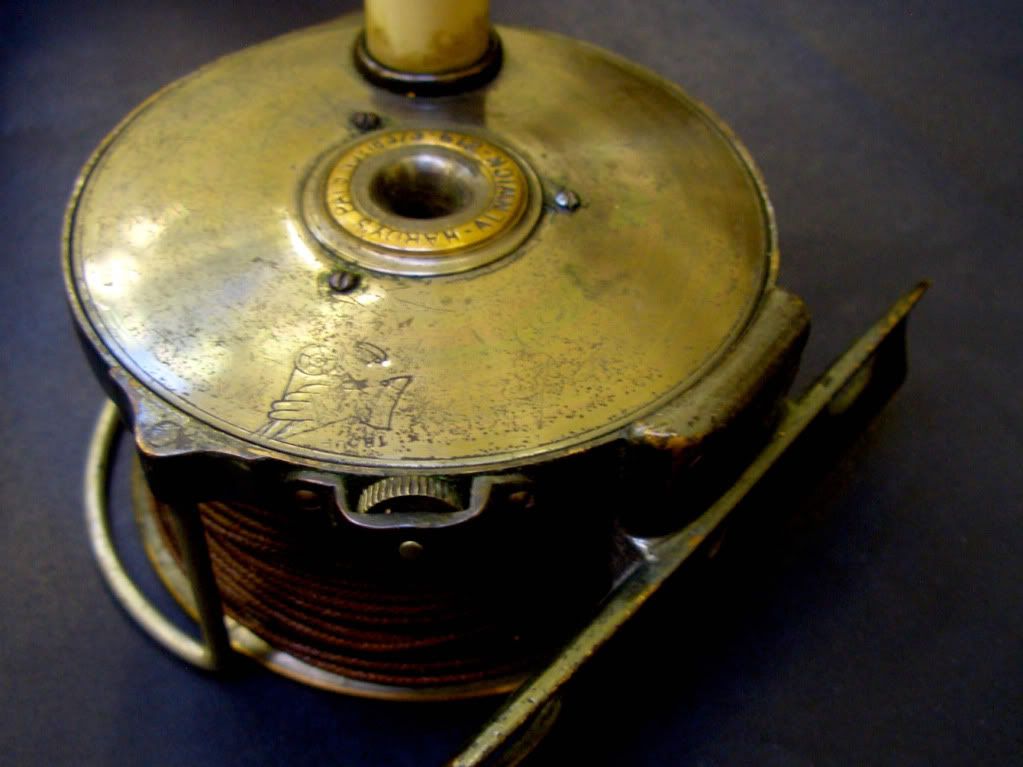
300 Hardy brass Perfect 3” ca 1891 13000 (5000-8000)

I don’t remember if lot 300 is when Freeman shouts, “Keep going, keep going, you’re into the swing of things now,” but that’s what the bidders do. Is £13,000 a reasonable price? Who can say?

As far as I am concerned, lots 301 to 399 mean it’s time for lunch. Cased fish are, in my opinion, best admired from a considerable distance. And while I love angling literature, I buy books to read much the same way that I buy rods to fish. So while Freeman gets rid of the dead fish and his friend David runs through the books, I walk across the green and slide a couple of tapas and a beer down my throat. I’m back in time for:

400 Hardy Pomeroy Tarpon Reel 4800 (2500-3500)

It may not look like much in the pictures, but the quality, the weight, its sheer brassness… this is the type of reel that seems to vindicate an addiction to old reels. It’s nice to think that Hardy Brothers, in the old days, went to such lengths to indulge the whims and obsessions of people like Captain Pomeroy.

401 Hardy 3.5” Fly and Spinning 2200 (1000-1500)
402 Hardy 3.75” Ferris salmon 2700 (700-1000)
480 Hardy Super Silex Multiplier small 5000 (2000-3000)
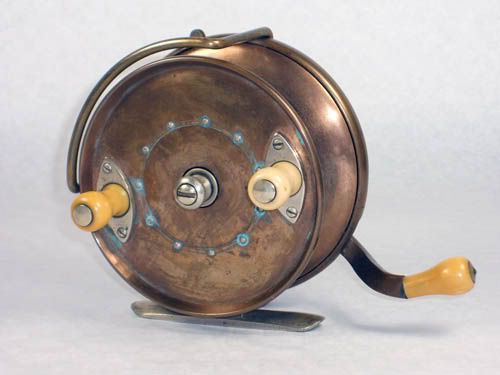

Lot 480, in excellent condition, is one of only nine Super Silex multipliers made in the 2&5/8” size. The Hardy platewind multipliers – the Silex, the Super Silex, the St. George, and the Tournament Casting Reel – are wonderfully eccentric reels. As far as I know, nobody else made reels of this type. Like Dr. Todd says, things I would buy if only I could afford them. This one climbed above my pay grade in no time at all.

500 EVH Restigouche 6/0 1400 (900-1300)
510 William Blacker 2&1/8” ca 1850 2700 (1500-2500)
511 Hardy Perfect 2.5” wide drum 1900 (900-1300)
547 Hardy Ocean 6” wood 1400 (700-1000)
550 Hardy Birmingham 2.5” nickel s. 6000 (1500-2500)
580 Hardy XLM Jock Scott 1400 (1300-1800)

The XLM is the tournament version of the Jock Scott, in clear aluminum finish. It’s pretty rare, and comes in a few different versions, but quite a number of these have been sold over last ten years or so. This one has a cylindrical brass brake adjuster on the tailplate and the brass cut-out collar on the headplate, but £1400 still seems like an overbid.

611 Hardy 3.5” Fly/Spinning 2600 (1000-1500)
620 ABU Ambassadeur 6000 black 1200 (400-600)
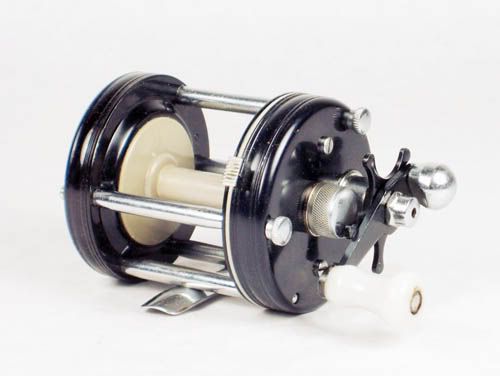

Last time the black 6000 came up for sale at Angling Auctions in 2008, the estimate was the same; but absentee bids meant the room bidding started at £1200, and it eventually sold for £1600 if memory serves. This time, the bidding started at £600. I made sure it reached £1200 before shaking my head, making Freeman a few extra quid. But the phone bidder who beat me still got a pretty good deal.

Towards the end of the auction, everybody gets a bit tired, and Freeman becomes a little bit quicker with the hammer. Lot 634 is a box of ten K. P. Morritt’s Intrepid reels, with a 130-180 estimate. Freeman starts the bidding at 60. “One day, they’ll be very collectible,” he drawls. This gets a laugh from the crowd but no bids. Still, as far as reels are concerned, I counted only two or three passed lots during the auction, which is normal.

So much for the reels. Elsewhere, a Higginsbotham line winder made 1700 (300-400), a George IV fruitwood priest made 1100 (350-550), some creels made good money, and an Allcock bait display made 2000 (500-1000).

Conclusions? No real surprises. In tough times, the big names shine, and in England Hardy is the biggest name. Many of the top lots went a long way beyond the high estimate. The Restigouches also did well, but there are normally just a handful of EVH reels on view in Chiswick. The rare Aerials did well, the more common varieties not so well.

As usual, being hopelessly naïve, I’d bookmarked a few choice lots around which to build my bidding strategy. As usual, I returned home with a couple of nice reels but not the treasures I really wanted. Outnumbered, outgunned, outbid. At least I managed to be the underbidder on some good lots this time. I resolve to return to Chiswick, if not richer then at least more reckless.

-- Espen

Thursday, July 23, 2009

Journey to the Center of an Obsession: My ABU Tour, Part II by Espen Olav Sjaastad

Today we get the second and final part of Espen's beautiful article on ABU. A tremendous thank you goes out to Espen and the whole ABU gang. What a great story! I can't wait for the book...

Journey to the Center of an Obsession, Part 2
by Espen Olav Sjaastad
© 2009 Espen Olav Sjaastad. All right reserved.

We meet Jan Sjöblom, plant manager, in his office. As expected, he exhibits more than a marginal interest in fishing reels. He is open-minded and accessible and supplies us with some valuable bits of information about the reels we are researching. We also learn that ABU is weathering the hostile economic climate quite well. The Ambassadeur has been winning market shares of late, to some extent offsetting the effects of a shrinking market, and sales in Sweden have increased. I look past Sjöblom and recognize some seductive, familiar curves in an unfamiliar costume, a prototype 2501CDL with gold-plated frame and red sideplates. Our licence to shoot is still good, so I wipe some drool from the corner of my mouth and reach for my camera.


Plant Manager Jan Sjöblom

This enormous building is divided into four floors which, in descending order, contain offices, assembly, machining, and surface treatment. In assembly, the work stations look a bit like those in a collector’s basement, except that the tools are better. ABU’s finest reels – the small Ambassadeurs and the Mörrums – are still assembled by hand. There is also a production line where the fully automated assembly of the C3s and and C4s and other models takes place. There’s plenty of activity in machining, too. Some parts are now made in Eastern Europe and Asia. Others, like the frames and spools and gears, are machined here at the factory from brass and aluminum rods and sheets. One more trip in the elevator and we’ve reached the ground floor, where anodizing and plating takes place. I follow Karl-Eric through the factory in a half-daze, too mesmerized by machines and colors and bins full of parts to take the pictures I had planned.

Later that day, I’m thrilled when Karl-Eric gives me a Norwegian edition of the ABU 75th anniversary poster, a poster of some note among ABU fans. He mentions, offhand, that the Norwegian posters came from the printer with a number of spelling mistakes and were all destroyed. He thinks. This was one he saved from the scrap heap, it might be the only existing Norwegian specimen. He thinks. I’m a collector, so back at Lotta’s I spend the rest of the evening in a feverish hunt for those magical typos that would support his theory. Collectors are mad.

Thursday morning at Lotta’s. Across the street is a row of apartment buildings just like the one in which I’m staying. Under new ownership, the Halda watch factory would recover from its 1920 collapse and would, at its peak, employ 1300 workers. ABU, around 1980, employed 700. Halda shut down for the last time in 1989, while ABU now employs about 100. All those workers gone, and many of them lived across the street. The buildings fell into disrepair and were marked for condemnation, but some of my compatriots caught wind of this, picked up the apartments for a song and half a dance, and restored them to summer home status. More followed and a Norwegian colony gradually formed.

July is the big vacation month, but some Norwegian migrants are already here. Gathering outside in the parking lot, stretching, yawning, wondering how to spend another perfect day. They look happy enough. Stereotypically, Danes are Scandinavia’s tropical tribe, fun-loving and friendly. Norwegians go to Denmark for a beer and a laugh. But Sweden feels more like home. The landscape is familiar, the spoken language more accessible. And Swedes radiate something more temperate, not a heatwave but a mild summer breeze, easier on our frozen Norwegian souls.

ABU’s reputation in Scandinavia owes a lot to its service policy. In Oslo, I never had to worry about parts. Regardless of model, they always had what I needed. And in the good old days, if you sent an Ambassadeur for service and it was sufficiently trashed, ABU would simply send a brand new one in return. Unfortunately, the Oslo inventory of parts was recently shipped back to Svängsta. More worryingly, a couple of years ago, ABU stopped producing spare parts for the classic reels from the ‘50s, ‘60s, and ‘70s. They still have the tooling in Svängsta but tooling won’t help if the knowledge of how to use it is lost. Prices in the online market for parts may soon explode.

The ABU Service Department is located in a long, single-storey building behind the factory. Karl-Eric says hallo to a number of old colleagues before we sit down with his namesake, Håkan Svensson (no relation), to talk about small Ambassadeurs, the 1500C and 2500C models and their closest relatives. Of the classic models, the small ones and the 7000 are apparently those that generate fewest problems and complaints. Håkan explains that there are issues associated with some permutations of the small ones too, but that’s another story for another time.


Håkan Svensson services a reel

We sit down for coffee, where we are joined by Jan Svensson (no relation). Jan has brought some old factory catalogs and schematics. We discuss past changes to small Ambassadeurs for a while. It’s Thursday afternoon. Outside the sun is shining. Just down the road, people are swimming or catching fish. In America, a few dozen incurable reel addicts are preparing for a guided tour of the IGFA Museum. Somewhere in this world, people are making money, making love. And here I am, in the ABU Service Department, listening to three unrelated Svenssons lamenting the march of time and cursing the inventor of jerk bait techniques. There is no place on earth I would rather be.


Part of the assembly crew

On a day when the wind is just right – or just wrong, depending on your perspective – you can hear the blasts from the open-air concerts at the Sweden Rock Festival all the way to Svängsta. Most of the bands are Swedish, and many of those bands have banded together to form an organization called “Ge fan i våra vatten.” This is untranslatable, which is just as well, since expletives are involved. But the general purpose of the organization is conservation of Swedish waters and the fish stocks they hold. In support of this initiative, ABU recently unvailed a reel in loud greens with the organization’s suggestive logo anodized into the tailplate, the Ambassadeur 5601C Raw. A percentage of receipts goes to conservation. A marriage of two desirable trends: the increasingly cool image that recreational fishing enjoys among Scandinavian rockers, and the growing realization among tackle makers that if there are no fish, there is no reason to buy tackle.

After leaving the Service Department, we visit with Els-Marie Svensson (no relation), who works with product development at ABU. A few of the rock & roll reels are scattered around her office. Els-Marie educates us on some of the finer points of Ambassadeur foot numbers, then shows us another rock & roll reel in black and aubergine. She calls it the Harley-Davidson reel. Still later, we talk to Arne Johansson. Arne is another retired ABU reelmaker, and he willingly shares his memories of the small Ambassadeurs. Then he and Karl-Eric get into old stories from their ABU days, the crazy things that seem to have happened on a regular basis. They talk about getting the old gang together, revisiting the past, using this as a foundation for a book or a video. Amen.

Lennart Borgström has said that it’s always either up or down, you never stand still. Many collectors believe that his leaving ABU not only marked the end of a long ascent and the beginning of a long descent but actually precipitated these. Karl-Eric thinks Lennart Borgstöm did the right thing – Borgström would not have been a happy man at ABU today, not within any plausible counterfactual scenario. The rise of ABU was a small miracle, but things change. Tax policies, cost levels, competitors, tastes. Perhaps it’s equally miraculous that, despite it all, Ambassadeurs are still being made right here in Svängsta.


Support a good cause - look for this logo when buying your next reel

Thursday evening, I go for dinner with Karl-Eric and his wife Mona to a restaurant in Karlshamn. They advise me to take a different route back to Oslo the next day, through the heartlands of Sweden, places I have never been. It may take a little longer, they say, but it’s worth it. I’m thinking I might get lost, it’s something I’m good at, especiallly when I’m daydreaming about reels. But then I figure if I just keep going north for a few hours, then hang a left, I’m bound to reach Norway sooner or later. Devoted pilgrims always find their way home.

If you collect small Ambassadeurs and have stories or pictures that you are willing to share, or if you would simply like to discuss these reels, feel free to contact Espen at espen.sjaastad@umb.no -- and look here for information on the book, as I'll post it as soon as I hear anything!

-- Dr. Todd

Wednesday, July 22, 2009

Journey to the Center of an Obsession: My ABU Tour, Part I by Espen Olav Sjaastad

Today and tomorrow, we are absolutely delighted to offer you a glimpse into the world of ABU, written by our Scandinavian friend Espen Olav Sjaastad. Espen--a dedicated collector and historian--gives us unique insight into both ABU history and the state of reelmaking today. We should ALL thank Espen for this delightful and brilliant essay. He is co-authoring a new book on ABU small baitcasters, my favorite reels maybe ever, which will be one of the most anticipated offerings in the coming year. Enjoy!

Journey to the Center of an Obsession, Part 1
by Espen Olav Sjaastad
© 2009 Espen Olav Sjaastad. All right reserved.

The E6, or European Route Six, is a Scandinavian artery. It starts at the southern tip of Sweden and ends at the northern tip of Norway. Or is it the other way around? Monday, June 1, a sunny Oslo morning, I pack my bags and head south. At the border, I show my reels to Swedish customs, just in case their Norwegian counterparts try to charge me VAT on my way back. I skirt Gothenburg, Falkenberg, Halmstad, catching an occasional glimpse of the Swedish west coast. Boats and lighthouses and a million small islands. Get your kicks on Route Six? Not likely. I get my kicks in mysterious ways, so just north of Helsingborg I turn east.

International news. The radio is blaring about this Swede who upset Rafael Nadal in the French Open. After about an hour of this, they mention the collapse of General Motors, 240,000 workers facing an uncertain future. I reach the Swedish east coast at Pukavik. Another good-looking coastline, with larger formations and more vegetation. They’re raising tents for the Sweden Rock Festival, where bands like Heaven & Hell and Twisted Sister are expected. Almost there. I turn north before I reach Karlshamn, pass through the small town of Mörrum, drive another eight kilometeres or so, and there it is, the even smaller town of Svängsta with the great big factory where they made all those fishing reels that I love.

It’s early evening. I check into Lotta’s. You won’t get any breakfast at Lotta’s but you’ll get a bed and free Internet in your room. I get my room keys and make a phone call to Karl-Eric Svensson, also known as “Svängstakalle” among Swedish collectors.


Karl-Eric Svensson prepares to stamp a number on a foot

Karl-Eric started working on the ABU factory floor in 1957. Before retiring in 2003, he had held almost every imaginable position within the firm. Karl-Eric and I are planning a book about small Ambassadeurs, the reason for my visit. For the next three days, I have the privilege of being guided through the ABU legacy by a true veteran and expert.

Tuesday morning, we meet outside the ABU museum and the curator, Henning Karlsson, lets us in. ABU owes its existence to the collapse of the Halda watch factory in 1920. Carl August Borgström, suddenly unemployed, started his own watch-making business in a small wooden building a stone’s throw away from the Halda factory. That’s where the ABU museum is now.

From the ceiling hangs an old photo of the workshop as it appeared in 1939, just before Göte Borgström, Carl August’s son, decided to make the transition to fishing reels. The interior displayed in the photo has been meticulously reconstructed in the museum itself. But the photo also shows the workers. And there, in a far corner of the room, is the thirteen-year-old Karlsson at work at his machine.

The museum also contains a couple of reels of more than passing interest to Karl-Eric and me. Karlsson unlocks the displays and gives us a licence to shoot. I take a few snaps, the anti-shake on my camera working overtime.


A rare, early Ambassadeur 1500CDL


Sightseeing is next. ABU nostalgia is scattered like spare parts all around this neighborhood. At Lotta’s, a life-size cardboard cutout of the bikini-clad ABU girl greets me just inside the entrance. Walk into a restaurant or hotel in Svängsta or Mörrum and you’re as likely as not to find a couple of glass cabinets full of old reels. Residential streets are named after brands of fishing tackle.

In Mörrum, next to Kungsforsen (the King’s Falls), is the House of Salmon and the Royal Salmon Fishery. You can buy your fishing licence here or simply enjoy the view. There’s also a weighing station, a restaurant, and an exhibit. The latter contains a vast number of Ambassadeurs, of course, but also some good Hardy Perfects, a wall full of lures from around the world, and a few enormous, wall-mounted salmon.


The old ABU watch factory, now the ABU Museum

Further down the river, a flyfisher is just about to take a break. He’s German, has been here a few days, but has had no luck. We talk for a while, before he asks why I’m staring so intently at his reel. Instead of trying to explain to the man that this is simply one of my bad habits, I ask him whether the reel is any good. Yes, yes. It’s a German reel, a Vosseler. A modern, large-arbor salmon reel. It looks to be of decent quality.


The Mörrum River

Another of my bad habits is the wanton purchase of reels. There are twice as many specialist tackle dealers in this little town as in my hometown of Oslo, Capital of Norway. In one of them, Bringséns Sportfiske, Mr. Bringsén even makes his own brand of reels, including “the only antireverse fly reel that truly works.” In another, I almost buy a tiny Loop trout reel, a model no longer produced that is hard to find outside Sweden. Somehow, though, the reflexive grab towards my credit card fails to materialize, probably because I’m subconsciously afraid of offending Karl-Eric by buying a non-ABU reel.

Our final stop this day is Ekebergstugan, a timber cottage imported from Finland that sits on a hill above the Mörrum River. Karl-Eric still patrols the ABU beats and possesses keys that will open most doors. This is where the King of Sweden came to fish and recreate in 1976 as a guest of Lennart Borgström, son of Göte and third in the line of ABU owners. The King brought his uncle, Prince Bertil, and a friend, President Uhro Kekkonen of Finland. He also brought his fiancée, the lovely Silvia, who is now Queen.

Karl-Eric and I sit down at the royal table, unpack pizza and beer. We talk about collecting and collectors. There’s a Scandinavian club for reel collectors, Samlarklubben Rullen, mostly populated by Swedes. Karl-Eric has organized a couple of get-togethers in Svängsta in the past, it’s a popular venue because you are still likely to find rare ABU tackle that hasn’t yet reached collectors. He knows of only one other dedicated collector among the employees and ex-employees at ABU, but there are plenty of old reels and lures among them. Walk-ins can still produce a number of gems if a meet is held in a public place and properly advertized.

We walk down a flight of stairs to the basement. President Kekkonen’s old bedroom has portraits on the wall but no signs of luxury. Kekkonen was a tough guy, a hunter and fisher with a legendary capacity for something called Koskenkorva. In the hallway, crates of empty bottles are stacked along a wall but none of those bottles ever contained Finnish vodka. ABU clients occasionally still come here to fish, but there haven’t been any Finnish presidents for a while. No kings or queens either.

Outside, the grass is long and the fishing piers lie unmounted and unused along the banks of the river. In the 1960s and 1970s, a dozen employees were charged with upkeep of the ABU stretches, but those jobs were cut along with other costs during the last 30 years. The piers don’t matter right now, the salmon and the sea trout won’t reach this far in June. An upstream dam is rationing the water, saving it for another time of year when electricity prices are higher, so the fish are stuck below the falls further down.

At the age of 14, on a fishing trip to the western fjords of Norway, I picked up an ABU catalog at a local tackle dealer. The compact beauty of the multipliers caught my attention, and those images stayed with me through the winter. Somewhere in my brain, the seeds of an obsession – acquisitive, probably unhealthy – were germinating. For my 15th birthday, after a campaign of threats and pleas, my parents gave me my first Ambassadeur, a 6600C with black sideplates and red thumbar. Backlashes were surely a feature of the early days, but they have disappeared from memory. What I remember, mostly, is casting twice as far as my non-Ambassadeur-owning friends. I did not catch more fish than them (I still don’t), but I had the finest reel (I still do).

I don’t have reels as fine as those that Karl-Eric displays in his tackle room, however. If you are an ABU collector and could pick a career, his would have to come pretty close to the top of the list. We spend Wednesday morning examining, discussing, and photographing reels. The perfect vacation.

Wednesday afternoon, it’s time to visit the factory. We park the car, walk up to the entrance, and take the external elevator to the top floor. Karl-Eric presses a button and someone inside presses a buzzer. We enter. As it’s my first time, I’m feeling I should have made more of this moment, but animal sacrifices or other elaborate rituals might not go down so well with management. Instead, I spend some time admiring the reels displayed in the lobby.


The ABU factory entrance


Tomorrow: Part 2