Showing posts with label Dr. James Henshall. Show all posts

Monday, February 29, 2016

Happy 45th Birthday, Dr. James Henshall!


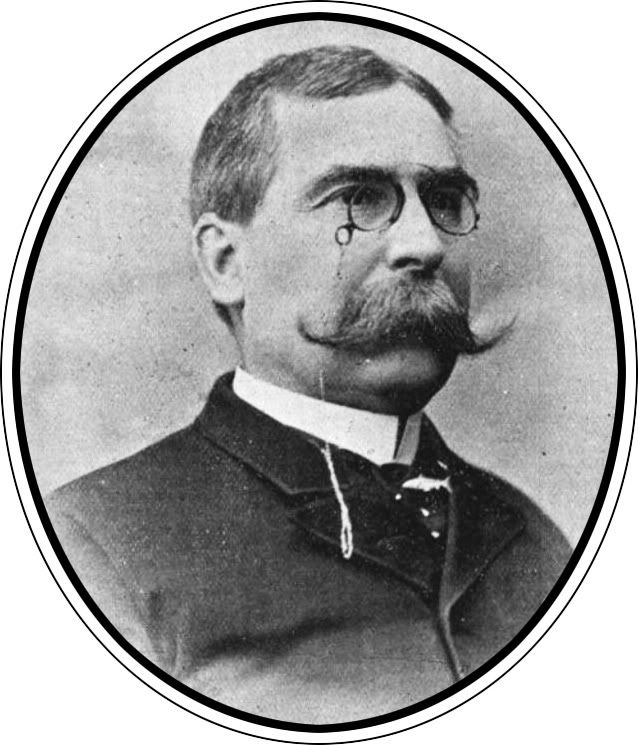
180 years ago — on February 29, 1836 — the legendary Dr. James Alexander Henshall was born. Yes, the “Father of Bass Fishing in America” was a leap year baby, born in fact, on Leap Day itself. Since his birthday came around only once every four years, we get to celebrate this day as his birthday.

Happy 45th Birthday, Dr. Henshall! And thank you for everything you did for the American angler.

-- Dr. Todd

Tuesday, February 28, 2012

Voices from the Past: Will Wildwood on Dr. James Alexander Henshall (1892)


Tomorrow (February 29th) is the 176th birthday of Dr. James Alexander Henshall. 44 leap years have passed since this man was born in Baltimore and changed the world of fishing. He lived one of the most interesting lives and impacted fishing as much as any individual American of his era.

For those interested in learning more about Henshall's life, check out The Autobiography of Dr. James Alexander Henshall, edited by the great Clyde Drury. It is a fantastic read!

In honor of the great Dr. James Alexander Henshall, we post Will Wildwood's 1892 biography of the good doctor. Long may this "American Walton" be remembered for his many contributions to fishing and fishing history!

-- Dr. Todd

Dr. James Alexander Henshall

by Will Wildwood (1892)


DR. JAMES A. HENSHALL, popularly known as the "Apostle of the Black Bass," the acknowledged authority on everything pertaining to this excellent game fish, was born and educated in Baltimore, Maryland. He inherited a strong passion for shooting and fishing, more particularly the gentle art of angling, and from his early years has been a careful student of natural history. It is recorded of him that at the tender age of four years he secretly packed a small basket with luncheon, and with cross-bow and arrows repaired to a neighboring wood in search of game and Indians. When found he was eating his luncheon beside a small camp fire, and in his basket were the trophies of his trip—a ground squirrel, a frog and a small fish. His favorite books at this period were "Robinson Crusoe" and "Peter Parley's Natural History."

When about eight years of age Mr. Henshall removed to the city, and his summer vacations were spent mostly in camping along the shores of the Patapsco and Chesapeake, with his rod and gun and usually a few congenial companions, who were the proud owners of a small sloop; or on the mountain streams of Maryland, fishing for trout. On Saturday holidays in the spring and summer he often went out with the market fishermen and never tired of witnessing the hauling of the immense seines and learning the names of the numerous fishes. From this ample and somewhat remarkable experience it is not surprising that at the age of fifteen he was a good angler and fly fisher, a fair shot, and could handle an oar or single paddle as well as those many years his senior.

Once, when but fourteen years of age, he swam with a companion on a wager from Baileys to a fish-house across the Bay Patapsco, known as the Spring Garden, a distance at that time of about two miles. He knew by sight and name every game and food fish in Baltimore waters, and could identify nearly every duck and shore bird. When nineteen years of age he and a companion, with fly rod and rifle, traversed the Alleghanies and Blue Ridge from Maryland to East Tennessee, tieing their own flies and moulding their own bullets, and eventually making their own rods. They spent the entire summer and fall in the mountains and in the valley, sleeping in the cabins of the mountaineers most of the time, and living- on the fat of the land, or in other words on brook trout, squirrels and wild turkeys.

His devotion to angling grew stronger as he attained the age of manhood, and he has given to the public innumerable descriptive articles on fishing and out-door sports, while his "Book of the Black Bass," as well as "Camping and Cruising in Florida," may be regarded as among the best books of their kind. Dr. Henshall is an enthusiastic yachtsman, a practical ornithologist and botanist, a keen lover of all manner of out-door sports, and his writings are alike practical and entertaining.

During the epidemic of yellow fever in Norfolk, Va., some thirty years ago, he rendered efficient service and became impressed with the heroic character of the work required of physicians, and resolved to adopt the medical profession. Upon his removal to Cincinnati he began the study of medicine, and eventually graduated with honor. Dr. Henshall began practicing his profession during the war, in Kentucky, and passed through the exciting and trying experiences of that period, in a manner which won for him a host of friends, and was the means of bringing him an extensive practice. At the close of the war, his health being impaired from overwork, he removed to New York City engaging in a lucrative practice with his former preceptor, but was forced to seek a more genial climate, which he found in Wisconsin, where he completely recovered his health. He eventually returned to Kentucky, where he remained for several years, and about four years ago went abroad with his friend Judge Nicholas Longworth, of Cincinnati; going first to the West Indies, thence across to Spain, and cruised about the Mediterranean from Gibraltar to Egypt and Turkey, and traveled extensively through Europe. On his return he located in Cincinnati, where he has been honored by being chosen Secretary of the Society of Natural History, President of the American Fisheries Society, and of the Ohio Fish and Game Commission, and Secretary of the famous Cuvier Club. During the past year he has done valuable work as special agent of the United States Fish Commission, and is now devoting his attention to the preparation of the Angling Exhibit for the World's Columbian Exhibition.

It will be seen from the foregoing that Dr. Henshall is a very busy man, whose services are always in demand where practical work is required in the line of ichthyology, scientific research, or technical matters relating to shooting, fishing and natural history.

He has spent four winters in Florida, has done excellent work in the line of ichthyology and he recently made a collection of fishes of the State of Ohio and of the Ohio river and its tributaries. Dr. Henshall is a very congenial, companionable and entertaining gentleman, and has a host of friends and admirers all through the United States, among whom the universal sentiment may be briefly summed up in the wish that he may live long and prosper.

Tuesday, December 22, 2009

Voices from the Past: Dr. J.A. Henshall (1884)


In time for Christmas, we bring you this holiday epistle from the great Dr. James Alexander Henshall. It was originally published in the December 1885 American Angler.

CHRISTMAS ANGLING.

BY DR. JAMES A. HENSHALL.

In the current issue of The Turf, Field, and Farm, we find the following paper on winter angling in Florida. The fisher for sheepshead in northern waters will note the practice obtaining in Florida of striking quickly, being the reverse of what he does on northern grounds. We bear witness to the value of the instructions given to "Buck:"

It was sunrise in Florida. The crimson spokes of Phoebus' chariot wheels rose silently out of the sea and stretched from horizon to zenith. The day had dawned clear and fine. The sweet breath of morning, the soft, south wind proceeding from the tropics and following the Gulf stream northward, stole along the shore, whispering loving messages to the palmettos, whose slender arms and broad green hands, trembled with eager, responsive delight.

It was the third day after Christmas. Our little schooner lay moored alongside the mangroves and palmettos of Pinkham's Cove, just above Indian River inlet The waters of the cove and channels among the islands were at rest, and clearly reflected the blush of the morning sky, for the tide was low-slack. The pelicans from their rookery—twenty miles away—came sweeping down Indian River and out at the inlet in long single files, noiselessly and swiftly, their huge bills in repose upon their breasts like great giant woodcocks. The long-billed curlew, the gannet and the cormorant came sailing over in flocks and companies, and settled down on their feeding-grounds in the channels among the mangrove isles. Plumed egrets and crested herons came singly and in groups, gulls and terns came in wheeling squadrons, and bay snipe and shore birds in multitudes. The fish crows greeted the rising sun with praises loud though harsh, ably seconded by the chatter and trills of the grackles.

Amid this calm and dignified repose of mother Nature and the noise and bustle of her children, "Buck" and I were capturing the mini branches and roots of the mangrove, shaking down, meanwhile, the dew drops in a shower of diamonds, rubies and sapphires, or chasing the lively fiddler-crabs along the shore; for Buck, having never wet a line in salt water, was to begin his novitiate as a salt-water angler that very morning.

Having secured hundreds of the active crustaceans, we proceeded in our dingey to a favorable location, not fifty yards from the schooner, and anchored. The tide now began to make, which brought the stern of the dingey over an oyster bed, where Buck was to try his "'prentice han'" on sheepshead and drum-fish, while I being in the bow, could easily reach the fringe of mangroves at the edge of the channel with my flies, to which were certain to rise red-fish, salt-water trout, ravallia, crevalle, &c. And where else than in Florida could this happy state of piscine possibilities exist—one occupant of a boat taking bottom fish of many varieties with bait, the other taking surface feeding fish with the artificial fly?

Buck was armed with a stout Henshall rod of ten ounces, a braided silk line, and a single Sproat hook, No. 1-0, tied on a gimp snell, while I was equipped with a heavy, twelve-ounce trout fly-rod, and used but a single fly, a "polka." A single hook or solitary fly is all that should be used in Florida waters, or, for that matter, a single hook, in bait fishing, is amply sufficient for other waters, and more should never be used by the genuine angler.

"Now, Buck," said I," bait your hook with the smallest crabs, whole, but cut the larger ones in two or four pieces. Keep a perfectly taut line, and strike sharply whenever you feel a nibble, or you may lose your bait and your chance of hooking the fish. Perhaps you may fail to hook your fish upon striking, but you will probably save your bait for the next one. They will not stop biting during the first half of the flood-tide, for their name is legion. Sheepshead are great baitstealers; therefore it is best to strike quickly, upon the least nibble, or your time may be more occupied in baiting your hook than in playing your fish."

Buck's hook had scarcely sunk beyond his sight before he felt a short, sharp tug; he struck quickly and firmly, and was soon playing a fish of considerable strength and activity, giving him line freely.

"My stars!" he exclaimed, "how he bores towards the bottom; and he bucks like an old ram!"

"Don't give him line," I advised, "or he will tear out the hook or cut the line on the oyster shells at the bottom. Hold him by the spring of the rod until he comes toward the surface, then reel him in."

"Which Buck proceeded to do, and soon landed a sheepshead of five pounds,

"Come in here, you old mutton head!" said he exulting over his first sheepshead.

Soon he had another, and profiting by my advice gave him no line and soon had him on the surface and in the boat.

"Come in out of the wet you slab-sided gridiron!" he exclained in high glee. "Oh, I'm a boss shepherd among sheepshead, and don't you forget it. It takes me to corral the bucks, ewes and lambs of this lively flock!"

As Buck was an apt pupil, I left him to his own devices, knowing that he would now soon learn all that was necessary in sheepsheading in the school of experience. I began casting under the mangroves, and was soon fast to a salt-water trout of some six pounds, a fish closely allied to the Northern weakfish, but more gamey. Buck stopped fishing to witness the struggle, and, as I took it into the landing net, he said:

"You've pricked my balloon, and the gas has escaped. I'm tired of catching sheepshead. Let's change ends and swap rods."

"No, no, Buck; dance to your fiddlers, and stick to your end of the boat, for to-day at least."

"Great guns!" exclaimed Buck shortly afterward; "I've got a Tartar this time. The spring of the rod won't do for him, and I'm afraid he'll fight it out on the line till next summer, and pull me overboard in the fall!"

And the reel hummed merrily. Finally he landed a drum fish of fully ten pounds, and a good, gamy fighter withal

"The father of all sheepshead," remarked Buck; "look at his beard!"

"That's not a sheepshead at all, Buck, though it has a slight resemblance in its barred sides; it's a drum."

"Well," answered he," that's the first drum I've played since I was a boy, and I played it well; oh, I'm a boss drummer now!"

In the course of an hour, and in quick succession, I took several more salt-water trout, a few red fish or channel bass, running from four to eight pounds; some ravallia or snooks, of from three to ten pounds; crevalle of three or four, and lastly a bone fist of about three pounds, which last fish gave more real sport than all of the others. The bone-fish, or lady-fish as it is sometimes called, is a slender, silvery fish; and fights in the water and in the air like the black bass, but mostly in the air. Buck was much excited and elated during the play of the fish, and cried out, at times:

"Game to the backbone! A silver shuttle, by Jupiter! Handspring, flip-flaps and summersaults! Great Scott! I've done with sheepshead and drum! Hurrah for Bony-part! You've knocked the sawdust out of my doll, now, by thunder I"

Buck soon had the stipulated dozen sheepshead needed for the day's supply, and returned to the water all those subsequently caught. All of my fish were also returned alive to their element, except a bluefish of six pounds, the only one caught, which was reserved for the gridiron. Finally Buck tired of landing sheepshead, small drum-fish, mangrove snappers and pin-fish, or salt water bream, even before the stage of half-flood was reached; and though we quit fishing, the fish had by no means ceased biting.

"Well, well!" gasped Buck, thoroughly exhausted with his sport, and his hands smeared with fish scales and crab shells. "In the name, of Walton, Cotton and Dame Julianna, what's this?" and he lifted in a large toad-fish or oyster-frog which I unhooked and threw overboard, for Buck was afraid to touch the uncanny thing.

"I think I'll stop now," he said; "or may be 111 catch the devil himself, for I don't believe he is proof against crab-cider or a lively fiddler."

"Well, Buck," I asked," what do you think of salt water fishing?"

"I've not had time to think much about it," panted he; "it takes my breath. It beats anything I ever dreamed of. The idea of two men in the same boat, a few dajrs after Christmas, hauling in fishstriped, streaked, spotted and cross-barred, of all the colors of the rainbow—with human teeth and saw-teeth, sharp teeth and blunt— hauling them up from the bottom, yanking them up from the top find pulling them in from the air above: it's too much—much too much. And then the nasty, slimy things—the toads and puffers and swellfish. Yes, it's much too much. But I've had glorious sport, if you can call it sport Why, we could glut a fish-market on a single tide. But I'm not a fish-monger. I'm an angler. A little of this thing goes a great way. Really and truly I've had more sport taking a half-dozen black bass from a clear stream, under the green trees, with the song of the birds, the odor of the flowers and the fragrance of the fields borne on the summer breeze, than with all this constant yanking, jerking and snaking in of a piscatorial convention, to say nothing of the lure—crab hash and clam chowder!"

"Nay, Buck; thou art biased and exhausted by overwork; thou art prejudiced by a surfeit of sport. Let us up killick and away to our little ship, where in preparation the matutinal meal, the sputtering of the savory sheepshead in the frying pan, and the sizzling of the bluefish on the gridiron will drive away such uncharitable thoughts, and the appetizing odors exhaled will dissipate the odium of comparison between fresh-water and salt-water angling. And remember, my dear Buck, that it is not so much by the act of angling that we are to be judged, but by the spirit with which we engage in it. And let us both remember, until we cross to the other side of that silent stream, this merry hour of angling, in this merry Christmas time."

Cynthiana, Ky. Dec. 1884.

Wednesday, September 17, 2008

Dr. James A. Henshall, Fish Culturist, by Clyde Drury

I was recently asked to contribute a piece on Dr. James Henshall's career as a fish culturist to the outstanding new journal Eddies: Reflections on Fisheries Conservation, which I strongly suggest anyone with an interest in preserving our fishing history should subscribe to immediately.


In the course of researching this material, I wrote Clyde Drury, the premier Henshall authority in the world and editor of the recently released Autobiography of Dr. James Alexander Henshall, for his take on Henshall's work in this field. He sent me far more than I needed, and has kindly allowed me to reproduce a portion of his correspondence as it adds greatly to our knowledge of Henshall.

Dr. J.A. Henshall as a Fish Culturist

by Clyde E. Drury

In 1865 while working as a medical doctor in New York, Henshall began studying the scientific and life history of fishes as a means of rest and relaxation. His study of the writings of all the leading ichthyologists of the day served him well in the scientific section of his “Book of the Black Bass.” It was there that he established priority for the scientific names gives to the largemouth and smallmouth bass.

When he moved to Oconomowoc, Wisconsin he began to study the fish up close. He stocked a pond on the property with adult bass and studied their breeding, spawning, and feeding habits for several years. He also studied the bass in several other nearby lakes and another hatchery run by Colonel George Shears of Beaver Lake.

The months of February, March, and April, 1889, were spent by Henshall in making an ichthyologic exploration of the southern coast of Florida, together with the U.S. Fish Commission schooner Grampus.

During the months of January, February, and March, 1892, he was engaged in collecting a series of the salt-water fishes of Florida for use in preparing the exhibit of the U. S. Fish Commission at the World's Columbian Exposition, Chicago, 1893.

Some key dates in Henshall's fish culture career:

1886-1892 – secretary and then President of the Ohio Fish commission
1891-1892 – President of the American Fisheries Society
1897-1909 – for 12 years Superintendent, Bozeman Montana Hatchery, US Fish Commission
1909–1917 – Superintendent of Tupelo Mississippi Hatchery

Here is a brief list of works written by Henshall on the subject of fish culture:

Henshall, James A., Dr. "Contributions to the Ichthyology of Ohio: No. I." Journal of the Cincinnati Society of Natural History 11 (July-October 1888): 76-80.

Henshall, James A., Dr. "Contributions to the Ichthyology of Ohio: No. 2." Journal of the Cincinnati Society of Natural History 11 (January 1889): 122-126.

Henshall, James A., Dr. "On Some Peculiarities of the Ova of Fishes." Journal of the Cincinnati Society of Natural History 11 (July-October 1888): 81-85.

Henshall, James A., Dr. "Some Observations on Ohio Fishes." Journal of the Cincinnati Society of Natural History 12 (January 1890): 114-125.

Henshall, James A., Dr. - Report Upon A Collection Of Fishes Made In Southern Florida During 1889. 4to. Pages 371-389. 1891. U. S. Commission of Fish and Fisheries. Document 167. Washington DC. Extracted from the Bulletin Of The United States Fish Commission, Volume ix, For 1889.

Henshall, James A., Dr. - Notes On Fishes Collected In Florida In 1892. 8vo. 15 pages. 1894. U.S. Fish Commission Bulletin for 1894, Article 17. Softbound. Washington DC. Reprinted 1987.

Henshall, James A., Dr. - A Plea For The Development And Protec¬tion Of Florida Fish And Fisheries. Taken from Proceedings And Papers Of The National Fishery Congress held at Tampa Florida, January 19-24, 1898. Ex¬tracted from U. S. Fish Commission Bulletin for 1897. Article 8, pages 253 to 255.

Henshall, James A., Dr. - A List Of The Fishes Of Montana With Notes On The Game Fishes. 8vo. 12 pages. 1906. University of Montana. Missoula MT. A descriptive paragraph on Largemouth and Smallmouth Bass. Indicates that Bass had been planted in the western portion of the state where the waters were warmer. He also says “The colder waters of the eastern part of the state are totally unsuited to black bass; moreover, they should never be planted in ponds or streams containing trout.” Four pages are devoted to trout, and grayling with a short paragraph on the Rocky Mountain whitefish. Reprinted 1985.

Henshall, James A., Dr. - Culture Of The Montana Grayling. 4to. 7 pages. 1907. Fisheries Document #628. U. S. Dept. of Commerce and Labor. Washington DC. Softbound.


Many thanks to my friend Clyde for penning this brief piece, which along with my own biography of Henshall's fish culture work, should be a great start for anyone interested in reading more on his work in this field.

-- Dr. Todd

Wednesday, June 11, 2008

Dr. Todd's Mailbag: 11 June 2008


Dr. Todd's Mailbag

The last edition of the Mailbag seems to have been a popular addition to the site, so I am running a sequel. Keep the questions coming!

Dr. Todd,

I have been wondering for sometime when manufacturers
of metal baits started to use Chrome for plating some of their lures. I have a Chapman Safe Deposit that looks like it is chrome plated. I plate with silver and nickel in making some of my own baits and I know that this Chapman is not silver or nickel plated because it is just so shiny but weathered and old at the same time.

What do you think?

Philip A.


A great question to which I believe there is not a definitive answer. According to George Dubpernell’s “A History of Chromium Plating” (Plating & Surface Finishing, June 1984), chrome plating first came into widespread use in 1928, the fundamental principles of chromium electroplating not having been discovered until 1924. It wasn’t really popular until the early 1930s.

Theoretically it is possible it was used on lures in the 1880s and 1890s, and Chapman, being one of the largest of the manufacturers, might have done it. But it does not appear that it was likely that they did.

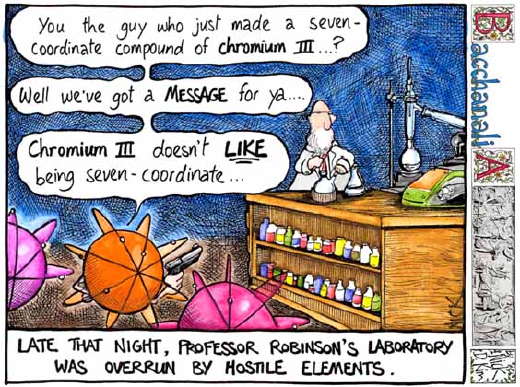
Chromium plating is a type of electroplating, which was invented in 1805 by Italian scientist Luigi V. Brugnatelli (don’t believe all the hype about “ancient batteries” as they are pure speculation). The inventor of the Bunsen burner (R. W. von Bunsen) actually produced limited samples of electro-deposited chromium in 1854 using chromium chloride solutions. Electroplating itself was a widespread industrial technique by the 1860s, with the British (of course) taking the lead and America following in the 1870s, but chrome was not one of the substances used. Chrome really became a household name in the 1940s and 1950s due to its use on automobiles.

So is your Chapman chrome plated? In a short answer: no. So, if it isn’t nickel or silver, what is it? German Silver perhaps (a nickel alloy), or burnished aluminum? Any speculation would be greatly appreciated…


Somewhere some scientist is chuckling about this…


References:
Dartmouth College has a great web site about chromium.

The Finishing Industry’s cool home page has lots of info on electroplating.

Web Elements Periodic Web Table

-------------------------------------------------------


Hello Dr. Todd,

I picked up a reel at this years [ORCA] national that I have a couple questions on.

It is exactly the same as a four brothers regal in every way. The markings on it are congress which if I remember is for Supplee-Biddle but above Congress there is a trademark I don't recognize.

It is a fish with an arrow through it. The fish points up at a slight angle and the arrow is horizontal.

Can you tell me anything about this reel as far as what that trademark is and what time period it came from? I would guess the late teens or early twenties. If you need or want some pictures let me know.

Robin S.


Dear Robin,

This is one of my favorite logo reels, made for Supplee-Biddle of Philadelphia (as you mentioned). It dates from the late 1920s or early 1930s, based on the three examples I own in my own collection.

The “speared fish logo” was actually originated by Supplee Hardware before they merged with Biddle Hardware around the start of WWI. It is one of the most distinctive and attractive logos, used on rods, reels, lures, ephemera, etc.


Shakespeare-made Congress Speared Fish logo reel

Interestingly, I believe these “speared fish logo” reels were brought in to fill the enormous gap left by the end of the Montague trade line (which began to be phased out in 1929 and culminated with its end in 1931). Shakespeare, like the one pictured, and Pflueger, like the one you own, stepped in by producing these beautiful trade reels for Supplee-Biddle.

References:
Dr. Todd E.A. Larson, “The Mark of Congress: The Fishing Tackle of the Supplee-Biddle Co.” (NFLCC Magazine, June 2006).

-------------------------------------------------------


Hello!

I have an authentic first edition (1881) of the original "Book of the Black Bass" by James A. Henshall, M.D. of Cynthiana, KY (and also Cincinnati, OH). It's in excellent condition, and very rare. I was researching the book when I found your website…When I received the book, I discovered, tucked away between the pages, two newspaper clippings from 1963 and 1964. The first article was about the AFTMA naming an award after Henshall, the second is about the unveiling of a historical marker commemorating Henshall, near Cynthiana. I live in Georgetown KY, about 15 miles from Cynthiana, and have seen this marker myself.

-- Margie B.


I love Henshallania, as we call anything related to Dr. James Alexander Henshall. I was not aware there is in fact a historical marker in Cynthiana, Kentucky devoted to the father of bass fishing in America! I discovered that it is located in Cynthiana, south of the I-27 bridge, and is Kentucky Historical Marker #651. Here is a photo of this cool marker, courtesy of the State of Kentucky:


Your First Edition should be worth good money as there were probably no more than 2500 copies of the first edition printed (and most of those sold by pre-order). It is one of the seminal works in American fishing history. As a Cynthiana native, it may interest you to know that he devotes a lot of space in his autobiography to his Civil War years spent there.

References:

The Autobiography of Dr. James A. Henshall , edited by Clyde Drury.

That’s it for this edition of Dr. Todd’s Mailbag!

-- Dr. Todd

Thursday, September 27, 2007

Review: The Autobiography of Dr. James Henshall

Many of you are familiar with Dr. James Alexander Henshall, the father of modern bass fishing. After all, 400,000 reprint copies of Book of the Black Bass have sold through Bass Anglers Sportsman's Society (B.A.S.S.) alone. But what do you know of the life and times of one of the most important people in the history of fishing? Likely very little.


One of the reasons I founded The Whitefish Press was for books just like this one. It was serialized in Forest & Stream from 1919-1921, but Dr. Henshall died before it could be released in book form. Since Forest & Stream by that time had switched to a monthly format, and had seen its circulation dip well below 100,000 (1/10th that of its competitors like Field & Stream and Outdoor Life), very few people got a chance to read the fascinating story of Henshall's life.

Clyde E. Drury, noted bass fishing historian and Henshall scholar, thought this was a shame. He worked extremely hard to put together a rough photocopy of the autobiography (which was still missing one part), and kindly distributed this to hundreds of historians and collectors alike over the years. A few years ago he was lucky enough to purchase a complete set of originals off eBay, and now had the images to go with the text.

The first book on fishing history I ever owned was a reprint of Henshall's Book of the Black Bass given to me for my 10th birthday, so I was always interested in Henshall's background. Like Clyde, I put together a complete photocopy set of Henshall's autobiography with the intent of one day making it widely available. Bill Sonnett put Clyde and myself together, and since Clyde had spent great amounts of time digitizing his copy, I proofed his work from my copy and we got a definitive corrected edition as a result.

The book is the story of American fishing written against the backdrop of the panaroma of history. Henshall's early memories include "Tippecanoe and Tyler Too," (one of the most important presidential elections in history in 1844) the Mexican-American War, the Great Comet of 1843, fishing in the pre-Civil War era, and much more. Later, he would be directly involved in other great events, and of particular interest is his work as a physician during the Civil War in Kentucky, where he had direct contact with Morgan's Raiders, was friends with David Snyder (Kentucky reel pioneer George Snyder's son), and first learned the joys of bass fishing. His post-Civil War life is the history of sport fishing in America.

This is a big book--over 100,000 words--and I just don't think you can be truly knowledgable on the history of fishing or fishing tackle and not read this book. Details are available from The Whitefish Press. Its eminently readable today, comes with an introductory biography by Clyde Drury, 60+ original black-and-white images, and 57 detailed explanatory end notes to help make sense of some of the more obscure references.

-- Dr. Todd