Sunday, October 24, 2010

1000 Words

1000 Words

Today we get a beautiful piece of art (I know, not a photo--but it's still great) from Ewen M. Tod's classic Wet-fly Fishing Treated Methodically (1903). One of my favorite fly fishing scenes...


-- Dr. Todd

Saturday, October 23, 2010

Deconstructing Old Ads: Six Decades of Field & Stream Covers


Six Decades of Field & Stream Covers

The first cover here is from June 1903 and is one of my favorites. The longer you look at it the more things you see. All covers during this period featured the buffalo skull logo.


The second cover shown here is from May 1915. Issues from this period featured the fancy border and attractive paintings of outdoor scenes. As the cover states, the magazine was 20 years old this month.


The 1920s were a time of great prosperity. The magazine was now 25 cents and features loads of ads in its 190 pages. This May 1923 issue also announces $3500 in cash prizes for their thirteenth annual fishing contest.


The June 1937 issue reflects the realities of the Depression. The price of the magazine is now 15 cents. The prizes for the fishing contest have been reduced by $500 and the 120 page issue features far more modest ads that those from the 1920's.


This June 1945 issue reflects the reality of World War II. It features a patriotic cover and is printed in a smaller format as well as on obviously cheaper paper. A large majority of the advertising is from larger companies and most say something to the effect that they are presently engaged in the War effort but will be back in the outdoor equipment business as soon as peace arrives.


My final example comes from the decade of the 1950s. This January 1958 issue is the first copy of Field & Stream that I ever purchased off the news stand. The cover sold me and still captivates my eye. When I was growing up in northwestern Ohio in the 1950's hunting was very popular with high school age boys. I fact if one brought a note from home, you could be excused for a half-day of school on the opening day of squirrel season and Rabbit season. There were no deer, no turkeys and as we had no water nearby, no ducks or geese. I was 18 when I saw my first Canada Goose, a single bird flying over the corn field I was standing in. Today that corn field is part of a College campus, covered with grass, ponds and Canada Geese. For me this cover has always captured the thrill of hunting cottontails on the snow.


-- Bill Sonnett

Friday, October 22, 2010

The Friday Funhouse

Video of the Week

A nifty deleted scene from The Lost World of Mr. Hardy about Zane Grey and Special Service boats...


Things I Would Buy If Only I Could Afford Them

A bunch of cool Punkinseeds this week, including this 740 in Silver Shore.


You try and find a nicer Goldfish Punkinseed than this one!


You've got to say Frank Mizera made some of the most beautiful--and distintct--spearing decoys in history.


This Ernest Holzmann reel is just a thing of beauty.


LOVE this Brown Frog 1500 Injured Minnow!


Still love this Heddon #300...


Considered by some to be the finest spinning reels ever, this Fin Nor No. 4 in the box is a superb reel.


This Heddon 100 in Green Scale has aHUGE scale pattern!


Intro Creek Chub Pikie Boxes are always a great find.


A nice Talbot Eli makes me want to go tournament casting.


You got to hand it to Winchester--these Multi Wobblers are surely distinct lures.


A dealer pack of Rublex Alta spinners is a nifty point-of-purchase display.


This is a pretty cool old Eagle Lock Co. leather tackle box.


As always, have a great weekend, and be good to each other--and yourself.

-- Dr. Todd

Thursday, October 21, 2010

Thursday Review: Lang's On-Line Auction (Fall 2010)

Thursday Review: Lang's On-Line Auction (Fall 2010)

November always brings for us the eagerly awaited Lang's Fall Auction. This year--as always--we are treated to some incredible collections as well as some unique individual pieces.

There are some incredible reels available. They include the Bing Crosby-owned Fin Nor No. 3, some great Zwarg, Stan Bodgan, and a number of nifty modern reels like Tibor, Danielsson, Abel and Saracione. Indiana reel collectors will go insane over the boxed examples available. Individual gems include a nice Billinghurst, and of course, everyone loves the Philbook & Paine fly reels.


Rods are dominated by some terrific Orvis impregnated models. Other rods include some neat Payne, Leonard, Thomas, Hawes, and Edwards.

Flies have been on fire lately. Flies in this auction include Schmookler, Dette, Defeo, Wulff, and Cross. My favorite, however, are the Rhead True to Nature flies and the salmon flies dressed by Megan Boyd.


Spearing decoy collectors will be pleased by the selection, including stalwarts like Bud Stewart and Oscar Peterson. There is even a selection of minnow traps this year.

A nice collection of creels leads of the second day, including some George Lawrence and Haywood creels. There is a nice selection of floats, including some large Ideal floats and the beautiful Pequea below.


Books are one of my favorite fields, so I was pleased to see books by Francis Francis, Roderick Haig-Brown, and Thad Norris. Lang's always has some tremendous artwork, and this wonderful Bristol rod piece is no exception.


Lures, lures, lures...what can you say about an auction that leads off with a Baby Comstock Flying Hellgramite and a Chatauqua Minnow? HOLY COW. And someone is getting rid of a once-in-a-lifetime Schmoo collection. A nice selection of Moonlights, Paw Paw, and the usual suspects: CCBC, Heddon, and South Bend.


So much awesome stuff! Perusing a Lang's auction is like walking through a beautiful museum. You better block off about four hours because here's the on-line catalog for Day 1 and for Day 2.

-- Dr. Todd

Wednesday, October 20, 2010

Baseball and Fishing: Joe "Unser Choe" Hauser's Sport Shop

Baseball and Fishing: Joe "Unser Choe" Hauser's Sport Shop

I was gratified at the reaction to my recent articles on Indianapolis baseball legend (and tackle merchant) Donie Bush and Red Sox slugger and world-class angler Ted Williams. By the way, Indianapolis native Dan Basore wrote in the comment section that the baseball stadium in Indy was for years named Bush Stadium after Donie Bush. "It wasn't too far from my home and I saw Herb Score pitch there," Dan notes. Herb Score, of course, was the hardthrowing righthander who's career was said to have been cut short by a line drive that damaged his vision. In reality, Score regained his 20-20 vision and claimed it was a shoulder injury that ended his career. Score did become an announcer of note for many years afterward, however, helming the mike for the Indians for over three decades.

This week we will cover another former major leaguer who also owned a sporting goods store and sold marked fishing tackle bearing his name. This man also made a significant mark on baseball history, and in fact, became known as one of the most feared home run hitters in history. The reason why most people have never heard of him before is because he hit most of his home runs in the minor leagues. Joe "Unser Choe" Hauser, Sheboygan sporting goods merchant and minor league home run king, is the subject of this weeks "baseball and fishing tackle" profile.

A Wisconsin native born and raised in 1899 in Milwaukee, his German background led to his unique nickname. Baseball fans, being the fickle creatures that they are, of course are noted for booing players when the don't perform, a strange development considering failing 7 our of 10 times at the plate makes one a superstar. While playing in the minor leagues for Milwaukee, as Joe himself noted, the predominantly German fans refused to boo "Unser Joe," or in German, "Our Joe." The nickname followed him throughout this career.

Hauser reached the majors in 1922 for the prodigious Philadelphia A's, whom he played for on-and-off (with significant time missed for injuries) for the next seven years. The 1920s A's were only slightly below the legendary Yankees in star power; his last year as an Athletic was 1928 when the team won 98 games and fielded a roster that included Mickey Cochrane, Al Simmons, Ty Cobb, Jimmie Foxx, Tris Speaker, Eddie Collins, and Lefty Grove, all of them hall-of-fame members. The A's would go on to win the world series in 1929 and 1930, although Hauser was no longer with them at the time.


Joe Hauser is sometimes called a pedestrian major league hitter, but that is not quite the truth. Take his 1924 campaign. He hit .288 with 27 home runs and 115 RBI. Those are certainly good numbers by today's standards, but baseball was just leaving its dead ball era and his 27 homers was second in the league to Babe Ruth. Sadly, just when his major league career was in its ascendancy, he broke his knee cap in four places, and although he had two abortive attempts to restart his career, his major league career came to an end in 1929 with the Indians at the age of 30.

But Unser Choe was just getting started. Banished to the equivalent of "AAA" baseball, he began to hit home runs at a prodigious rate. With the Baltimore Orioles in 1930, he smoked an incredible 63 home runs--to that point an all-time record--with 175 RBI. But after another injury Baltimore sold his contract to the Minneapolis Millers, a move brought about in large part because the Orioles had purchased Buzz Arlett's contract from the Philadelphia Phillies. In an interesting twist, Arlett would become the all-time minor league home run king, eclipsing Hauser's career record.

After 49 homers in 1932, Hauser came back with a legendary year in 1933 when he clubbed a new record 69 homers for the Millers. The next three years years saw him average 30 home runs due to injuries. In another interesting coincidence, Hauser's manager with the Millers was no other than Donie Bush, who as we learned last week went on to found the Bush-Feezle Sporting Goods company in 1937. Fascinatingly, his minor league home run rival Buzz Arlett joined him Minneapolis in 1934.


Perhaps Bush influenced Hauser, for that year, at the age of 38, when the opportunity arose for him to return home, Hauser became manager of the Sheboygan minor league team (playing Class D ball). The Sheboygan Press declared in a large headline that 225 local baseball fans "Honor Joe Hauser at Big Booster Banquet." The warm homecoming must have tugged his heart strings, for he spent the rest of his life in Sheboygan.

In the spring of 1938, Joe Hauser opened a sporting goods store to supplement his meager income as a D Ball manager. His partner was local sportsman Les Kuplic, "a well-known member of the Sheboygan Chairs baseball team, now known as the Sheboygan Indians," as the The Sheboygan Press noted on July 31, 1942. "Mr. Kuplic will be remembered as a former tennis champion." Kuplic also played for the Sheboygan Red Skins from 1938-1940, a professional basketball team that was one of the charter seven members of the N.B.A. The store was known as "The Hauser & Kuplic Sports Shop" and was located at 522 North Eight Street. According to the aforementioned article, the company:

was known as 'Pond's Sports Shop' before 1938 at which time it was owned by a Mr. Pond and managed by Mr. Kuplic. When Mr. Pond's lease expired, Mr. Kuplic decided to go into the business if he could get Mr. Hauser to form a partnership. Seeing an opportunity to retire from the active sports field and still continue in the profession of his choosing, Mr. Hauser was glad to take over a half share of the business...bowling, tennis and fishing are among the leading sports which Hauser supplies.


Picture of Les Kuplic from 1942.


Business must have been good--Hugh Fullerton, Jr. wrote in his syndicated baseball column on May 29th, 1945 that "Joe Hauser, the old minor league home run king, is running a sports goods store in Sheboygan, Wis. and making more dough than he ever did in baseball." By that time he had moved to 522 N. 8th Street, and then in 1946 purchased property at 914 N. 8th Street and remodeled the entire building. The new store opened on April 12 and 13, 1946, and was "virtually the talk of the town. Sporting a cream and maroon glass front inscribed with Joe's signature, the building is one of the most attractive in the business district."


Assisting Hauser in the new store was Harold Kaye, who "will handle the store while Joe makes trips with the Indian baseball team," as an article in The Sheboygan Press declared on April 10, 1946. It is not known when the partnership with Kuplic ended but by this time there was no mention of Kuplic; Hauser's wife Irene was the bookkeeper. The firm still carried "all types of fishing tackle." As another article dated August 10, 1953 in Sheboygan Times declared, Hauser's shop was "one of the finest sporting goods stores in this section of the state, [and is] known as Joe Hauser's Sports Shop."


When the Wisconsin State League folded with the coming of major league baseball to Milwaukee, Hauser (after a brief stint as manager in Union City, TN) ended his career managing my home town Duluth minor league team in the old Northern League. From 1955-1958 he skippered the Duluth-Superior White Sox (the only time I know of when they were not called the Dukes) and won a Northern League pennant in 1956. That team was led by Don Mincher (who later spent 13 years in the majors) and included four other future major league players: Jack Kralick, Hal Trosky, Jr., Glen Hobbie, and Cam Carreon. In 1958 Unser Choe retired from baseball and returned to his sporting goods store in Sheboygan, where he remained until retiring in May, 1984.


Joe Hauser was inducted into the Wisconsin Sports Hall-of-Fame.

When baseball writer John Pierce interviewed Hauser for a piece published in the February 1954 Baseball Digest, the retired slugger could declare that the sporting goods trade "hasn't made him rich, but it's provided a steady income and given him a good outlet for the yarns and anecdotes about the game he loves." He became a beloved fixture of the local scene, and was the subject of frequent interviews. Here are two interesting facts he related at various times. "I never got knocked down all the time I was playing," he related to Tom Flaherty in an interview in 1992, and as he told an earlier interviewer, he was never once pinch hit for in his long career.

Most native Sheboyganites over the age of 50 will remember Hauser's Sports Shop. He was a legend in town and ran an expansive sporting goods store for almost fifty years, selling a ton of fishing tackle to the local angling community. Occasionally Hauser-marked items come to market; they are mainly snelled hook envelopes or other paper ephemera. The one pictured below was wholesaled to Hauser-Kuplic Sporting Goods from Ed. K. Tryon, the massive Philadelphia-based jobber who sold tackle nationwide to tackle and sport shops. This one came in a dealer box of twelve, all of which were stamped with the same non-descript marking depicting the pre-1942 Hauser address. I would bet this dated to before WWII.


Unser Choe Hauser passed away in 1997 at the age of 98. He was truly the Minor League Home Run King.

-- Dr. Todd

Tuesday, October 19, 2010

Research Report: 19 October 2010


We haven't had time to run a Research Report for some time, but I hope to be able to get some in before the new year. Here's one today from Terry McBurney, who would like information on the great Hurd Super Caster. Here's his request:

Hurd Super Caster and Caster Rod and Reel Combinations
I am researching the Hurd Lock and Manufacturing Company from Detroit, Michigan and their Super Caster and Caster rod and reel combinations for an article that I am preparing to write. I would like to communicate with Hurd collectors to discuss the company, the Hurd family and the well-made rod and reel combinations that they produced.

I can be reached at antiquefishing@comcast.net or by calling - 616-676-1148 (home) and 616-822-4233 (cell). Thanks.

Terry McBurney


Terry sends along this ad from the June 1948 Outdoor Life

Help Terry out! I know there are a lot of Hurd fans out there.

-- Dr. Todd

Voices from the Past: Ballade of the Gamefish (1920)


Grantland Rice was one of the truly legendary sportswriters of the 20th century, probably most noted for his famous paragraph:

"Outlined against a blue-gray October sky the Four Horsemen rode again. In dramatic lore they are known as famine, pestilence, destruction and death. These are only aliases. Their real names are: Stuhldreher, Miller, Crowley and Layden. They formed the crest of the South Bend cyclone before which another fighting Army team was swept over the precipice at the Polo Grounds this afternoon as 55,000 spectators peered down upon the bewildering panorama spread out upon the green plain below."

There are some great sportswriters around today, but that right there is sportswriting at its best.


Unbeknownst to many, he was also a poet of note. Below is a fine representation of his piscatorial work.

BALLADE OF THE GAMEFISH

by Grantland Rice

"Only the gamefish swims upstream."
—Colonel John Trotwood Moore.

Where the puddle is shallow, the weakfish stay
To drift along with the current's flow;
To take the tide as it moves each day
With the idle ripples that come and go;
With a shrinking fear of the gales that blow
By distant coasts where the Great Ports gleam;
Where the far heights call through the silver glow,
"Only the gamefish swims upstream."

Where the shore is waiting, the minnows play,
Borne by the current's undertow;

Drifting, fluttering on their way,
Bound by a fate that has willed it so; 

In the tree-flung shadows they never know
How far they have come from the old, brave dream;
Where the wild gales call from the peaks of snow,
"Only the gamefish swims upstream."

Where the tide rolls down in a flash of spray
And strikes with the might of a bitter foe,
The shrimp and the sponge are held at bay
Where the dusk winds call and the sun sinks low;
They call it Fate in their endless woe
As they shrink in fear when the wild hawks scream
From the crags and crests where the great thorns grow,
"Only the gamefish swims upstream."

Held with the current the Fates bestow, 

The driftwood moves to a sluggish theme,
Nor heeds the call which the Far Isles throw, 

"Only the gamefish swims upstream."


-- Dr. Todd

Monday, October 18, 2010

News of the Week: 18 October 2010


Don't have time to read 50+ fishing and tackle collecting blogs and web sites? Well, let us do it for you! Follow all of the latest news, articles, and stories on our Whitefishpress Twitter account! Hint: You don't need to be a member...just bookmark the Twitter Feed Page or click on latest links to the right!

Freshwater Fishing Hall of Fame and IGFA announce 2011 inductees...Arkansas tackle show gets profiled...fun times on Long Pond...Catfish Dave...marsh fishing...silvers are the best salmon ever?...huge steelie caught on Clearwater River...a garage sale I'd like to go to...Irish pike angler catches 397th 20+ pound pike...new record Kokanee...Indiana man gets 53 inch pike...custom rodmaker Russ Pritchard...it must be THE NEWS OF THE WEEK!

The Big Lead: The Freshwater Fishing Hall of Fame announces its 2011 class...and the IGFA readies to induct five into its Hall of Fame.

The Arkansas tackle show gets some great press (and a neat photo of Jerry McCoy to boot):


Fun times on Long Pond.


Catfish Dave makes dreams come true.


ESPN goes marsh fishing.


Southern Outdoor Writers gather...chaos ensues?

Writing, the limelight, and why good writers should just chuck it all and go fishing.

Field & Stream's Deeter proclaims silvers the best salmon of all.


Huge steelhead caught on Clearwater River.

Outdoor writer has a garage sale...I wish I was at.

Irish pike angler zeroes in on his 400th 20+ pound pike.


British fishery boss says 40% of all fish kills due to fish pellets.


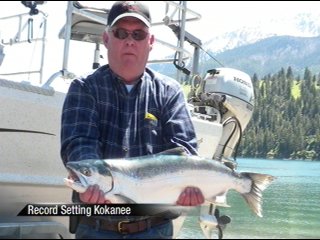
Pendelton man catches record Kokanee Salmon.


Indiana man nets 53-inch Northern Pike on Ontario fishing trip.

Finishing with a Flourish: Russ Pritchard, custom rodmaker, gets profiled.


-- Dr. Todd