Wednesday, January 23, 2013

The Bait Shops, Tackle Shops and Sporting Goods Stores Of America by Harold Dickert


The Bait Shops, Tackle Shops and Sporting Goods Stores Of America

By Harold Dickert


So much has been written about tackle manufacturers. Countless hours of research, resulting in a vast array of articles, have taken place. I am so very grateful that this is the case. Over the last 30 years we have learned so much information that has enhanced our knowledge and made our hobby dramatically more rewarding.

During this same 30 years many of the large retailers in the big cities have been chronicled through some wonderful research and publication. Also the wholesale distributors, big and small have been covered in great detail.

The fact remains however, that a vast majority of the fishing tackle that we enjoy in our collections today were sold by the little tackle shops that dotted the land by the thousands in the 1930’s, 40’s, 50’s, 60’s and 70’s.

The purpose of this article (and perhaps a few in the future) is to do a little digging, a little reflecting and a little reminiscing about those stores and what we lost as they, and many other small retail businesses, ceased to exist.

Very few of those small shops are still in business today. The story of what happened to them is often more that meets the eye. The first reason often sighted is the lower price structures of the emerging big box stores. Although this was a factor as time went on I believe it actually started with the introduction and proliferation of the automobile. As people became more and more mobile and had the ability to travel greater distances the need for the neighborhood stores cease to exist. It was the beginning of the end for the family owned corner grocery store, the candy store, the shoe shop, the meat market, the drug store, the hardware store and yes, eventually, the bait shop. Many of the families that ran these stores could not see it coming. Often they thought it was because they were poor merchants and could just not compete but actually the handwriting was on the wall. Nothing they could have done would have changed anything. Our buying habits and in reality our American way of life was simply changing, sadly, in my opinion, never to be the same.

Let’s start our journey by examining some of the advertising that took place. The really small stores generally did not advertise in the newspaper. They depended on word of mouth advertising. Like any merchant they realized that a good reputation went a long ways. This is still true today. This type of advertising left no traces for us to find but other types did. One of those, used most often, were advertising novelties to be handed out to customers. They took many forms such as calendars, key chains, ink pens, match book covers and the one I’d like to discuss here, fish rulers to measure your catch. Much like the hardware store with their yard sticks and the paint store with their paint stirring sticks, the bait shop handed out these marvelous little (usually 12 or 14 inch) rulers, with a lot of information printed on both sides. To have a small collection of these provides a wealth of information upon close examination. One starts to realize the diversity of these shops and the vast array of products that were offered.

Take a short trip through time with me as we tour in and around southern Michigan during the 1940’ and 50’s. I picked this area because it is the one I am most familiar with and certainly represents a microcosm of the majority of the U.S. Most of us old timers, if I may be allowed to include myself in that category, are aware that drug stores sold fishing tackle and you can find evidence of that here as we look at the Richmond Drug ruler from Bear Lake, Michigan. Pretty standard fare and I bet a great place to grow up. Fishing Tackle/Soda Fountain…you bet…I’ll take the job. Two small tackle manufacturers near by…paradise.

Image Hosting by PictureTrail.com

Or just up the road, in Beulah, where we have the Oxley (General) Hardware. I’m riding the Way Back Machine now as I to travel back there to hunt for old tackle. Tinning? Not even sure what that was.

Image Hosting by PictureTrail.com
Traveling South we come across the famous Arntz Sporting Goods Store, home of the Michigan Lifelike Minnow. Yes that wonderful lure was made many years before this ruler would have been handed out but I would have liked to see the store in the 1950’s anyway.

Image Hosting by PictureTrail.com

Other shops nearby would have been Chalmers Bait and Tackle in Whitehall or the Voss Hardware In Muskegon Heights or 40 miles to the east to Chucks Live Bait in Grand Rapids. A city the size of Grand Rapids would easily have had 50 or more little tackle shops in and around town over the years.

Image Hosting by PictureTrail.com

Don’t forget Service Stations like Wm. Tulloh, over in Rose City. They Rented out Cabins too…pretty cool. I can hear the waves washing up against the shores of the lake from my cabin as I wait for morning to start a day’s fishing.

Image Hosting by PictureTrail.com

Now, The Irish Hills Bait Ranch sounds like a wild place over in Tipton, Michigan. Besides the usual fare they sold Go-Carts. Now we’re talking. I would have given anything for a go-cart when I was a kid but could never afford one. I even trying making my own but had no way to weld the pieces together.

Image Hosting by PictureTrail.com

If you prefer the big city head on into the Detroit area. I bet the American Army & Navy Stores did a big business after the war.

Image Hosting by PictureTrail.com

Not big enough? How about The Great Chicago Surplus Stores. They simply had “Everything”

Image Hosting by PictureTrail.com

Of course we should picture the flip side of the rulers too. They usually told us the size and catch limits for that state and often gave the year. Sometimes they offered a few words of wisdom too.

Image Hosting by PictureTrail.com

Well, I guess it’s time to come back home to reality and be thankful that we are still around to look back at the good old days.

Hope you enjoyed our short trip and hope we can do it again soon as we continue to look at the Bait Shops, Tackle Shops and Sporting Goods Stores Of America.

Tuesday, January 22, 2013

Voices from the Past: Bilkin's Electric Frog (1908)


The following story by F.L. Harding from Outing Magazine (August 1908) is a charming story about a fishing contest and a special lure. I enjoyed it very much, and wish now to have a Bilkin's Electric Frog of my very own.

Bilkin's Electric Frog

by F.L. Harding

ENTERPRISE was the slogan of the Parmacheenee Piscatorial Association. Their mahogany bungalow at the salmon reserve up in Canada was chock full of novelties and inventions appropriate for anglers. There was the marble bust of Walton on an alabaster pedestal greeting one right in the front hall. Its electric-lighted eyes had blue bulbs, the chromatic accuracy of the blue having been settled through special appropriation passed standing.

Then the Personal Experience Library swelled the proud breasts of the members when visitors came to wonder and stayed to applaud. It was Crixton's idea. Crixton was Vice-President and chief machine. Many thrilling yarns of their fishing feats were nightly told at the open fire. Why not preserve these Homeric legends? Why not collect these testimonies to the Parmacheenee pluck and skill? A talking-machine, a few words of persuasion to the blushing salmon devastators and a superb assortment of canned fish stories stocked the reading room, on tap at all times.

Life was rosy at the fishing club bungalow. The moving casting platform dotted with wicker reclining chairs, ran along the bank at the salmon run, furnishing a thorough whipping of the water with no chance for fatigue. It passed along the near shore and down the other side, crossing a pair of rustic bridges with a stop only at the buffet for gin rickeys. The power was supplied by the Falls below. Here Crixton's fine Roman hand appeared again.

'Twas he, too, that invented the aquarium railroad car in which live grilse were brought in for planting, as cosy as could be. The "Piscatorial Limited" was the envy of all the neighboring clubs. He was working on what he termed his "preparing tank" when the Events Committee announced the early approach of the Annual Tournament. His scheme was to instill abnormal vigor into the fish by a short sojourn in his swan pool in which Perrier Jouet '78, had been slightly added to the water. So far the results had been rather disheartening and demonstrated the diverse effects of the "craytur" on finny temperaments. "Crixton's salmon jags" were derided by his club-mates. Abandoning his immoral effort to under- mine the stamina of Salmonidae, he threw himself heart and soul into devising a new rod for the great Tourney.

About this time a new member, one Bilkin, turned up at the Lodge and ex- pressed his intention of competing for the attractive prizes offered by the munificent Tournament Committee. Little attention was paid to Bilkin, however, for all the membership list was engaged in fitting out for the coming event. The President's Gold Loving Cup upon which a sportive salmon with emerald eyes was engraved by Diffany of the metropolis. was in danger of permanent capture. The devastating Crixton had two grips on it and needed but a third to amble off with the glorious trophy. His cunning contrivances had seduced the heaviest fish for two years running. With many a pledge of Scotch and soda, his fellow-members swore that this time the tide would turn.

The appointed day broke threateningly but Pluvius withheld his wrath when Crixton emerged in immaculate cream flannel. The sun shone forth as the honorable company took their accustomed chairs and the casting platform was set in motion. Every angler had his valet to keep the ice in his glass, untangle his line from interfering shrubbery and to regulate the angle of his sun shade. The day was warm for June and these minor comforts were dated. The heavily stocked stream yielded a plenitude of sport.

The salmon were in most cases, however, liberated after weighing. The valet, when a struggling fish neared the shore, hopped off the slowly gyrating platform and seizing the line, steered the protesting salmon into the nearest Submarine Scales. Void Crixton encore! Dotted along the shore were small machines, tested daily for accuracy, where a registering arm upon the bank connected with a glass tank beneath the surface. Leading a fish over this trap, a foot-lift ashore elevated the glass cube above the water with the contented catch paddling about within. The pounds were duly noted and the tank returned below the surface. It was the work of but a moment for the valet to draw the salmon to the bank, remove the hook and, running back to his place. mix up a self-congratulatory highball for his exultant patron.

Crixton's new rod was the talk of the day. "Jolly smart chap, old Crix!" was the universal comment. A complicated framework beside his pneumatic-cushioned steamer chair supported the slender rod of aluminium, fifteen feet in length. It weighed three ounces, an exceedingly sporty weapon. His new reel had Baltham Watch Co. mechanism, jewel set with ball bearings. The wooden framework by the chair was his patent Automatic Fly-Caster. Place the rod in the grips, aim your casting sight, note the elevation, draw back the spiral spring attached to the rod tip, place the fly in the sub-catapult, discharge the weapon! Voila, a bull's-eye! It couldn't miss and was absolutely noiseless. Crixton spent many sleepless nights over the plans with a consulting artillery engineer and at last-perfection!

After the cast was executed, he removed the rod, took a fresh-lit monogram cigarette from the attendant and complacently fished that bit of water. Crixton enjoyed his angling.

An hour before sunset, at which time the Tourney was to officially end to give place to a simple repast of sixteen courses at the bungalow, the heaviest fish was credited to the Automatic Fly Caster. It weighed thirty-one pounds, a noble catch. The great Gold Cup was fast slipping from its nook upon the mantelpiece. In sixty short minutes, the greedy paws of Crix. would close upon it for good and all. Too bad and yet no help for it!

Suddenly the new member, Bilkin, was seen to dash down the hillside. Breathlessly he leaped upon the casting platform, and fitted up his rod. Three attendants lugged a large case after him, which he ordered placed at his side. "Been waiting all day for my stuff," he told his neighbor. "Just came in now!"

An ordinary bamboo rod appeared in his hand. His reel seemed to have a glass section in the base like a non-conductor. The line upon it was most peculiar. It was a bit thick for casting and seemed wrapped about a core of some weight. The inside end ran out of the side of the reel and a lackey connected it with the large black box. His movements in the approaching dusk were indistinct but still the curious anglers noted his producing something with elaborate care from a box of cotton waste.

To their disappointment, a common rubber frog appeared which he snapped on to the line with a peculiar swivel and cast out upon a famous pool he chanced to be passing.

His neighbor told them afterward that Bilkin's men started up an electric storage battery in the box, that Bilkin's line was wired, that Bilkin's common frog glowed in the water with a soft effulgence and kicked with most alluring spasms. It jerked about the surface; a perfect counterfeit of a live froggie disporting in his front yard.

He got the big salmon or there would have been no story. He caught "Old Baldy," observed daily, but last taken by the famous Carter ten years before. The old patriarch was half blind, put up no fight at all and fell a victim to a foul deceit in his second childhood. In the last decade as the record showed, he had put on twelve pounds and his forty-seven had Crixton's thirty-one beaten to a custard.

Of course Crixton was sore. He begged the Committee to disqualify Bilkin's frog as an illegitimate device, but the Club upheld the victor. The Gold Cup was saved at the eleventh hour. And now they all use the Bilkin's Animated Batrachian.

-- Dr. Todd

Monday, January 21, 2013

News of the Week: January 21, 2013


Don't have time to read 50+ fishing and tackle collecting blogs and web sites? Well, let us do it for you! Follow all of the latest news, articles, and stories on our Whitefishpress Twitter account! Hint: You don't need to be a member...just bookmark the Twitter Feed Page or click on latest links to the right!

THE MONDAY 10: The Ten Fishing Stories of the Week You Need to Know
The Big Lead: Pass on the fishing heritage.


The worst fishing trip ever?

The Bassmaster Classic is coming to Tulsa in February 2013.

The IGFA 2013 World Record book has just been released.


The fishing rod that got away.

New fishing tackle display at the Gladwin County Historical Museum.

How the giant Wels Catfish is taking over German rivers.


A gentle giant of a catfish fades from sight.


Is the jig the greatest lure ever made?

A new Hibdon is hitting the bass trail.


FInishing with a Flourish: Tax dodging French actor Gerard Depardieu is "building a wooden house so he can go fishing in Russia."


-- Dr. Todd

Sunday, January 20, 2013

1000 Words


In this edition of Hollywood Goes Fishing we get a classic fly fishing image of Myrna Loy, who was one of the biggest female stars of the 1930s. Best known for portraying Nora Charles in the legendary The Thin Man movies, based on the Dashiell Hammett books, she was the daughter of a Montana rancher who grew up around hunting and fishing. Here she is in a press photo dated 1938. A frequent co-star with Clark Gable (himself a fly fisherman), she made the "Quigley Poll of the Top 10 Money Making Stars" the year this picture was taken. A lovely and talented woman, she can be counted among the fraternity of anglers.


-- Dr. Todd

Saturday, January 19, 2013

Deconstructing Old Ads with Bill Sonnett: The End of One Era and the Beginning of Another (1951)


The longer I study vintage tackle advertising and fishing articles, the more I have come to appreciate the many changes in fishing methods and tackle that took place in the decade following World War II. The only period in the 20th century that seems to come close to it in tackle development is the economic boom years of the 1920s. This last observation started years ago when I first began to look through old tackle boxes and noticed that baits from the 1920s were far more common than those produced during the Depression years of the 1930s.

After World War II there were many changes in fishing tackle that quickly burst onto the scene. Glass rods, the switch nylon lines, the move toward smaller lures, the change from wood to plastic for the majority of new and many older lures, and the biggest change of all -- the popularization of spinning and the tackle it required.

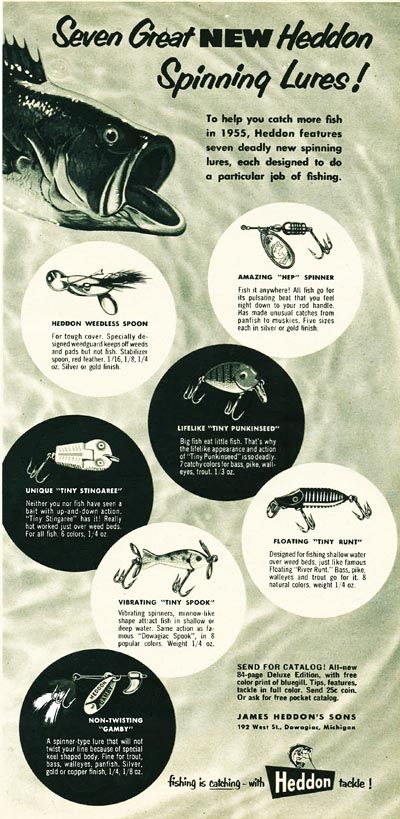
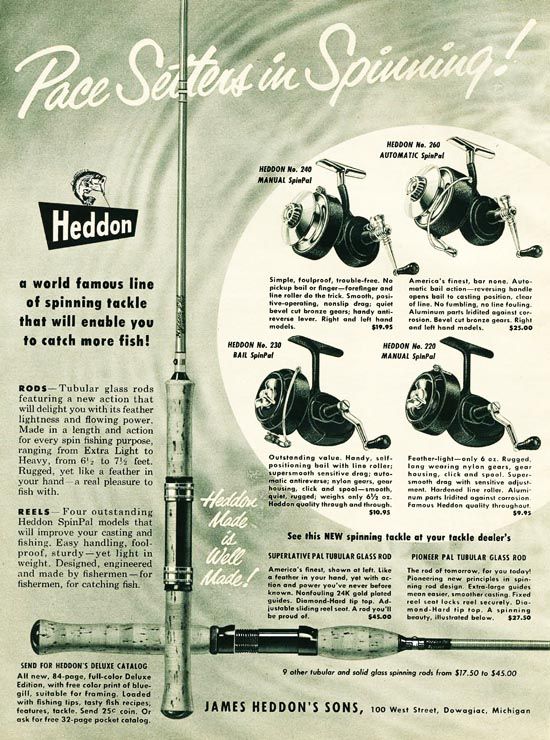
The first ad below is from the 1951 issue of the Sports Afield Fishing Annual. With the possible exception of the Baby Chugger, the “new” Heddon lures for 1951 are an undistinguished class. Most of them did not set any sales records nor were they long mainstays in the Heddon line. Of the baits shown, only the Flaptail Spook has proved to be a fish catcher for me and then only on Northern Pike. By the way, it is one of those “surface” lures that sinks like a stone if not reeled quickly over the water. 1951 was the year that Heddon introduced the solid glass “Pal Spook” baitcasting rods. When one looks through this ad or the 1951 Heddon Deluxe Catalog there is no mention of spinning; no reels, no rods and no appropriate lures. They seemed to have been caught flat footed by the enormous changes that were beginning to take place.


In 1952 Heddon introduced three lures specifically made for spinning. The Tiny Runt, the Tiny Torpedo and the Tiny Lucky 13. Also in 1952 Heddon offered a solid glass spinning rod as well as a short-lived bamboo spinning rod, but still no spinning reels. By 1953 a hollow glass spinning rod as well as the Heddon “Spin Pal” open faced reel were offered. Looking through 1954 outdoor magazines there appears ad after ad for spinning reels, (many of which did not make the cut and are best forgotten) and relatively few ads for baitcasting tackle. In 1955 the following two ads appeared in the Sports Afield Fishing Annual. They speak for themselves as to the changes at Heddon and the rest of the tackle industry in only four years time.


By 1956 there were at least 13 different spinning rods offered in Heddon's catalog as well as six models of open faced spinning reels and page after page of lures specifically designed for spinning. It was indeed a decade of change and in Heddon's case it all took place in the last five years of that decade after the close of World War II.

Around 1953 my Father and I were riding in a small boat and we passed a young man standing on the end of a dock using an open faced spinning reel. I turned to my father and asked him what kind of reel it was. He allowed as it was probably one of those new “spinning reels” he had heard about. Watching the bail go around, I could not imagine how the reel worked. By 1955 I had purchased an open face spinning reel of long-forgotten parentage and lacking a “spinning rod” I used the reel up side down on an old baitcasting rod. A poor arrangement at best, but I was very proud of my outfit and my new found ability to cast my bait and bobber “way out there.” I recall during this time many local men my father's age who put their baitcasting rods in the garage and swore that never again would they use anything but spinning tackle.

Today I seldom pick up a spinning rod with the exception of an ultralite to fish for panfish. My friends and I enjoy using vintage baitcasting outfits the same way some folks enjoy hunting with a bow or a flintlock. I have a difficult time persuading many, my age and older, to go back and give baitcasting another try. Their memories of that time period are filled with backlashes and frustrations. Spinning has never been more popular.
 
Tight Lines
 
Wild Bill Sonnett

Friday, January 18, 2013

The Friday Funhouse


The Video of the Week


A fish jumps out of the water and into a man's hands!


12 Things I Would Buy If Only i Could Afford Them


This B.F. Meek & Sons reel comes just in time for the ORCA "Kentucky Reels Come Home" announcement.


A seven prong spear is really attracting a lot of interest.


Now Fenwick Lunkerstick handles are bringing the big bucks!


Man do I love this Thoren Minnow Chaser in the box!


A Leonard Mills fly reel is amazing.


This Marvin Hedge tournament bamboo fly rod is a great find.


Camp Minnow Traps are neat things.


Who wouldn't like this Heddon Spin-Diver?


Apparently this is a very rare Mississippi license pin!


You're not going to find a rarer metal tackle sign than this Pflueger one.


As always, have a safe weekend -- and be nice to each other, and yourself!


-- Dr. Todd

Thursday, January 17, 2013

I Am Milwaukee Bound!

I am in Milwaukee for the annual show! Make sure to come by the Whitefish Press table and say howdy!

-- Dr. Todd

Wednesday, January 16, 2013

KENTUCKY REELS COME HOME! Orca Nationals Sep. 5-6-7, 2013!


We have finalized the dates of the ORCA Nationals in Frankfort, Kentucky -- Thursday, September 5th, Friday, September 6th, and Saturday, September 7th!

The theme of this year's show is KENTUCKY REELS COME HOME and due to the concerted work of ORCA members Betty Barr and Don Kleier, natives of Frankfort and dedicated Kentucky reel collectors, we will have the first reunion of the Milam family collection! This will include many, many never before seen in public reels, catalogs, original shingle, etc.

If you only have one or two, or two dozen, Kentucky reels, we encourage you to make certain you can be at this gathering! We will have a display room with 24-hour security just to make absolutely certain these precious treasures will get the protection they deserve.

More exciting news. We are working out the details to have a commemorative book documenting the reels brought in to this show from collectors so we will have a record of the amazing gathering of Kentucky reels!

The Capital City Museum is working with us, as are the Chamber of Commerce, the Kentucky Outdoor Writer's Association, and local businesses. We hope the KY History Center will be on board as well.

This will be a VERY popular show and you will want to book early -- I strongly suggest if you want a table to contact Roger about registration as soon as information becomes available in the coming weeks. Double bed rooms will be $88 and suites $179 per night.

I believe this will be the greatest gathering of these historic reels in history. It will be an ORCA nationals to remember...don't miss it!

-- Dr. Todd

Tuesday, January 15, 2013

Voices from the Past: William Henderson's My Life as an Angler (1874)


A book I rarely hear mentioned today, but is of interest to angling historians, is William Henderson's My Life As An Angler… (London: Satchell, Peyton & Co., 1874, 1879).

A noted folklorists, Henderson was an accomplished angler and a good writer who set to put down his fishing exploits not necessarily as a record of accomplishment, but rather as an inspiration to others to find the same kind of joy in angling that he did.

The entire book is well worth reading, but I would point out the lovely introduction as especially worth perusing. It is humble and full of mirth, and isn't that what we aspire to find in our fishing literature?

I am now sixty-one years of age, and am still attached as ardently as ever to the noble sport of angling for salmon and trout. In manhood as in youth, it has often happened that I have been unable to leave home at the periods which my judgment pointed out as the most promising for sport. During these times of disappointment I have never failed to seek what comfort I could in reading books on angling, pisciculture and kindred subjects, and frequently I have succeeded in transporting my mind to the streams I knew and loved so well. At moments such as these, when Pepperhaugh on Coquet, or Coupland on Glen, seemed again to smile upon me, regretful feelings would rise in my mind with regard to the past, with a craving to read the record of my wanderings for half a century by broad river and rippling streams—to recall some scenes of special interest in which with companions, many of them dead or far away, I have enjoyed the fly-fishing of May, or the more productive worm-fishing of June. Though the thoughtlessness of youth and the manifold occupations of maturer age have prevented me from keeping a regular journal of my many and varied wanderings, yet I am not wholly without memoranda of days given to the gentle art—days which do not appear to have been noted down for the excellence of the sport obtained but by mere caprice, and which detail average rather than exceptionally successful angling.

It is with regret that I feel myself unable to relate many a tale of mirth and frolic in which I bore a part. I could neither do justice to them in the recital, nor place them in chronological order. I must content myself with doing little more than copy such memoranda as my old writing-case contains, and chronicle faithfully such incidents as memory has preserved. And this I do in the hope that my dear children will feel an interest in the stories of the past, and especially that my sons may gain from them some instruction in the art of angling.

-- William Henderson. Florence: Christmas, 1874.


To download a full copy of Henderson's book, click here.

-- Dr. Todd

Monday, January 14, 2013

The News of the Week: January 14, 2013


Don't have time to read 50+ fishing and tackle collecting blogs and web sites? Well, let us do it for you! Follow all of the latest news, articles, and stories on our Whitefishpress Twitter account! Hint: You don't need to be a member...just bookmark the Twitter Feed Page or click on latest links to the right!

THE MONDAY 10: The Ten Fishing Stories of the Week You Need to Know

The Big Lead: Remembering the great Bill Cullerton Sr.


Antique fishing lure thief gets sentenced.

Man steals fish from aquarium, then uses it to win a fishing contest.


Don Cox is really into tackle collecting.


Brent Chapman lives the pro bass fishing dream.

Golfer Brenda Ormsby is going fishing.


Female anglers discuss gender barriers.


Bonefish in 130 feet?


50 Shades of Grayling.

A fly fishing show is like an old friend.

Finishing with a Flourish: A gluttonous pike is found dead with a big zanier inside it…


-- Dr. Todd

Sunday, January 13, 2013

1000 Words

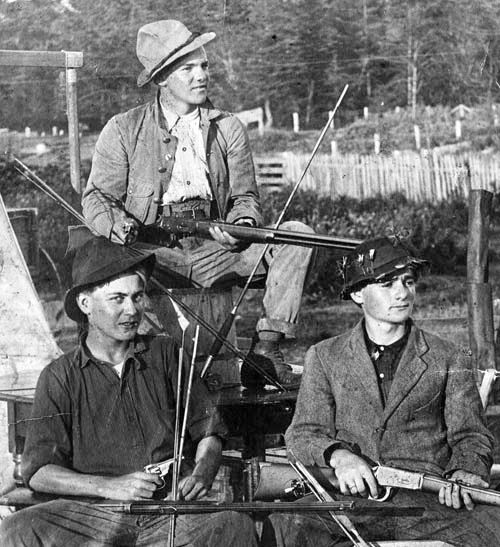
This is one of my favorite photos from the turn of the century featuring three outdoorsmen with all the gear you can imagine. They appear at first glance to be a gang of toughs, but to be honest, I believe that these are three "sports" dressing the part. The give away, to me, is the flies-in-the-hat on the dude in the right hand corner. Still, it's an awfully memorable photograph and one of my all-time favorites.
-- Dr. Todd

Saturday, January 12, 2013

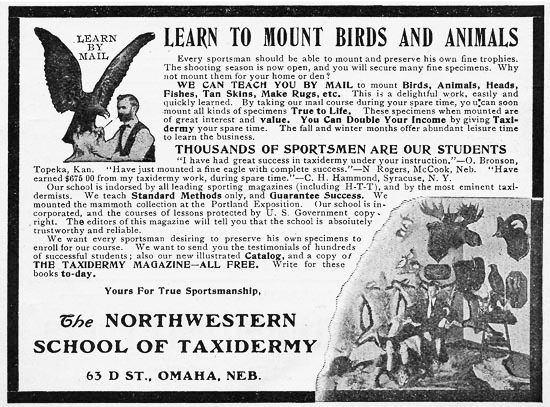
Deconstructing Old Ads: The Northwestern School of Taxidermy (1906)


Breathes there a sportsman over 50 who as a boy did not ponder over the ads for the Northwestern School of Taxidermy? Was there a boy then who did not think that his room would be the envy of all who entered if it were decorated with mounts of fish, birds, game heads, etc.? I have not met him. It seems every gentleman my age to whom I speak had such a dream and sent off for the “free book” which contained countless photos of exotic mounts and was designed to bring a boy's taxidermy desires to a fever pitch. Many saved their money or pooled it with a friend and sent away for the lessons offered. The next part of their tale usually involves luckless sparrows, pigeons, or songbirds who were sacrificed to hone their taxidermy skills. Generally, that is also where their story ends as mounting small birds calls for a lot more patience and skill than most young boys can muster.

The Free Book.


Lessons 1 to 5.


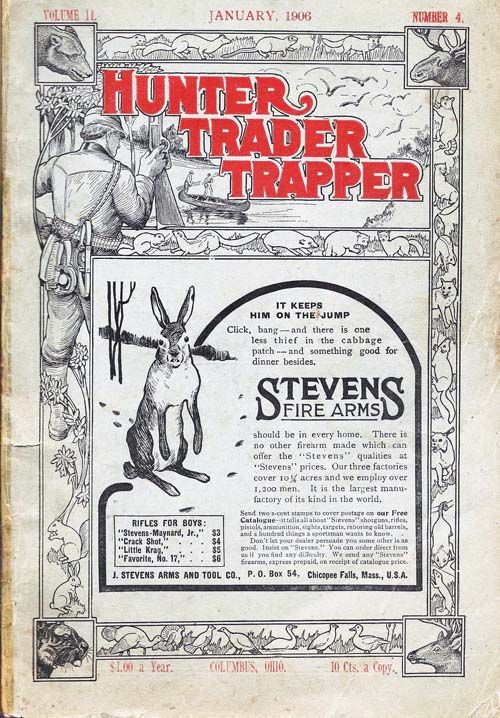
To give you an idea of how long this went on, the two ads shown below are from 55 years apart. The first is from the January 1906 issue of Hunter Trader Trapper and the second is from the January 1961 issue of Outdoor Life.


After putting it off for many years, I sent off for the mail order course. This was after I received a pheasant mount from a “professional” taxidermist that was so poorly done, I knew I could do better. Over time I got reasonably good with fish and achieved a reputation as a very good bird taxidermist. Further books and instruction were responsible for most of my "improvements" but the lessons from the Northwestern School of Taxidermy is where it all started. They say never turn a hobby into a profession as it will take all the fun out of it. When my waterfowl mounts got to looking very good, local taxidermists asked me to do mounts for them. Fifty duck mounts in one season was enough to take the fun out of this hobby and I have not mounted another bird in the last 25 years.

The Northwestern School of Taxidermy went out of business around 1980 after getting into trouble for some questionable business practices and failing to update their lessons. I still find it is fun to read their ads and remember the daydreams I had as a boy thinking about how great it would be to have my room covered in mounts and turned into a true “Sportsman's Den.”


Tight Lines,
 
-- Bill Sonnett