Monday, September 19, 2011

News of the Week: 19 September 2011


Don't have time to read 50+ fishing and tackle collecting blogs and web sites? Well, let us do it for you! Follow all of the latest news, articles, and stories on our Whitefishpress Twitter account! Hint: You don't need to be a member...just bookmark the Twitter Feed Page or click on latest links to the right!

Martha's Vineyard Derby is underway…angling match raises money…Scotsman wins fly fishing championship…walleyes are good for a lake…non-toxic sinkers…man saves dog from bear with fishing rod…finding magic in a surf rod…the act of kayak fishing…twitching on the Rogue…Goliath Groupers are mysterious…Haig Brown festival enters 10th year…Salmon FIshing in the Yemen gets reviewed…Rolls Royce enthusiast/world record fly angler passes on…it must be THE NEWS OF THE WEEK!

The Big Lead: The 66th Martha's Vineyard Derby begins with a reminder of loss, and with Kid's Day.


We get a companion piece on women who run with fish.


The Rocky River folks have a great Huron River wallpaper.


Piranha caught in Lake Jarun.


An angling match lands thousands for charity.


Scotsman finally wins trout fly fishing championship.


Why more walleyes might improve fishing in your lake.


A new non-toxic sinker from New Zealand is making waves.

Man saves dog from bear attack…with a fishing rod.

Finding magic in a surf rod.


The act of kayak fishing.


Canada's super salmon run.


FIshing the "Twitch" on the Rogue River.


The Goliath Grouper is still largely unknown.


Haig-Brown festival marks 10th anniversary.

In Maine, businesses suffer as fish abandon the Kennebec.


The first review of Salmon Fishing in the Yemen.

Finishing with a Flourish: Bud Korteweg, Rolls Royce enthusiast and fly angler with two dozen IGFA world records, has passed away.


-- Dr. Todd

Sunday, September 18, 2011

1000 Words

1000 Words

This is an interesting press photo of Academy Award winning actor David Niven with a surfcasting outfit ca. 1950. Nifty photo!


-- Dr. Todd

Saturday, September 17, 2011

Deconstructing Old Ads: The Wilson Six-in-One Wobbler (1916)


The Wilson Six-in One Wobbler


This ad for the “The New One for 1916” appears is the May 1916 issue of National Sportsman magazine. The Six-in-One Wobbler is not a common bait. I noticed that this ad gives a price for all the other “Wobblers” in the Wilson line but not for this new addition. This makes me think that it cost a bit more due to the amount of hardware on the bait. After reading the following 1919 review of this bait by Dixie Carrol, who normally touted everything as the greatest yet invented, there may have been a problem actually catching fish on this thing. Fishing lures and restaurants are best advertised by positive word of mouth and negative experiences relayed to friends usually stop sales in their tracks:

"The Six-in-One Wobbler has an adjustable visor that can be moved to regulate the diving depth and make the wobbler do anything from a surface crawl to as deep as a six foot underwater swim and the motion it takes is attractive to the Game fins. Of the whole outfit (Wilson Lures) however, I personally stack my chips on the white, red fluted wobbler, I am never without it on the fishing waters."

I have never found a Six-in One Wobbler that was in such poor shape that I could feel good about taking it fishing to see what it would do in the water. Some years ago my roommate at the National NFLCC Meeting learned a valuable lesson from a Six-in-One Wobbler. He had a nice one in his “For Sale” case for two days without a single inquiry or even a hard look by the many collectors visiting our open room. I asked him what he would take for it and he allowed as there seemed to be little interest in it, so he offered it to me at a good price. As I removed it from his case and placed it mine, I mentioned that often a lure sells faster when displayed on a background that highlights its color and commented that this one really looked good in my case. Not five minutes went by when a customer, leaning over my case, excitedly ask if the Six-in-One Wobbler was for sale. I must admit, for just a moment I was tempted to double the price I had just paid for it for no other reason than to see the look on my already somewhat stunned roommate's face! We still laugh about the incident and I still own the bait.

-- Bill Sonnett

Friday, September 16, 2011

The Friday Funhouse

Video of the Week

Another classic 1956 film about striper fishing on the East Coast, by Van Campen Heilner.


12 Things I Would Buy If Only i Could Afford Them

This is a super great Hardy Cascapedia 4/0 salmon fly reel.


This uncatalogued Heddon 150 is driving the Heddon fan nuts.


When is the last time you saw a Hawaiian-made deep sea reel for sale?


Break out your wallet, 'cuz you're not going to see another Earl Parker Gresh six pack display box anytime soon!


Here's a Heddon Baby Torpedo salesman's ring showing 35 colors!


An awesome Turtle brand creel shows why these are just the best.


This is a really beautiful 19th century fishing painting.


Who doesn't like a 9/0 Fin-Nor Reel?


I LOVE this Heddon Tadpolly in the box.


Indy 500 Checker Pattern on a Heddon 210? OH MY!


A large brass bait box is a nifty find.


How about a Boeing Machinist's prototype reel???


As always, have a great and safe weekend, and be good to each other--and yourself.

-- Dr. Todd

Thursday, September 15, 2011

Thursday Review: Classic Angling (Sep-Oct 2011)

Thursday Review: Classic Angling (Sep-Oct 2011)

The morning mails brought a welcome delight -- the latest edition of the great British magazine Classic Angling. This was an exceptionally awesome issue, covering a huge variety of fishing history.


One of the things I love best about the magazine is it is tune to the modern world and the latest in fishing news. This is why I was delighted to read that Reuben Heaton's--a legendary fishing reel maker--would be manufacturing reels again after a 60 year absence. I was also interested to learn Lang's Discovery Auction would be held in August in upstate New York. It will be interesting to see how much this increases traffic to this always looked forward to event.

As far as features, there were a number of them and they were all excellent. Leading the way was Steve Starrantino and Bob Mead's "Fly Provenance Is Just the Toughest Thing to Prove" which details the many difficulties in trying to prove who actually made a fly. A very well done article.

Another neat article was on legendary pike man Alfred Jardine, who's reputation has taken a bit of a beating of late. Graham Booth's "Exploding the Myths Behind Jardine and his Record Pike" helps to set the record straight on a man who, by all accounts, was one of the true pike fishing legends.

Neil Freeman, one of the best writers out there, gives us "Don't be Fooled by Salmon Abundance" which helps explain why the sudden influx of salmon on the Test does not necessarily mean that all is well in the world of salmon.

John Bailey, recently feted by Manchester United F.C. and about to launch a new television fishing series, gives us the insight in how he helped relaunch the beloved Mr. Crabtree Goes Fishing.

As a bookhound, I always love Judith Head's writings on angling ephemera. This issue she tackles "The Early Days of Copyright" and does a bang-up job as usual.

My own contribution to this issue was an article I was very proud of dealing with the British rodmaker Lt. Col. Gerald Oborn. "The Wonderful Cane Rod of Colonel Oborn" was based on a series of interviews with both Oborn's son and John Price, who worked with Oborn for a number of years.

Finally, ORCA columnist and legendary spinning reel historian Ben Wright -- who's new book we reviewed a couple of months ago -- and who's monthly Spinning Reel Reports appear on this very blog, gives us a tremendous article entitled "The Genesis of the Fixed-Spool Reel." Really a nifty piece.

There are dozens of smaller articles as well, including one that finally explains how the Mitchell Reel got its name.

This is a fabulous issue of a magazine that keeps getting better and better. The magazine is ably edited by Keith Elliott, and is available through subscription by Clicking Here.

-- Dr. Todd

Wednesday, September 14, 2011

52 Trade Houses Part 24: The Fishing Tackle of W.T. Grant Stores

Image Hosting by PictureTrail.com

Over the course of the next year, we'll be detailing the history of 52 companies that sold branded fishing tackle. 52 trade houses in 52 weeks -- some obscure, some famous, and all available exclusively here on the Fishing for History Blog! If you have any items from the week's entry you'd like to share with us, please send it my way and I'll make sure it makes it on the blog.

For a discussion of what exactly trade tackle is, Click Here. Enjoy the 52 for 52!

o - o - o - o - o - o - o - o - o - o - o - o - o - o


Trade House Tackle, Part 24:

The Fishing Tackle of the W.T. Grant Stores


There were many "five and dime" stores, but as far as I know, only the W.T. Grant Co. billed itself as the "25 Cent Store." Founded in 1906 by William Thomas Grant, the Grant chain of discount stores began life in 1906 in the city of Lynn, Massachusetts (the home town of legendary rodmaker Wesley D. Jordan). It was founded with $1000 that Grant had saved as a salesman, and it was an immediate success. His business success was predicated on the idea that he should sell people what they wanted at a price they could afford.


William Thomas Grant established the Grant Foundation in 1936.

The firm quickly grew to become one of the largest of its kind in America. by 1936, Grant Stores took in nearly $100 million in sales, and had become a staple of many American communities, both large and small alike. From downtown Boston to Concord, North Carolina to Reedley, California, Grant stores were as much a part of the community as any chain in America.


Grant Common Stock from the post-World War II era.


After World War II the conservative nature of Grant's corporate culture eventually caught up with it. Despite 1200 stores, it began to founder in the 1960s and attempted too late to distinguish itself from the competition with its larger "Grant City" clones of Kresge's K-Mart stores. Perhaps because William T. Grant was still nominally in charge (he passed away in 1972 at the age of 96), the firm was unable to adapt and their fall was quick and spectacular (more on this later).


A Grants store from the 1960s.


Utah W.T. Grant ca. 1963.

The company sold a full line of sporting goods, including entry level fishing tackle. Ads from the 1920s touted fishing tackle, and in the 1930s Grant ads were declaring their stores carried "a full line of fishing tackle."

Beginning around 1950 this tackle was sold under their proprietary trade name of "Grantsport." A good example of Grantsport tackle are spinning reels; Ben Wright's Spinning Reel Reference & Identification Guide lists three different Grant reels, including the Grantsport 710 and RL-700. They also sold a spincast reel with the Grantsport logo on it.


There was other Grant marked tackle including hook tins, snelled hook holders, and even tackle boxes. There was also a line of low priced fishing rods. Most of this tackle was marked "Grantsport." All of it reflects a company that tried its best to give the customer what it wanted.
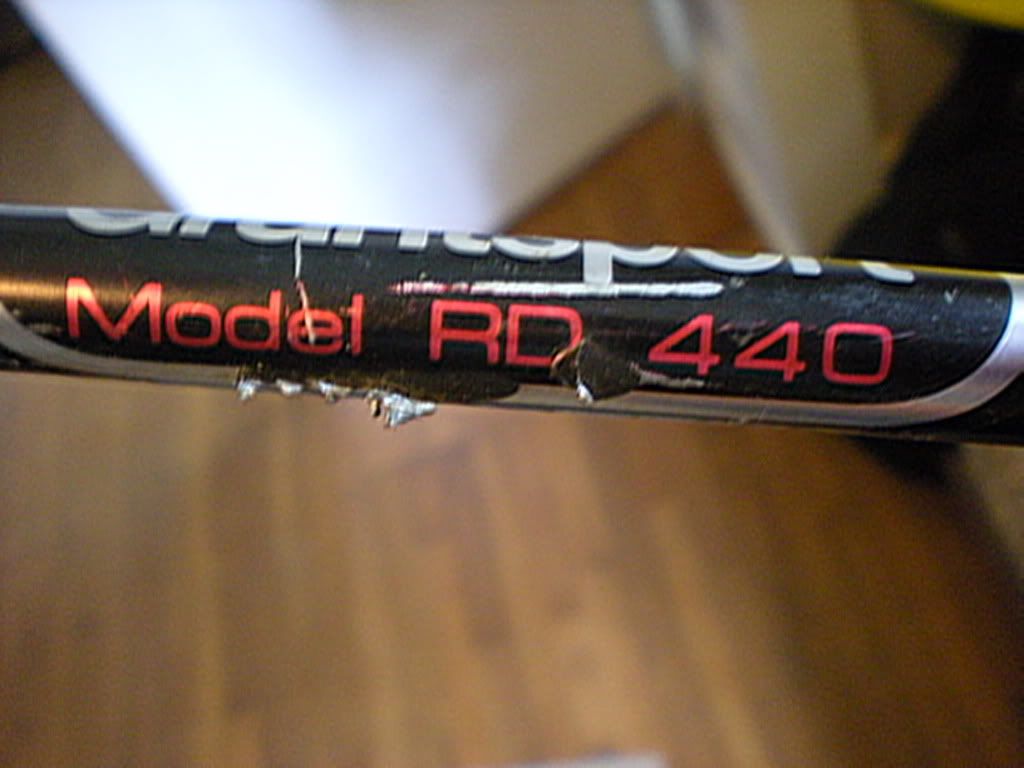

A Grantsport Model RD 440 fishing rod.

The company's fall was dramatic, and changed American corporate culture. The company's directors had unfettered control over the firm, and through a series of bad decisions (including granting store credit to anyone without background checks) foundered and failed in a period of 24 months, ending in a massive bankruptcy in 1976 (the second largest to date in American history). As a result, new rules were instituted to keep large publicly traded companies from being completely controlled by a small cadre of directors.

W.T. Grant stores lasted 70 years and left us some interesting fishing tackle. They sold tackle from the 1920s (and perhaps earlier) and many American anglers got their first rod and reel at Grant's. They were a part of the nation's fabric and their tackle, although not high-end, is worthy of collecting.

-- Dr. Todd

Tuesday, September 13, 2011

Voices from the Past: A Fishing Story (1915)


This is a nifty little fishing story lifted from the pages of CUrrent Opinion for September 1915. I thought it was charming.

Fishing in the Park.
A fish story, told at a banquet in Milwaukee by Representative Bartholdt of Missouri, has been started on a successful tour of the east by the Philadelphia Bulletin. It goes further here:
"Those people," said Bartholdt, "remind me of the old man. Yes, they remind me very much of the old man.

"He had a soft, daft look, the old man I'm speaking of, and he sat on a park bench in the sun, with rod and line, as if he were fishing; but the line, with a worm on the hook, dangled over a bed of bright primroses.

"'Daft!' said a passer-by to himself. 'Daft I Bughouse! Nice-looking old fellow, too. It's a pity.'

"Then, with a gentle smile, the passer-by approached the old man and said:
"'What are you doing, uncle?'

"'Fishing, sir,' answered the old man, solemnly.

"'Fishing, eh? Well, uncle, come and have a drink.'

"The old man shouldered his rod and followed the kindly stranger to the corner saloon. There he regaled himself with a large glass of dark beer and a good fivecent cigar. His host, contemplating him in a friendly, protecting way, as he sipped and smoked, said:

"'So you were fishing, uncle? And how many have you caught this morning?'

"The old man blew a smoke cloud toward the ceiling. Then, after a pause, he said:
"'You are the seventh, sir.'"


-- Dr. Todd

Monday, September 12, 2011

News of the Week: 12 September 2011


Don't have time to read 50+ fishing and tackle collecting blogs and web sites? Well, let us do it for you! Follow all of the latest news, articles, and stories on our Whitefishpress Twitter account! Hint: You don't need to be a member...just bookmark the Twitter Feed Page or click on latest links to the right!

Bass moves to Birmingham...Australia's "Formula One" of big game fishing...protecting the Chippewa River...vibrating jigs...Kiwi inventor wins tackle award...pike on the fly...13 year old better angler than you, catches monster Tiger Trout...reelin' the big ones in...Ted Williams gets a postage stamp...74 year old man refuses to be saved until rescuers save his tackle, too...it must be THE NEWS OF THE WEEK!


The Big Lead: BASS moves its headquarters to Birmingham.

Why Australia's Lizard Island is the "Formula One" of big game angling.


Remember fishing is about fun.
Why protecting the Chippewa River is .

an endless task

Molix's new vibrating jig promises to be a big hit.


Kiwi inventor wins best tackle award.

The hatchery opens for tours on September 24.

Salmon River

Why pike on the fly is an absolute blast.


13 year old much better angler than you, catches monster Tiger Trout .


How to reel in the big ones.

Fishing star (and baseball player) Ted Williams to get his own stamp. Bummed it isn't of him fishing…


Finishing with a Flourish: 74-year old man refuses to be pulled out of lake unless folks pull in his tackle, too.

-- Dr. Todd

Sunday, September 11, 2011

1000 Words

1000 Words

A very cool "posed" studio image of a young Minnesota angler and some nice bass.


-- Dr. Todd

Saturday, September 10, 2011

Deconstructing Old Ads: The Most Beautiful Shakespeare Lure Ad Ever? (1929)


The Most Beautiful Shakespeare Lure Ad Ever?

Beauty is in the eye of the beholder, and in my case, this is the most beautiful Shakespeare lure ad I've seen. We're not talking catalog illustrations here but rather a full page ad on the back cover of the June 1929 issue of Field & Stream. I've looked through several hundred early “Outdoor” magazines in order to come up with what I hope are interesting ads for these weekly features and I must say that this ad is so out of the ordinary for Shakespeare, that I was somewhat stunned when I first saw it.


Shakespeare advertised a great deal in the earliest years of the twentieth century then went through long periods when advertising was rare. More often than not, only reels were advertised with little mention of lures. Very few Shakespeare ads were presented in full color before world War II.

Economic times were good and the Shakespeare Company apparently was enjoying that prosperity. The founder of the Company, William Shakespeare Jr. was a very astute business man and I'm sure he expected sales of these lures to provide a good profit despite the high cost of an advertisement of this quality. In June of 1929 there was no hint of the troubling times that were only months away in the form of the “Great Depression”


-- Bill Sonnett