Showing posts with label baseball and fishing. Show all posts

Sunday, February 1, 2015

1000 Words: Baseball's Famous Anglers


Baseball produced a lot of interesting connections to fishing and tackle (just type the word "baseball" into the search function to the right to get several dozens articles on the subject we've published). Here we see Yankee legend Lou Gehrig fly fishing in this excellent photos ca. 1930. Gehrig liked fishing and there are a number of photos of him angling.


-- Dr. Todd

Sunday, November 3, 2013

1000 Words


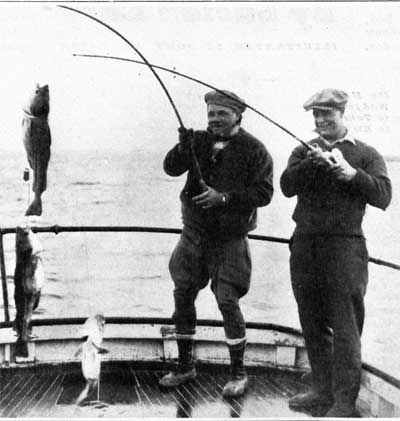
This week in 1000 words we get a superb fishing photo dated 1938 of the hall-of-fame Philadelphia A's slugger Jimmie Foxx. Old Double X could clout with the best of them (58 home runs in a single season) and he could clearly fish with the best of them, too. What a catch!


-- Dr. Todd

Thursday, October 20, 2011

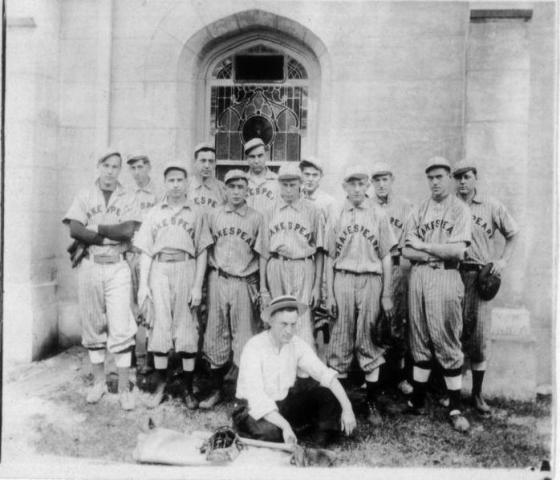
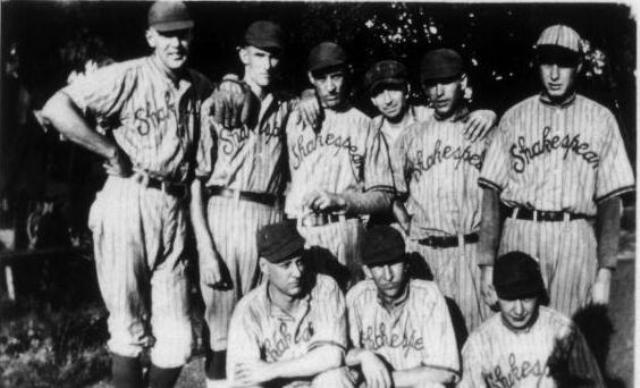
The Shakespeare Baseball Team ca. 1920s-1930s

The Shakespeare Baseball Team ca. 1920s-1930s

Last year, in honor of the World Series, we wrote about Matt Lollman's Great-Grandfather and Grandfather, the first father-son player-manager to win the World Series. Matt followed this up with a great piece I'm using to celebrate the Fall Classic. Here's his great article on the Shakespeare Baseball Team of the inter-war period.

I think we would be remiss without acknowledging the lure and reel connection with Shakespeare's sponsored Baseball Team from the late 1920s early 1930s.
 
Heres a link to two photos of the baseball team ca. 1930.


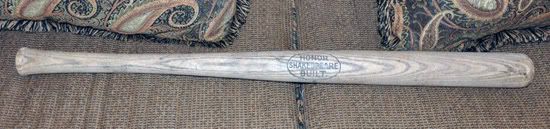
Matt's Shakespeare Baseball Bat.

I also have as one of my most prized lure possessions a bat from the Team. And as additional photo here is one I have of Babe and my great grandad on horseback in 1925 Heading North from Spring Training is the caption grandmother has written on the back.
 
-- Matt Lollman

Wednesday, November 3, 2010

Baseball and Fishing: One Last Pitch

Baseball and Fishing: A Final Entry

Well, I'd be remiss to let the World Series come to an end (congratulations to the beleaguered Giants fans!) without one final article on baseball and fishing. This one comes from NFLCC member Matt Lollman, who has a tremendous story to tell. Here it is in his own words:

As you may or may not know my granddad and great granddad, Steve O'Neil and Skeeter Webb, were the only father and son (technically father-in-law/son-in-law) player-manager team to ever win the word series. This was for the 1945 Detroit Tigers.

Steve actually played with Babe Ruth on the 1925 Yankees and earlier had played with Shoeless Joe Jackson and won the pennant and World Series with Cleveland in 1920.


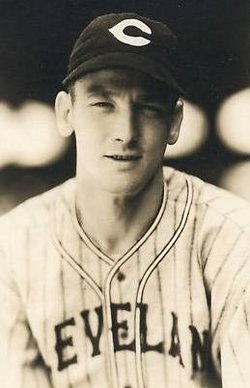
Steve O'Neill as an Indian, where he spent 13 seasons.


James L. "Skeeter" Webb spent 12 years in the majors with five teams, winning a world series in 1945 under his father-in-law O'Neill.


Here is a picture of my grandfather with Babe Ruth:


Thanks, Matt! I would also note that Steve O'Neill, Matt's great-grandfather, was one of SIX brothers, all of whom played in the major leagues! Two of Steve's daughters married major leaguers, including Skeeter Webb, Matt's grandfather. So no matter where Matt turns in his family tree, he's going to run into a major league baseball player!

Matt also had a story to relate about a major tackle manufacturer and a sponsored baseball team, but alas, baseball season is over for 2010. You'll just have to come back when Baseball and Fishing resumes again in 2011! After all, spring training is only four months away....

-- Dr. Todd

Wednesday, October 27, 2010

Baseball and Fishing: Babe Ruth, Fanatical Angler

Babe Ruth: Fanatic Angler

Perhaps the most iconic figure in the history of baseball is George Herman "Babe" Ruth, the legendary slugger for the New York Yankees. Ruth began his career as one of the great pitchers in the league, but when he turned full time to hitting, he revolutionized the game. For several years, he hit more home runs than entire teams.

Ruth had legendary tastes and appetites, but one of the things he loved to to do in his spare time was fish. He talked in his autobiography Babe Ruth's Own Book of Baseball how he was as "funny looking a kid as ever got a trouncing for cutting class to go fishing." He became nationally famous early on as a piscator, and was even famously arrested in June of 1926 for fishing without a license in Michigan, and although an arrest warrant was issued, it had no repercussions. Interestingly, the press reported that the Babe only caught "a few scrawny bluegills." I can't help but think the wardens were Tigers fans....

It wasn't until Lou Gehrig joined the Yankees that Ruth really caught fishing fever. "Lou Gehrig would rather fish than eat," Babe famously wrote in his autobiography. They became very close and fished often together.


This famous photo of Ruth and Gehrig fishing was run in the Saturday Evening Post in 1931.

Much of their time spent fishing was in Florida, where as author Harvey Frommer noted, they went "boating and fishing for king mackerel or grouper in the Gulf of Mexico, then prevail(ed) upon a hotel cook to prepare the fish for supper, the Babe was having the time of his life." Ruth became so obsessed with fishing that according to Leigh Montville, one of his biographers, he used to go to the fish markets in New York and buy live fish, then put them in the bath tub in his hotel room and invite players and media alike up for an impromptu fishing tournament.


Photo of Larry Hunter and Babe Ruth fishing in Florida.

Ruth's fishing accomplishments made national news, as did most of what he did. It's hard to explain just how popular Ruth was--hardly a week went by during the 1920s and 1930s that did not see a feature article about him. Here's an example of a 1929 Associated Press photo of Ruth and his wife with a huge mess of fish:


The photo was run in hundreds of newspapers around the country.

One of my favorite stories of Ruth and fishing was his contest with Harold G. Lentz, champion surf caster, that took place in 1921. As covered by the national media (and magazines like Popular Science), Lents tried to cast a four ounce lead weight further than the Babe could hit a home run. According to Popular Science, Lentz won the contest in front of the 30,000 people who showed up at the Polo Grounds to witness it. Below are some photos from the article:


Here's a link to a photo of Lentz with Ruth owned by the Bettman Archives.

Ruth had a legendary soft spot for children. A good example of this is a story reported by the Equine Chronicle about horse breeder Carol Harris, whose father was a friend of Ruth's when she was a child. He used to come to New Jersey to visit, and while there, the two became fishing partners. “He used to visit my Dad and he loved for me to go fishing with him," she reported. "He hated worms and I would always bait his hook and then take the fish off."


So to end Baseball month here on the Fishing for History blog, let's tip a cap to the greatest player who ever lived--Babe Ruth. And let's remember him as a fanatical angler to boot.

-- Dr. Todd

Wednesday, October 20, 2010

Baseball and Fishing: Joe "Unser Choe" Hauser's Sport Shop

Baseball and Fishing: Joe "Unser Choe" Hauser's Sport Shop

I was gratified at the reaction to my recent articles on Indianapolis baseball legend (and tackle merchant) Donie Bush and Red Sox slugger and world-class angler Ted Williams. By the way, Indianapolis native Dan Basore wrote in the comment section that the baseball stadium in Indy was for years named Bush Stadium after Donie Bush. "It wasn't too far from my home and I saw Herb Score pitch there," Dan notes. Herb Score, of course, was the hardthrowing righthander who's career was said to have been cut short by a line drive that damaged his vision. In reality, Score regained his 20-20 vision and claimed it was a shoulder injury that ended his career. Score did become an announcer of note for many years afterward, however, helming the mike for the Indians for over three decades.

This week we will cover another former major leaguer who also owned a sporting goods store and sold marked fishing tackle bearing his name. This man also made a significant mark on baseball history, and in fact, became known as one of the most feared home run hitters in history. The reason why most people have never heard of him before is because he hit most of his home runs in the minor leagues. Joe "Unser Choe" Hauser, Sheboygan sporting goods merchant and minor league home run king, is the subject of this weeks "baseball and fishing tackle" profile.

A Wisconsin native born and raised in 1899 in Milwaukee, his German background led to his unique nickname. Baseball fans, being the fickle creatures that they are, of course are noted for booing players when the don't perform, a strange development considering failing 7 our of 10 times at the plate makes one a superstar. While playing in the minor leagues for Milwaukee, as Joe himself noted, the predominantly German fans refused to boo "Unser Joe," or in German, "Our Joe." The nickname followed him throughout this career.

Hauser reached the majors in 1922 for the prodigious Philadelphia A's, whom he played for on-and-off (with significant time missed for injuries) for the next seven years. The 1920s A's were only slightly below the legendary Yankees in star power; his last year as an Athletic was 1928 when the team won 98 games and fielded a roster that included Mickey Cochrane, Al Simmons, Ty Cobb, Jimmie Foxx, Tris Speaker, Eddie Collins, and Lefty Grove, all of them hall-of-fame members. The A's would go on to win the world series in 1929 and 1930, although Hauser was no longer with them at the time.


Joe Hauser is sometimes called a pedestrian major league hitter, but that is not quite the truth. Take his 1924 campaign. He hit .288 with 27 home runs and 115 RBI. Those are certainly good numbers by today's standards, but baseball was just leaving its dead ball era and his 27 homers was second in the league to Babe Ruth. Sadly, just when his major league career was in its ascendancy, he broke his knee cap in four places, and although he had two abortive attempts to restart his career, his major league career came to an end in 1929 with the Indians at the age of 30.

But Unser Choe was just getting started. Banished to the equivalent of "AAA" baseball, he began to hit home runs at a prodigious rate. With the Baltimore Orioles in 1930, he smoked an incredible 63 home runs--to that point an all-time record--with 175 RBI. But after another injury Baltimore sold his contract to the Minneapolis Millers, a move brought about in large part because the Orioles had purchased Buzz Arlett's contract from the Philadelphia Phillies. In an interesting twist, Arlett would become the all-time minor league home run king, eclipsing Hauser's career record.

After 49 homers in 1932, Hauser came back with a legendary year in 1933 when he clubbed a new record 69 homers for the Millers. The next three years years saw him average 30 home runs due to injuries. In another interesting coincidence, Hauser's manager with the Millers was no other than Donie Bush, who as we learned last week went on to found the Bush-Feezle Sporting Goods company in 1937. Fascinatingly, his minor league home run rival Buzz Arlett joined him Minneapolis in 1934.


Perhaps Bush influenced Hauser, for that year, at the age of 38, when the opportunity arose for him to return home, Hauser became manager of the Sheboygan minor league team (playing Class D ball). The Sheboygan Press declared in a large headline that 225 local baseball fans "Honor Joe Hauser at Big Booster Banquet." The warm homecoming must have tugged his heart strings, for he spent the rest of his life in Sheboygan.

In the spring of 1938, Joe Hauser opened a sporting goods store to supplement his meager income as a D Ball manager. His partner was local sportsman Les Kuplic, "a well-known member of the Sheboygan Chairs baseball team, now known as the Sheboygan Indians," as the The Sheboygan Press noted on July 31, 1942. "Mr. Kuplic will be remembered as a former tennis champion." Kuplic also played for the Sheboygan Red Skins from 1938-1940, a professional basketball team that was one of the charter seven members of the N.B.A. The store was known as "The Hauser & Kuplic Sports Shop" and was located at 522 North Eight Street. According to the aforementioned article, the company:

was known as 'Pond's Sports Shop' before 1938 at which time it was owned by a Mr. Pond and managed by Mr. Kuplic. When Mr. Pond's lease expired, Mr. Kuplic decided to go into the business if he could get Mr. Hauser to form a partnership. Seeing an opportunity to retire from the active sports field and still continue in the profession of his choosing, Mr. Hauser was glad to take over a half share of the business...bowling, tennis and fishing are among the leading sports which Hauser supplies.


Picture of Les Kuplic from 1942.


Business must have been good--Hugh Fullerton, Jr. wrote in his syndicated baseball column on May 29th, 1945 that "Joe Hauser, the old minor league home run king, is running a sports goods store in Sheboygan, Wis. and making more dough than he ever did in baseball." By that time he had moved to 522 N. 8th Street, and then in 1946 purchased property at 914 N. 8th Street and remodeled the entire building. The new store opened on April 12 and 13, 1946, and was "virtually the talk of the town. Sporting a cream and maroon glass front inscribed with Joe's signature, the building is one of the most attractive in the business district."


Assisting Hauser in the new store was Harold Kaye, who "will handle the store while Joe makes trips with the Indian baseball team," as an article in The Sheboygan Press declared on April 10, 1946. It is not known when the partnership with Kuplic ended but by this time there was no mention of Kuplic; Hauser's wife Irene was the bookkeeper. The firm still carried "all types of fishing tackle." As another article dated August 10, 1953 in Sheboygan Times declared, Hauser's shop was "one of the finest sporting goods stores in this section of the state, [and is] known as Joe Hauser's Sports Shop."


When the Wisconsin State League folded with the coming of major league baseball to Milwaukee, Hauser (after a brief stint as manager in Union City, TN) ended his career managing my home town Duluth minor league team in the old Northern League. From 1955-1958 he skippered the Duluth-Superior White Sox (the only time I know of when they were not called the Dukes) and won a Northern League pennant in 1956. That team was led by Don Mincher (who later spent 13 years in the majors) and included four other future major league players: Jack Kralick, Hal Trosky, Jr., Glen Hobbie, and Cam Carreon. In 1958 Unser Choe retired from baseball and returned to his sporting goods store in Sheboygan, where he remained until retiring in May, 1984.


Joe Hauser was inducted into the Wisconsin Sports Hall-of-Fame.

When baseball writer John Pierce interviewed Hauser for a piece published in the February 1954 Baseball Digest, the retired slugger could declare that the sporting goods trade "hasn't made him rich, but it's provided a steady income and given him a good outlet for the yarns and anecdotes about the game he loves." He became a beloved fixture of the local scene, and was the subject of frequent interviews. Here are two interesting facts he related at various times. "I never got knocked down all the time I was playing," he related to Tom Flaherty in an interview in 1992, and as he told an earlier interviewer, he was never once pinch hit for in his long career.

Most native Sheboyganites over the age of 50 will remember Hauser's Sports Shop. He was a legend in town and ran an expansive sporting goods store for almost fifty years, selling a ton of fishing tackle to the local angling community. Occasionally Hauser-marked items come to market; they are mainly snelled hook envelopes or other paper ephemera. The one pictured below was wholesaled to Hauser-Kuplic Sporting Goods from Ed. K. Tryon, the massive Philadelphia-based jobber who sold tackle nationwide to tackle and sport shops. This one came in a dealer box of twelve, all of which were stamped with the same non-descript marking depicting the pre-1942 Hauser address. I would bet this dated to before WWII.


Unser Choe Hauser passed away in 1997 at the age of 98. He was truly the Minor League Home Run King.

-- Dr. Todd

Wednesday, October 13, 2010

Baseball and Fishing: Ted Williams--Angler (a Retrospective)

Baseball and Fishing: Ted Williams--Angler (a Retrospective)

Ted Williams is perhaps the most famous of the baseball playing anglers. He was such an acclaimed angler that he was inducted in the IGFA Hall-of-Fame in 2000, and spent the majority of his post-baseball career (and a portion of his playing days) as a tackle merchant, both on his own (Ted Williams Inc. until 1961) and as a spokesman for Sears, Roebuck & Co. fishing tackle.


Much has been written of Williams on-line, including my own little epistle that has turned out to be one of the most viewed articles in the history of this site. It dealt with his famous (at least among collectors) Upper Deck commercial. If you missed this one, you can read about it by clicking here.


As I've been conducting a lot of research on Williams over the past several years, I will have some great pieces on the Splendid Splinter's angling career over the course of the next year. But there's a lot to keep you busy in the meantime:

Sports Illustrated's great article by Williams' biographer John Underwood on Ted and fishing: Click Here to View.

Fran Folsom's piece on Williams fishing on the Miramichi River: Click Here to View.

ESPN's piece on the Greatest Flyfisher who Also Played Baseball: Click Here to View.

Richard Ben Cramer's fantastic 1968 piece for Esquire: Click Here to View.

And finally, if you have 28 minutes, watch this fantastic video on Ted Williams fly fishing for Atlantic Salmon uploaded by Sears, Roebuck & Co. It's a hoot.


As baseball playoffs are in full swing, let's remember Ted Williams as both an angler and the best hitter who ever lived.

-- Dr. Todd

Wednesday, October 6, 2010

Baseball and Fishing: Bush-Feezle of Indianapolis

Baseball and Fishing: Bush-Feezle of Indianapolis

I am a massive baseball fan who is certainly in a very, very good place as my childhood team (the Minnesota Twins) and my adopted team (the Cincinnati Reds) have both won their respective divisions. To honor the start of the baseball playoffs, and a possible Twins-Reds World Series, I would like to relate a recent tackle find involving a very famous major league baseball player.

My story begins with a line spool. As many know I particularly like trade house tackle, and when I saw this "B.F. Monogram" line spool marked with a Bush-Feezle Sporting Goods Co. of Indianapolis, IN label I knew I had to have it. Luckily, I was able to purchase it, and while I awaited its arrival I began to dig around and try and find some information about this sporting goods merchant I had never heard of before.


It didn't take long to identify the Feezle in the company name. When it comes to research, it's always easier to track down an unusual name such as Feezle than it is to find a Smith or a Jones. So it was very easy to discover that the man in question was Stanley Feezle of Indianapolis. His name appeared all over the internet in large part because this sporting goods merchant was also a part time scout for the Brooklyn Dodgers.

Feezle was very good at his scouting job, so good in fact he was responsible for discovering two great players. The first was Carl Erskine, who according to one biography of this pitcher on the fine SABR baseball research site was scouted by "Stanley Feezle, who owned a sporting goods business in Indianapolis and was sent by the Dodgers to scout him." Erskine turned out to be a steady righthanded pitcher who in his twelve year major league career won 122 games.

But if Feezle found a gem in Erskine, he took home a true diamond when, in 1943, he discovered a lanky power-hitting shortstop at St. Joseph's College in Indiana. He convinced the nineteen year old Gil Hodges to sign a contract with the Dodgers, and soon after the Dodger GM Branch Rickey suggested he try first base, where he'd spent the vast majority of his career. After a stint in the army (where he fought at both Tinian and Okinawa), he eventually developed into one of the best players in the game. A Gold Glove fielder with significant power, he ended his eighteen year major league career with 370 home runs and three gold gloves.

So Stanley Feezle played a small but important role in major league baseball history. Born in 1897, despite his diminutive stature, Feezle made a name for himself very early on in the budding sport of basketball. As early as 1915 his exploits were being chronicled by the Indianapolis Star, his home-town newspaper. By the late 1920s his playing career was behind him, and he embarked on a very successful career as a professional basketball referee, often holding clinics attended by 500 people or more.

From a refereeing standpoint, Feezle believed that since the game was designed as a "no contact" sport, it should be officiated as such. Here's a commentary from nationally syndicated sports columnist Edward J. Neil of the on the 16 February 1935 Purdue-Long Island University game played at Madison Square Garden:

"The work of Stanley Feezle, diminutive Indianapolis referee who officiated the Purdue-Fordham game, may have been a revelation to those who are interested in making basket ball more popular in the East. Stanley went right to work from the opening tipoff, pounced on the first two instances of contact that could possible be interpreted as holding fouls (they were fouls, too, but of the sort too often overlooked in the East) and the boys on both teams immediately settled down to play by far the cleanest game of any produced in six Garden double-headers to date. The fact that it was the most entertaining game as well as the cleanest ought to give Eastern coaches an idea of what a good show basketball can be when it is played with due regard for the theory that it is a no-contact game, as the rule book says it is. And I'll never be annoyed again at Hoosiers bragging about their kind of basket ball. It's swell."

By this time he was widely considered not only basketball-mad Indiana's finest referee, but the best referee in the Big 10 and one of the best in the nation. This may be why in 1937 he decided to enter the sporting goods business. As The Logansport Pharos-Tribune declared on 13 December 1937:

Stanley Feezle, the ref, and Donie Bush, the hot-stove man, now co-proprietors of a sporting goods store in Indianapolis, are sponsoring a Thursday night basketball league there. The lads in that league shouldn't wait for equipment!

So we now get the second partner in the sporting goods store, and like Feezle, he's an important figure in the history of baseball. Unlike Feezle, though, he was an actual major league ballplayer!


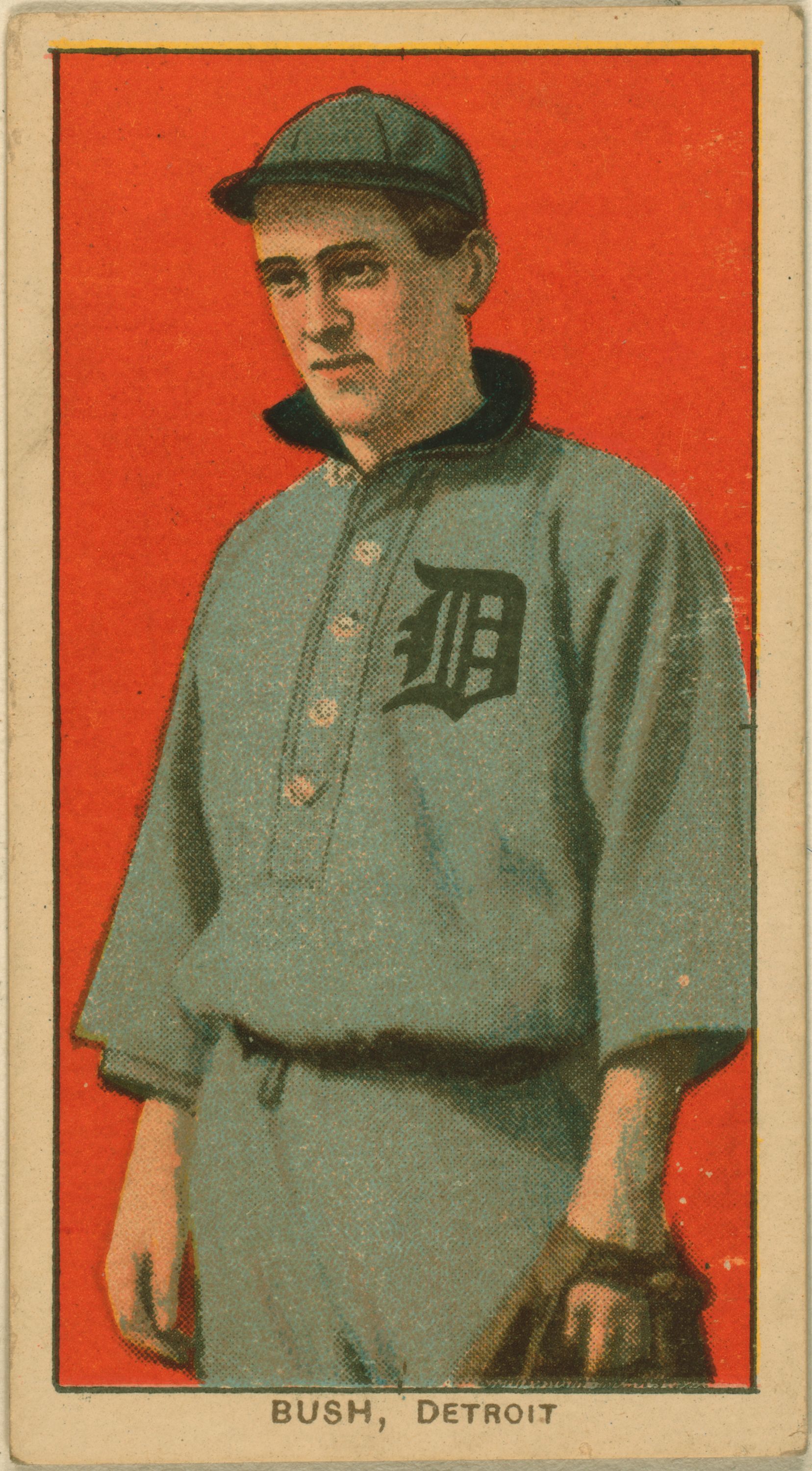
Owen "Donie" Bush (1887-1972) was an outstanding sixteen year veteran of the big leagues with the Tigers and Senators. At just 5' 6" and 130 pounds, Bush was one of the smallest players in the league but played shortstop better than anyone during his tenure. A decent hitter with a great eye at the plate (when he retired he ranked #2 in career walks), Bush is most noted for setting the American League record for stolen bases with 52 in 1909--a record that stood 83 years until Kenny Lofton broke it in 1992. He also ranks #5 all-time with 337 sacrifice hits, setting the plate on numerous occasions for his Tiger teammate Ty Cobb. Later, Bush would become a manager of note, leading the Senators, Pirates, White Sox, and Reds at various times between 1923-1933. As a manager, his greatest success came in AAA as the skipper of the Minneapolis Millers, where he managed Ted Williams the year before the lanky slugger was called up by the Red Sox.


A native Indianapolis boy, it is not a surprise that he got into the sporting goods business with Feezle in 1937. Their association was short-lived because in 1941, Bush became co-owner of the Indianapolis Indians. He would remain owner, manager, or president of his home-town Indians until 1969. Due to his executive position, he divested his partnership in the sporting goods store with Feezle, likely around 1942 or 1943. They remained close; Feezle was scouting for the Indians throughout the 1950s while Bush was president of the by then community-owned club.

The nifty line spool that bears both of these baseball legend's names is a great piece of fishing history, harkening back to the golden age of baseball. John Etchieson writes that the Monogram brand line was made by Gladding between 1938-1941, which makes it a nifty pre-World War II relic and a wonderful reminder of the connection between fishing and baseball.

-- Dr. Todd

Tuesday, July 21, 2009

Voices from the Past: Tris Speaker (1921)


A popular but often overlooked outdoor writer was Morris Ackerman, a syndicated writer who often billed himself as "America's Foremost Angler." In this article, taken from the Ironwood Daily Globe, 01 April 1921, he describes the fishing exploits of one of my favorite baseball players of all time, the legendary hall-of-famer Tris Speaker. I'm a bit of a baseball geek and love the history of the sport, so I have a particular fondness for Speaker, who seemed to embody the skill of Ty Cobb without the social pathology.


By Morris Ackerman,
America's Foremost Angler,

Tris Speaker, manager of the Cleveland world's champion baseball team, is one of the keenest of fishermen.

He was fishing with friends in the vicinity of Boston. The fins were biting as fast as hooks could be baited and dropped overboard.

In the party was Steve O'Neill, Indian catcher. His boat was not far away from Speaker.

"Two bits on the next fish," yells Steve to Spoke.

“You’re on," rejoins the manager.

O'Neill finally called quits.

"A friend of mine in the boat was hocking fish on my line as fast as he could," says Steve, "but Spoke was catching his fish faster than our team could operate."

On another occasion Speaker and a crowd of friends went fishing over at Middle Bass Island, Lake Erie. The wind made it impossible for them to
take their boats out.

One of the party caught a small green frog, baited his hook, cast out in a quiet cove off the lee shore, and promised his friends the surprise of their lives.

"There'll be a fine bass on that hook battling for its life in a few minutes," he remarked.

In order to give the experimenter a fair show, all hands retired to the feed galley.

"After lunch we went down to pull in the bass," says Tris, "and there was the fine little green frog sitting on the cork."

One time, down at Turkeyfoot lake, one of the natives wanted to show Spoke how to catch a croppie.

He baited a hook with a small minnow and hung it from the dock. Later on we went down to ascertain results.

A big croppie had swallowed the minnow and a big bass had swallowed the croppie.

"If we wait an hour and come a big musky may have the bass," said Speaker.

But the native said there weren't any muskies in the lake.


Speaker was a legendary hitter and a great manager. Like many baseball players, from Babe Ruth to Dusty Baker, he also loved to fish. The connection between baseball and angling is one worth remembering and exploring at greater depth.

-- Dr. Todd