Friday, February 15, 2008

Friday Funhouse

The Friday Funhouse

Video of the Week


We don't profile enough decoy makers around here, but this nice video of a Sturgeon Decoy Carver can start to fix that.


Things I Would Buy If I Could Afford Them

The Auction to Watch: This is the first known Holland Paper Minnow to come up for sale that I've ever heard of. Michigan collectors are going crazy about now.


Six hand-tied Japanese beetles in a cute little box turn $2 lures into $20 ones.


An Al Foss Pork Rind Jar is a neat addition to your pork collection.


A Pal-O-Mine in Pflueger's fabulous scramble finish


Your Heddon of the Week is this Dummy Double.


Reason #2348 to buy every reference book while its still available:
Dennis Roberts Mitchell Reference Guide.


This early Shakespeare Style C has attracted a lot of early interest.


Here is a tremendous Chapman Son & Co. fluted style spinner. Note the great green glass bead.


This Ocean City Fortescue--always a popular reel--becomes a mganet for bids when found in its box.


You don't see many Heddon lures in goldfish, but it is one of their prettiest colors.


I don't pretend to know much about creels, but this one has definitely attracted a lot of attention


Castaic Hard Baits have to be one of the most expensive contemporary lures around.


Another Pflueger 2600! Two in two weeks...


This Smithwick Top-N-Bottom was the company's first lure.


Have a great weekend and be nice to each other, and yourself.

-- Dr. Todd

Thursday, February 14, 2008

A Review of the NFLCC's New Web Site

Review: The NFLCC Web Site


The National Fishing Lure Collector's Club has worked very hard to revamp its web site, so I thought I would take a closer look at some of these changes. Primarily, the NFLCC has maintained a web site as a way of promoting information about the club. In this, it has always been a functional site--you still have your club information, show calendar, club shop, periodical information, etc.

But the NFLCC web site is not just about renewing your membership anymore. Two new areas are the message board and the gallery. The message board has been changed/updated a number of times, as it has been devastated by spam over the past year. One can hope the problems are fixed as there are currently only about five messages in total on the board, and that's a shame.

The most interesting addition is the gallery. I have always felt the NFLCC should make a place where donated research material is available to the membership, and they have created one. Hundreds of pages of great material are available in the gallery ranging from old catalogs to photos of rare spearing decoys. This promises to be one of the most important research tools on the entire web for fishing history.

All in all, the NFLCC has inaugurated some necessary and exciting changes on its web site. Now, all that's necessary is for members to start utilizing it on a regular basis. I know I'll be checking in to see if the gallery and message board are getting much use.

-- Dr. Todd

Wednesday, February 13, 2008

Yankee Doodle: The American Humorist's Take on Victorian Angling

Yankee Doodle: The American Humorist's Take on Victorian Angling

When I was working on my dissertation (which dealt with the überexciting subject of British travel writing in the Balkans), I would consistently be distracted by the British humor journal Punch. Punch was a legendary satirical political journal that took swipes at all aspects of British culture. One of my favorite things to do was to leaf through the oversized folios of Victorian issues of the journal searching for jokes about angling. Every few issues, Mr. Punch--the namesake figure of the journal--would take a few barbed jokes at the aristocratic angler. Someday I'll get around to scanning these and putting them up here on the blog.


The cover of Yankee Doodle showing the trademark character.

It is interesting to note that America had its own version of Punch entitled Yankee Doodle. Yankee Doodle took the same satirical format and transplanted it into the uniquely American culture. It got its start in 1846, with its own namesake in the form of the character Yankee Doodle, and immediately began lampooning many aspects of American culture.

Unfortunately, Yankee Doodle was not a success. It lasted less than two years, but during this time, it touched on the subject of American angling on several occasions.


A typical kind of angling parody.


A humorous take on fishing.

It would be nearly four decades after the failure of Yankee Doodle before America would have another satirical journal in the form of Puck.

-- Dr. Todd

Tuesday, February 12, 2008

Voices from the Past: Jim Gilford

Jim Gilford wrote a column called "The Drumming Log" in The Frederick Post in the 1960s. At the time, one of his colleagues was a fly fishing fanatic named Lefty Kreh. At the end of 1965, Kreh was tapped to take over the Met, Florida's great saltwater fishing tournament. Gilford wrote this great piece to celebrate his friend's achievements.

The Drumming Log

by Jim Gilford


The last four months have been hectic ones for Lefty Kreh. And that's saving something for a guy who is always on the go.

It started early this summer with a phone call from Joe Brooks. Joe had met Lefty years ago, given him his first fly rod and taught him how to use it.

In the years that followed, years in which Joe was winning greatness n the angling world, he continued to encourage Lefty to develop his natural talent for fly
casting.

Now Joe was calling to tell Lefty that the director of the Metropolitan Miami Fishing Tournament had died suddenly and tournament officials were lookng for a new man.

The Met is the largest and most publicized sport fishing contest in the world. It is sponsored by the Miami Herald to promote big game fishing and tourism in Florida.

Surprisingly, no big cash prizes are given. Contestants vie only for angling recognition.

The Met also emphasizes conservation. While trophies and citations are given for the biggest fish caught, the six most highly prized awards go to fishermen and boat captains that release unharmed the greatest number of fish not in the trophy class.

Starting in December and for the next seven months, the director of the Met and his staff plan and manage the tournament, watch over the competition, check weighing stations throughout Florida and the Caribbean, write news releases about the contest and handle the ever important job of public relations.

This would leave four month of the year for fishing hunting, free-lance writing and photography.

It would be a natural Lefty and the Met would be good for each other. Was Lefty interested in the job?

"You mean", asked Lefty "That they pay someone for doing that?"

More phone calls, an application, letters and a few anxious weeks of waiting followed. Other men were still in the running.

Finally, in mid July, Lefty was asked to go to Florida for a personal interview.

Shortly after this Met officials announced their selection. Lefty Kreh had been picked to be the fourth director in the 31 year history of this angling classic. He
would start work November 1.

There wasn't enough time after that for Lefty to do everything he wanted to do. He was holding a full time job with the government, writing a weekly outdoor
page for the Winchester, Va. paper and two outdoor columns each week for the News and Post.

A magazine article had to be finished, some new fly lines from Cortland had to be tried and a number of Fenwick experimental rods remained to be tested.

A weekend trip for one last look at the Eastern Shore, another to fish the upper Potomac and still others to the Susquehanna and the annual gathering on
Pennsylvania's limestone Le Tort ate up the time.

Baltimore, Annapolis,Washington, Harrisburg and all over Frederick he went, saying good-by to more friends than most men ever know. And then time ran out.

Last Tuesday, Lefty, Ev, Vickie and Larry moved to Miami.

Lefty Kreh will make an outstanding contribution as director of the Met. If he didn't have the personality, the talent and the self-confidence to do the job, he wouldn't have been picked.

You can be sure that wherever he goes, Lefty's smoothness with a shotgun, his colorful storytelling and his fascinating talent with a fly rod will always be the center of attraction.

But for me, Lefty has something more. His interest in people, young or old, regardless of position, and his willingness to share both his talents and his life are the marks that make him great.

I wonder what kind of place this would be if everyone would share the harvest of his talents with others as freely as Lefty shared his. It would be said many times again: Frederick will miss Lefty Kreh.


-- Dr. Todd

Monday, February 11, 2008

News of the Week, 11 February 2008

Bobby Knight gets to 900 wins and then quits to go fishing...monster sturgeon tows kayak fisherman for 90 minutes...Gary Loomis wins big outdoor award...Bill Lewis gets profiled...centre-pin reels are all the rage...how to trotline...the Kiwis love their Jack Mackerals...Charlie Campbell, Buck Perry, Nick Creme, and Virgil Ward are inducted into the Bass Fishing Hall-of-Fame...Elmira angler fishes in his aquarium when he can't hit the local water...Paris Hilton loves to fish...it must be THE NEWS OF THE WEEK!

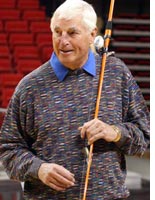
The Big Lead: Hall-of-fame basketball coach Bobby Knight retires abruptly...to go bass fishing?


Clint Thomsen goes ice fishing and discovers it warms his soul.

Monster sturgeon tows kayak-fisherman for 90 minutes across the bay.


A cozy shanty makes for good fishing for all.

Bryson Stout puts on his sailfish repellant...again.

NFLCC Member gets called to appraise fishing tackle at the Thomas Edison Museum, and gets a bit of a surprise...

The Hudson Star Observer profiles Todd Hess, muskie hunter.


Gary Loomis wins the 2008 Russ Mohney Outdoor Recreation Stewardship Award.

Matt Williams profiles the late, great Bill Lewis and his Rat-L-Trap lures.


The In-Fisherman outlines color choices for maximum walleye fishing.


Angry Vermont fishermen vent over new live bait fishing regulations.

The Detroit Free Press alerts us to the joys of Centre-pin reels.

The American Sportfishing Association (formerly the American Fishing Tackle Manufacturer's Association) celebrates its 75th anniversary.

The Nigara Gazette finds a use for top-water fishing lures.

The Mother Earth News gives detailed instructions on how to run a trotline. For those of you who are into that kind of thing.


James Philips learns about the high price of fishing reels.

This week in Know Your New Zealand Fish: the Yellowtail (Jack Mackeral).


Everyone remembers their first time...catching a fish.

Charlie Campbell, Buck Perry, Nick Creme, and Virgil Ward, pioneer TV fishing host, will be inducted in the Bass Fishing Hall-of-Fame.

Founder of D.O.A. Lures gets hooked on redfish.


The Bemidji Pioneer declares jigging spoons are no longer just for walleyes.

Sportfishing Magazine alerts us to the "one lure" fishing tournament.

Dogfish tournament won by 13-year old angler.


Osakis (MN) angler catches two 9+ pound walleyes while ice fishing. You may now gently weep. Additionally, you also know what those neat Montague Osakis trade reels are named after.


Crazed Elmira fisherman fishes in aquarium in his living room when he can't hit the water.


Finishing With A Flourish: Paris Hilton: She can't act. She can't sing. She can't dance. But at least she practices catch-and-release.


-- Dr. Todd

Friday, February 8, 2008

Friday Funhouse

The Friday Funhouse

Video of the Week


The perils of fishing while on a date...


Things I Would Buy If I Could Afford Them


Heddon Punkinseeds are the rage this week; here's a box for a 40XSK that is already well over $400.


Winchester mania is still in full force, as evidenced by this bait tin.


Nice to see Buck Perry items getting some interest, like this huge lot of Spoon Plugs.


The reel of the week is clearly this B.C. Milam #5 Kentucky. Don't get much rarer than this one!


This Ed. Vom Hofe 4/0 Model 423 Reel is a peach.


This Keeling Musky Expert minnow would go nicely in any Keeling display.


Nothing nicer than an early Raised Pillar Pflueger Summit.


Worst trade I ever made was trading off a Yellow Shore Minnow Wood Punkinseed just like this one.


Ambassadeur collectors are right behind Winchester guys in their utter and complete devotion to their brand, as evidenced by this Black 5000 Record.


Many high-end bamboo fly rods end up overseas; it appears that this Garrison #230 owned by a Japanese seller may make it back to America.


Arbogast collectors must be salivating over this rare salesman's sample.


Who doesn't love a Chippewa?


A tough Miller's Spinner in the box is a great yard sale find.


This nifty Wright & McGill Bass Bug assortment doesn't show up every day.


That's it for this week. Be nice to each other, and yourself!

-- Dr. Todd

Thursday, February 7, 2008

A Review of John Etchieson's Fishing Line Blog

A Review of John Etchieson's Fishing Line Blog "A Few Lines About Lines."

As a historian of fish hooks, I can empathize with the work of my friend John Etchieson, who is the premier historian of fishing line in the world. Let's face it. No modern fisherman has ever gone out without fishing line, which is why almost every tackle catalog carried a full spread of fishing lines. It is the one thing above all else that every angler needed on a regular basis.

Yet it is also one of those areas of fishing history of which almost nothing is known. The major line makers--Hall, Gladding, U.S. Line, etc.--are mostly mysteries to us, despite having background in some cases that span nearly two centuries. John Etchieson has dedicated thousands, and this is not an understatement, thousands of hours to rectifying the paucity of information on fishing line and its manufacture, uses, and sales, and in doing so has captured for us a missing piece of the puzzle that is American fishing history.

A Few Lines About Lines is Etchieson's new weekly blog, and already in its fourth installment, promises to be a significant contribution to our knowledge. Early installments include histories of Ashaway (and its often misunderstood Swastika-brand lines that long predated the rise of the Nazi party), the U.S. Line Company, R.J. Hillinger's "Bull Frog" lines, and the man who was Heddon's Chief Dowagiac.


W.L. Coller, Heddon's Chief Dowagiac, from Etchieson's Blog

All of these articles are exceptionally well researched and written pieces, complete with numerous illustrations. They are the beginnings of what I promise to be a flood of information, almost none of it ever seen before in print.

The blog is actually a teaser for John's forthcoming book on the history of American fishing lines, a work that promises to be a landmark volume in American fishing history. It is updated every weekend, something I greatly appreciate as after blogging all week I look forward to reading someone else's research over the weekend. Bookmark and check "A Few Lines About Lines" regularly, and if you ever have any questions about fishing line or line spools, drop John a note. If he doesn't have the answer, likely no one else does either. And next time you come across some old fishing line, give it the appreciation it deserves.

-- Dr. Todd

Wednesday, February 6, 2008

Ice Fishing in Otter Tail County

Ice Fishing in Otter Tail County

Over my Christmas break, I got the opportunity to do something that I absolutely love: ice fishing with my family. For those who haven’t ice fished, you should make it a point to give it a try. It is particularly fun to introduce the young ones to ice fishing, and I can say they take to it like a duck on frozen water.


A frozen lake hides fish underneath…

The first thing you have to do, of course, is drill some holes. Since the ice was about ten inches thick, we used a power auger. I am old enough to have had to use a hand auger when I was younger, and then chip the sides of the hole with an ice chipper.


Drilling the holes in the ice used to be backbreaking work, but not anymore.


Daughter can’t wait for the ice houses, so she’s first line in.

I also am old enough to remember having to haul out a wooden ice house on sleds by hand, arduous work even for the young of heart and muscle. New portable ice houses like this Eskimo set up in just minutes and weigh under 30 pounds.


Two person portable ice house.

Quickly we are on to fish—and to our great delight one of them is a nice 19” walleye! This is quickly followed by a four pound northern, perfect size for pickling. Northerns between 3 and 6 pounds are keepers; anything smaller or larger are released. Catch-and-release practices such as this keep balance in a lake.


Two fish.

A great deal of fishing gear is unique to ice fishing, including the special short rods perfect for light lines. Here I tie on a new airplane jig because a ten pound northern cut me off on the lip of the hole. As an aside, a week later my father-in-law caught the northern and it still had my jig in its mouth.


The daughter helps her old man scooping minnows for the fluorescent jigs.


Tying on a new jig after my big northern cut me off.

A fine day of fishing indeed. The whole family catches their share of fish.


The daughter sitting in the ice house.


She soon sets the hook and lands a cute Black Crappie!


Everyone joins in the fun.

Ice fishing is a blast and grows more popular in the northern climes every year. I know several people who fish 5-7 times a week in the winter who are lucky to be seen on the lake once a month in the summer.

If you don’t ice fish, you should. If you do ice fish, get out on that frozen pond and drill yourself a hole!

-- Dr. Todd