Showing posts with label In Memoriam. Show all posts
Showing posts with label In Memoriam. Show all posts
Tuesday, January 6, 2015
Sad News: Cotton Cordell has passed away ...
I just received news that Cotton Cordell passed away this morning in Hot Spring, Ark. at the age of 86.
Here's a link to a bio I did on him for the Encyclopedia of Arkansas History.
R.I.P. Cotton.
-- Dr. Todd


Thursday, August 7, 2014
A Shocking Loss ...
As I left the cabin following my meetings with the Freshwater Fishing Hall-of-Fame Selection Committee, I could not have been in higher spirits. Our committee had selected a great group of new inductees in the Hall-of-Fame, all worthy of this highest honor, and I was returning home with lots of positive momentum. My good mood was shattered as I received news that, only hours after leaving the north woods, Bobby Jennaro -- chef, dedicated angler, fishing companion, friend, younger brother of my sister's husband -- had suddenly collapsed and died in the cabin kitchen. He was only
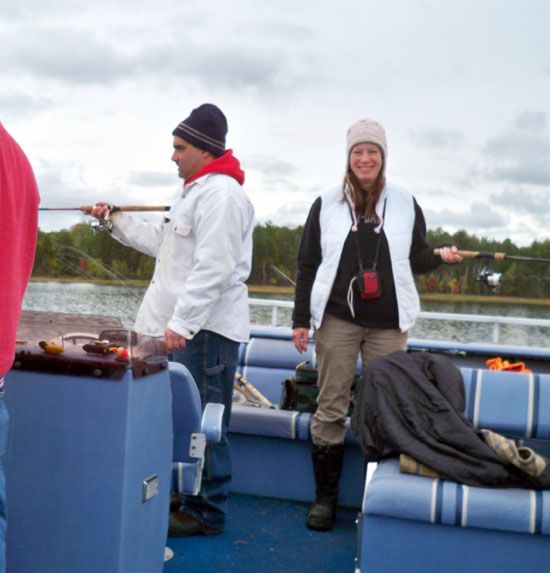
To say that this came out of the blue and that we are shocked beyond words does not convey our emotions. He was not a professional fishermen but I don't know anyone who enjoyed fishing more than he did. Rest in peace, Bobby ... and I hope that where you're at there are steaks on the grill and that you are hooked up to a big one. God bless you and your family in this tragic hour.
-- Dr. Todd
Thursday, October 17, 2013
Awful News: Robert Ellis Has Passed
John Elder reports that fishing tackle historian, Fishing for History magazine columnist, and all-around good guy Robert Ellis has passed away. Very, very sad news. Robert was truly one of a kind. He was a bundle of energy and knowledge -- I have many anecdotes but I'll relate my favorite one. Robert was a maniac for Bronson reels, so much so that for any Bronson reel -- even a trade reel for which he had no background -- he tried to ferret out information any way he could.
Thus the mystery of the Packard reel was born. Bronsons marked Packard are fairly common, but their origin has always been a mystery. So much so that I, too, dug into their background about five years ago and successfully solved the mystery, setting the material aside for an upcoming article for my Reels of the Trade column in The Reel News. Robert a year or two ago inquiring about Packard, and I told him I knew who sold them, and as a joke, told him he'd have to wait for the article to come out. He thanked me for the email, as he always did, and the next thing I know he was advertising on ORCA and Joe's Board paying "$25 Cash for Knowledge About Who Sold Packard Reels from Bronson." Keep in mind a really mint Packard reel itself costs about $10. I chuckled and emailed Paul the information he was seeking, and he laughed. I suspect it was a joke on his part, too, but you could never tell with Paul when it came to Bronson! I think he really would have paid cash for the information.
I will miss him greatly. You can read more from John Elder and his other ORCA friends by Clicking Here.
RIP my friend. I'm sure you and Jack Bright and the rest of our deceased ORCA family are having a ball right now.
-- Dr. Todd
Monday, June 25, 2012
Breaking News: Our Uncle Homer Has Passed Away
Such incredibly sad news. Homer Circle--everyone's Uncle Homer--has passed away.. I got to know Homer through his best friend Glen Lau, but admired him literally my entire life. Horribly sad news, but he lived a long life filled with bass and friends. My sincere condolences to his friends and family.

-- Dr. Todd
-- Dr. Todd
Sunday, December 4, 2011
Herb Proctor has passed away...
RIP my friend. You will be missed, but we all know you are in a better place. Here is a picture of Herb (on the left) with Chris Labuz, from 2009.

The world is a little bit sadder place today.
-- Dr. Todd
The world is a little bit sadder place today.
-- Dr. Todd
Wednesday, May 19, 2010
Bill Arp, in Memoriam by Keith Elliott
When I heard that Bill Arp had passed away a few weeks ago, I got in touch with Wallace Carney, esteemed Mitchell reel expert and author of the new book The Mitchell 300. Wallace was great friends with Bill and encouraged me to contact Keith Elliott and see if he would agree to allow Keith's obituary, run in the current issue of Classic Angling, on the blog. Keith, ever helpful, kindly agreed to allow us a look at a man who was a pioneer in so many ways. Here's Keith's neat article.
Bill Arp, In Memoriam
by Keith Elliott
Bill Arp, show pioneer and the first man to realise just how collectable Mitchells reels were, has died of cancer. An avid collector and historian who loved fishing with a Mitchell 408, he died at his home in Emmaus, Pennsylvania, aged 69. His close friend Hoagy G. Carmichael – author, angling historian and rodbuilder, has rich memories of Arp. The two often travelled together and ran a tackle auction in Bedford, New York, way before Oliver’s and Lang’s.
“There must have been 160 boxes and Bill put a number on every lot. I travelled to a lot of shows with him in the early days, and he was interested in Mitchells way before anybody else. He was collecting them 35 years ago. I always remember how pleased he was when I found a couple of great Mitchell reels from someone who worked at the plant.”
Carmichael also revealed a couple of little-known sides of Arp. He had been in the Marines and did a huge amount to help the Marine Corp League but was very senior in the league and did a great deal for them. He sent thousands of parcels to Marines serving abroad, and had a wall full of commendations. “Even then, the wall wasn’t big enough,” Carmichael said.
Arp had drinking problems after Vietnam, Carmichael said. “His first wife had left him and he said: ‘I have to stop this.’ He got a job and gave his name as Bob Jefferies. He worked for a very wealthy family in New York, running their estate under that name, but when he met Barbara, he wanted to marry her and change all this. He went to the IRS and said that he had been living under an assumed name, and wanted to pay back his taxes. He did so for the rest of his life. That’s how honest Bill was.”
and Dennis Roberts writes: my dear friend Bill Arp was my mentor for the hobby. Bill envisioned that someday, he would experience that Mitchell collecting would become a global phenomenon. He was involved with mentoring many collectors and assisted a number of authors who published books on Mitchell reels. Bill edited many books as well.
In the latter part of 2008, he became the lead moderator of the Mitchell Talk Forum on eBay, and was even involved in talks to organise the Mitchell gathering in Florida next year (page 16). An avid fisherman, he used only Mitchell 408s in his quest for smallmouth bass from the Penobscot River in Maine, his favourite fishing place.
A few weeks prior to his passing, he met me and we discussed the hobby. One of the last things he said was: “Before I pass, please tell me why these reels have such a hold on us?”
Please note that Keith is the editor and publisher of Classic Angling, one of the great magazines on fishing history.
-- Dr. Todd
Bill Arp, In Memoriam
by Keith Elliott
Bill Arp, show pioneer and the first man to realise just how collectable Mitchells reels were, has died of cancer. An avid collector and historian who loved fishing with a Mitchell 408, he died at his home in Emmaus, Pennsylvania, aged 69. His close friend Hoagy G. Carmichael – author, angling historian and rodbuilder, has rich memories of Arp. The two often travelled together and ran a tackle auction in Bedford, New York, way before Oliver’s and Lang’s.
“There must have been 160 boxes and Bill put a number on every lot. I travelled to a lot of shows with him in the early days, and he was interested in Mitchells way before anybody else. He was collecting them 35 years ago. I always remember how pleased he was when I found a couple of great Mitchell reels from someone who worked at the plant.”
Carmichael also revealed a couple of little-known sides of Arp. He had been in the Marines and did a huge amount to help the Marine Corp League but was very senior in the league and did a great deal for them. He sent thousands of parcels to Marines serving abroad, and had a wall full of commendations. “Even then, the wall wasn’t big enough,” Carmichael said.
Arp had drinking problems after Vietnam, Carmichael said. “His first wife had left him and he said: ‘I have to stop this.’ He got a job and gave his name as Bob Jefferies. He worked for a very wealthy family in New York, running their estate under that name, but when he met Barbara, he wanted to marry her and change all this. He went to the IRS and said that he had been living under an assumed name, and wanted to pay back his taxes. He did so for the rest of his life. That’s how honest Bill was.”
and Dennis Roberts writes: my dear friend Bill Arp was my mentor for the hobby. Bill envisioned that someday, he would experience that Mitchell collecting would become a global phenomenon. He was involved with mentoring many collectors and assisted a number of authors who published books on Mitchell reels. Bill edited many books as well.
In the latter part of 2008, he became the lead moderator of the Mitchell Talk Forum on eBay, and was even involved in talks to organise the Mitchell gathering in Florida next year (page 16). An avid fisherman, he used only Mitchell 408s in his quest for smallmouth bass from the Penobscot River in Maine, his favourite fishing place.
A few weeks prior to his passing, he met me and we discussed the hobby. One of the last things he said was: “Before I pass, please tell me why these reels have such a hold on us?”
Please note that Keith is the editor and publisher of Classic Angling, one of the great magazines on fishing history.
-- Dr. Todd
Sunday, September 13, 2009
Fran Betters in Memoriam, by Dave Bollinger
Dave Bollinger sends sad news about the passing of a fly angling legend, Fran Betters.
Another entry from the sad news department:
Fran Betters of the long time Adirondack Sport Shop and originator of the Ausable Wulff fly pattern died this past Saturday, September 5, 2009.
I got to know Fran through the years when my wife and I would fish the West Branch of the Ausable for Green Drakes early in June. Fran typically held a barbeque and celebration for any and all visitors at that time of year and it was a lot of fun. He was a mainstay of the Adirondacks and he will be missed.
Here is a note from Ron Urban, Chair of NYS Trout Unlimited:
"I have to say that Fran Betters gave it a great fight. He passed away this past Saturday after a lengthy illness. I am certain since my last visit with him in June that he is now at rest and in a place of tranquility and certainly with many friends fishing on a stream in Heaven. He was bedridden and has been so ill for so long. It was really a blessing. Many prayers are out to his wife, family and friends."
If you would like to send condolences to his wife Jan, send them via the following:
Mrs. Fran (Jan) Betters
Adirondack Sport Shop
P.O. Box 125
Wilmington, NY 12997
(518) 946-2605
info@adirondackflyfishing.com
Sincerely,
Dave Bollinger
Thanks Dave, for alerting us to this sad news.
-- Dr. Todd
Another entry from the sad news department:
Fran Betters of the long time Adirondack Sport Shop and originator of the Ausable Wulff fly pattern died this past Saturday, September 5, 2009.
I got to know Fran through the years when my wife and I would fish the West Branch of the Ausable for Green Drakes early in June. Fran typically held a barbeque and celebration for any and all visitors at that time of year and it was a lot of fun. He was a mainstay of the Adirondacks and he will be missed.
Here is a note from Ron Urban, Chair of NYS Trout Unlimited:
"I have to say that Fran Betters gave it a great fight. He passed away this past Saturday after a lengthy illness. I am certain since my last visit with him in June that he is now at rest and in a place of tranquility and certainly with many friends fishing on a stream in Heaven. He was bedridden and has been so ill for so long. It was really a blessing. Many prayers are out to his wife, family and friends."
If you would like to send condolences to his wife Jan, send them via the following:
Mrs. Fran (Jan) Betters
Adirondack Sport Shop
P.O. Box 125
Wilmington, NY 12997
(518) 946-2605
info@adirondackflyfishing.com
Sincerely,
Dave Bollinger
Thanks Dave, for alerting us to this sad news.
-- Dr. Todd
Saturday, September 12, 2009
Ken Holyoak in Memoriam by Dan Basore
Ken Holyoak in Memoriam
by Dan Basore
It wasn't until yesterday when ordering weed control advice for my pond that I learned of the passing in May of Ken Holyoak. Who is Ken you ask?
Here is his obituary that took a lot of searching to find in the files of the Berrien Press of Nashville, Georgia;
Hugh "Ken" Holyoak
Hugh "Ken" Holyoak, 72, of Alapaha died May 1, 2009, at South Georgia Medical Center in Valdosta.
Born November 23, 1936, in Enigma to the late Josiah Hugh and Jewell Dorminey Holyoak, he was owner and operator of Ken's Fish Hatchery in Alapaha and a member of the Church of Jesus Christ of Latter Day Saints. He served in the Air Force Reserves.
Survivors include his wife, Judy Wilson Holyoak of Alapaha; two sons and daughters-in-law, Jason and Kim Holyoak of Alapaha and Hugh and Laura Holyoak of Enigma; two grandchildren, Kason Holyoak and Blise Holyoak.
Funeral services were held at 4 p.m. on May 5 in the chapel of Bowen-Donaldson Home for Funerals with Bishop Tommy Spikes officiating. Interment was in Fletcher Cemetery in Alapaha. Bowen-Donaldson Home for Funerals was in charge of arrangements.
--------------------------------------------
Sadly this doesn't begin to commemorate the life of such a great man who contributed so much to fishing. I was privileged to spend several visits with Ken. He even took most of a day to take me around to his various ponds and share the story of how he struggled for many years to develop the Georgia Giant Hybrid Bream. He was a geneticist and had a very creative mind.
Noting the scarcity of frogs on menus, and the difficulty of raising them commercially as they required live food he awoke in the middle of the night with a revelation. Having spent the previous afternoon at the dentist he got a suction device used to remove saliva, attached that to a hose and a salvaged windshield wiper from the junk yard.
He put these ingredients together so the hose would swing over to a container of fish food pellets and swing over to a pit with bullfrogs. As the hose with pellets swung around the frogs would jump up and devour the pellets and the hose would swing back for another one. There was no waste as the arm wouldn't pick up another pellet if one was still on the end of the hose.
He also helped me to solve weed problems in my and friends ponds with a revolutionary approach. He wouldn't sell you any kind of weed killer until you sent him samples wrapped in a wet paper towel and cloth.
Then he and his staff analyzed the weeds and prescribed the proper treatment just like a doctor would do for a patient. His present catalog is 95 pages of tips and products for hatcheries, ponds and fish farms.
Ken was a master at getting publicity. Remember the Hogzilla? That story of the big pig approaching 1,000 pounds was carried in newspapers all over the country. When some didn't believe the story, that the pig was too big to eat so they buried it, Ken invited them out to his farm and dug it up.
His Georgia Giant Hybrid Bream had bigger mouths so they would eat more, grow bigger and bite more readily than other panfish. This was a big plus for kids of all ages giving them more action and larger fish to catch and release or eat.
There is so much more to tell and he deserves more than his brief obit. I hope you will be able to share his story as his works will go on for a long time.
The web site for Ken's Fish Farm can be found by Clicking Here.
Thanks Dan, for alerting us to this. He sounds like a real titan of the fishing world and his presence will surely be missed.
-- Dr. Todd
by Dan Basore
It wasn't until yesterday when ordering weed control advice for my pond that I learned of the passing in May of Ken Holyoak. Who is Ken you ask?
Here is his obituary that took a lot of searching to find in the files of the Berrien Press of Nashville, Georgia;
Hugh "Ken" Holyoak
Hugh "Ken" Holyoak, 72, of Alapaha died May 1, 2009, at South Georgia Medical Center in Valdosta.
Born November 23, 1936, in Enigma to the late Josiah Hugh and Jewell Dorminey Holyoak, he was owner and operator of Ken's Fish Hatchery in Alapaha and a member of the Church of Jesus Christ of Latter Day Saints. He served in the Air Force Reserves.
Survivors include his wife, Judy Wilson Holyoak of Alapaha; two sons and daughters-in-law, Jason and Kim Holyoak of Alapaha and Hugh and Laura Holyoak of Enigma; two grandchildren, Kason Holyoak and Blise Holyoak.
Funeral services were held at 4 p.m. on May 5 in the chapel of Bowen-Donaldson Home for Funerals with Bishop Tommy Spikes officiating. Interment was in Fletcher Cemetery in Alapaha. Bowen-Donaldson Home for Funerals was in charge of arrangements.
--------------------------------------------
Sadly this doesn't begin to commemorate the life of such a great man who contributed so much to fishing. I was privileged to spend several visits with Ken. He even took most of a day to take me around to his various ponds and share the story of how he struggled for many years to develop the Georgia Giant Hybrid Bream. He was a geneticist and had a very creative mind.
Noting the scarcity of frogs on menus, and the difficulty of raising them commercially as they required live food he awoke in the middle of the night with a revelation. Having spent the previous afternoon at the dentist he got a suction device used to remove saliva, attached that to a hose and a salvaged windshield wiper from the junk yard.
He put these ingredients together so the hose would swing over to a container of fish food pellets and swing over to a pit with bullfrogs. As the hose with pellets swung around the frogs would jump up and devour the pellets and the hose would swing back for another one. There was no waste as the arm wouldn't pick up another pellet if one was still on the end of the hose.
He also helped me to solve weed problems in my and friends ponds with a revolutionary approach. He wouldn't sell you any kind of weed killer until you sent him samples wrapped in a wet paper towel and cloth.
Then he and his staff analyzed the weeds and prescribed the proper treatment just like a doctor would do for a patient. His present catalog is 95 pages of tips and products for hatcheries, ponds and fish farms.
Ken was a master at getting publicity. Remember the Hogzilla? That story of the big pig approaching 1,000 pounds was carried in newspapers all over the country. When some didn't believe the story, that the pig was too big to eat so they buried it, Ken invited them out to his farm and dug it up.
His Georgia Giant Hybrid Bream had bigger mouths so they would eat more, grow bigger and bite more readily than other panfish. This was a big plus for kids of all ages giving them more action and larger fish to catch and release or eat.
There is so much more to tell and he deserves more than his brief obit. I hope you will be able to share his story as his works will go on for a long time.
The web site for Ken's Fish Farm can be found by Clicking Here.
Thanks Dan, for alerting us to this. He sounds like a real titan of the fishing world and his presence will surely be missed.
-- Dr. Todd
Tuesday, April 28, 2009
Breaking News: Mary Kefover Kelly Passes Away
It is with great sorrow that I must report the passing of Mary Kefover Kelly last Friday, 24 April 2009. Dr. John Elder, her close friend, emailed me last night while I was at the university, and I just got off the phone with Mary's daughter. Mary was one of the leading fishing historians of the 20th century. I had the great pleasure of working with Mary on editing and updating some of her best material into the book The Origins of American Angling: Essays on the History of Fishing and Tackle, which was launched just over a year ago.

I found Mary to be lively, intelligent, and extremely witty in all of my interactions with her. She was also extraordinarily helpful, sharing a lot of information with me on a variety of subjects. Her early work on Kosmic, Leonard, Conroy, and Chubb is still some of the most important work of its kind to date, and set the standard for many other writers to follow.
Her loss is a tremendous blow to the fishing history community, as her likes will never be seen again. As a female outdoor writer, she penned articles for all the leading magazines of the day--from Outdoor Life to Fishing World to The Pennsylvania Angler--at a time when there were precious few women writers in their pages. She wrote often for the American Fly Fisher, the publishing arm of the American Museum of Fly Fishing, where some of her best work was first published. She was a meticulous researcher of which it was said that she was the first person to ever read The Spirit of the Times from cover to cover.
I will very much miss her. May she rest in peace...
-- Dr. Todd
I found Mary to be lively, intelligent, and extremely witty in all of my interactions with her. She was also extraordinarily helpful, sharing a lot of information with me on a variety of subjects. Her early work on Kosmic, Leonard, Conroy, and Chubb is still some of the most important work of its kind to date, and set the standard for many other writers to follow.
Her loss is a tremendous blow to the fishing history community, as her likes will never be seen again. As a female outdoor writer, she penned articles for all the leading magazines of the day--from Outdoor Life to Fishing World to The Pennsylvania Angler--at a time when there were precious few women writers in their pages. She wrote often for the American Fly Fisher, the publishing arm of the American Museum of Fly Fishing, where some of her best work was first published. She was a meticulous researcher of which it was said that she was the first person to ever read The Spirit of the Times from cover to cover.
I will very much miss her. May she rest in peace...
-- Dr. Todd
Thursday, April 2, 2009
BREAKING NEWS: John Vandivier Passes Away
BREAKING NEWS: John Vandivier Passes Away
It is with tremendous sadness that I just read the news on Joe's Board that John Vandivier, a noted collector and all-around great guy, has passed away. There is a large thread with comments from his many, many friends you can read by clicking here.
This is truly a sad day. May he rest in peace.
-- Dr. Todd
It is with tremendous sadness that I just read the news on Joe's Board that John Vandivier, a noted collector and all-around great guy, has passed away. There is a large thread with comments from his many, many friends you can read by clicking here.
This is truly a sad day. May he rest in peace.
-- Dr. Todd
Monday, November 10, 2008
BREAKING NEWS: Clinton Beeler Sr. Passes
Colonel Milton Lorens of ORCA reports the very sad news that Zebco legend Clinton Randolph Beeler Sr. passed away last Saturday at the age of 81. He was the plant manager of Zebco, among many jobs he performed for this legendary firm. More information is available by Clicking Here. As soon as an obituary is posted I'll update this post.
Very sad news indeed. Our sincere condolences to Clinton Beeler Jr. and family from his many friends in ORCA and the NFLCC.
-- Dr. Todd
Very sad news indeed. Our sincere condolences to Clinton Beeler Jr. and family from his many friends in ORCA and the NFLCC.
-- Dr. Todd
Wednesday, October 15, 2008
Remembering Jack Bright (1922-2008)
Remembering Jack Bright (1922-2008)
I was deeply saddened to hear about the passing of Jack Bright, partly because he did not announce his illness and partly because I'd heard from him less than two weeks ago and all appeared to be OK with him. Every week I would receive a detailed email from Jack, usually spurred on by something he'd read on my blog. In fact, Jack was always eager to contribute to Fishing for History, and perhaps my favorite two pieces of his are "Lead to the Head Leads to New Lead" and "Thoughts on Paul Young."

Jack seated at the 2007 Louisville Nationals.
A quick anecdote about Jack. I was slated to room with Jack at the 2007 Louisville Nationals. We had coordinated ahead of time to meet in the lobby of the hotel, but when the appointed time arrived, no Jack. I called his cell phone to no avail. Then I called the room. Again no answer. I shrugged, registered, and went on over to the show. A couple of hours later I turn around and run into Jack, wearing a crooked grin. before I had a chance to say a word, he reached into his pocket and pulled out a rare Shakespeare reel. It was all the explanation that was needed from Jack, and we both had a good laugh. We had an ongoing bet when NCAA tournament time came around about whether Xavier or Michigan State would go deeper into the tournament...
Jack would occasionally email me what he called "filler material" which I could use for the blog on days I didn't feel like writing anything. I've culled a few of these pieces here (I have two longer ones I'll use in the near future). They were usually written in response to something I'd published on the blog.
Here's one that Jack wrote in response to some articles I published on Texas lure maker Doug English:
You touch on so many things that remind me of my past. Like [your] subject, there is another Doug English and from what I`ve learned no relation. Mine was an All American tackle at, I`m not sure, Southern Methodist, TX. Who went on to gain All-Pro status with the Lions in the late `70s when the Det. Lions had teeth and claws. Always thought one and the same.
A neat bit of trivia Jack offered came in response to an article about "another Jaws" referring to a large northern that had been eating ducks.
Todd -- A similar story appeared in the Detroit Free Press about early `40s RE a Musky that ate a cocker spaniel at the head of Belle Isle, the Musky was reportedly in the 100 lb. class, of course never caught or proven, great for the imagination. Dog`s owner was throwing sticks in river so dog would fetch. A couple years later a Percy Haver caught a world record Musky (64 lbs.) a few miles up the river (Lake St. Claire), makes good reading though. -- Jack
A third bit came after I'd talked about how some anglers use large live bait for musky and pike:
Neat story Todd -- I`ve used 2 inch Sunfish and/or Bluegills and an occasional 4 or 5 inch perch when after big pike, and have heard of the 2 to 3 lb. Walleye or smallie that Musky lick their chops over but your item put a new perspective on bait fishing.
But the most touching piece he ever wrote me was in response to my accident last November. It takes on a special meaning now:
It is so true, how much we take for granted, I had cancer of the colon 40+ years ago there again we suddenly realize what IS important and the time remaining is so vauable, I thank God again and again for my good fortune. You and yours are truly fortunate. --- Jack
We WERE fortunate, indeed, to have known Jack Bright. His warmth, intelligence, and humanity will be sorely missed. Above all else, I will remember his kindness. Somewhere, he's fishing a slow moving stream with his Uncle, anticipating the brown trout he's about to catch.
The world is a diminished place without him.
You can view Jack's obituary here .
Please take a moment and sign Jack's on-line Guest Book by clicking here.
-- Dr. Todd
I was deeply saddened to hear about the passing of Jack Bright, partly because he did not announce his illness and partly because I'd heard from him less than two weeks ago and all appeared to be OK with him. Every week I would receive a detailed email from Jack, usually spurred on by something he'd read on my blog. In fact, Jack was always eager to contribute to Fishing for History, and perhaps my favorite two pieces of his are "Lead to the Head Leads to New Lead" and "Thoughts on Paul Young."
A quick anecdote about Jack. I was slated to room with Jack at the 2007 Louisville Nationals. We had coordinated ahead of time to meet in the lobby of the hotel, but when the appointed time arrived, no Jack. I called his cell phone to no avail. Then I called the room. Again no answer. I shrugged, registered, and went on over to the show. A couple of hours later I turn around and run into Jack, wearing a crooked grin. before I had a chance to say a word, he reached into his pocket and pulled out a rare Shakespeare reel. It was all the explanation that was needed from Jack, and we both had a good laugh. We had an ongoing bet when NCAA tournament time came around about whether Xavier or Michigan State would go deeper into the tournament...
Jack would occasionally email me what he called "filler material" which I could use for the blog on days I didn't feel like writing anything. I've culled a few of these pieces here (I have two longer ones I'll use in the near future). They were usually written in response to something I'd published on the blog.
Here's one that Jack wrote in response to some articles I published on Texas lure maker Doug English:
You touch on so many things that remind me of my past. Like [your] subject, there is another Doug English and from what I`ve learned no relation. Mine was an All American tackle at, I`m not sure, Southern Methodist, TX. Who went on to gain All-Pro status with the Lions in the late `70s when the Det. Lions had teeth and claws. Always thought one and the same.
A neat bit of trivia Jack offered came in response to an article about "another Jaws" referring to a large northern that had been eating ducks.
Todd -- A similar story appeared in the Detroit Free Press about early `40s RE a Musky that ate a cocker spaniel at the head of Belle Isle, the Musky was reportedly in the 100 lb. class, of course never caught or proven, great for the imagination. Dog`s owner was throwing sticks in river so dog would fetch. A couple years later a Percy Haver caught a world record Musky (64 lbs.) a few miles up the river (Lake St. Claire), makes good reading though. -- Jack
A third bit came after I'd talked about how some anglers use large live bait for musky and pike:
Neat story Todd -- I`ve used 2 inch Sunfish and/or Bluegills and an occasional 4 or 5 inch perch when after big pike, and have heard of the 2 to 3 lb. Walleye or smallie that Musky lick their chops over but your item put a new perspective on bait fishing.
But the most touching piece he ever wrote me was in response to my accident last November. It takes on a special meaning now:
It is so true, how much we take for granted, I had cancer of the colon 40+ years ago there again we suddenly realize what IS important and the time remaining is so vauable, I thank God again and again for my good fortune. You and yours are truly fortunate. --- Jack
We WERE fortunate, indeed, to have known Jack Bright. His warmth, intelligence, and humanity will be sorely missed. Above all else, I will remember his kindness. Somewhere, he's fishing a slow moving stream with his Uncle, anticipating the brown trout he's about to catch.
The world is a diminished place without him.
You can view Jack's obituary here .
Please take a moment and sign Jack's on-line Guest Book by clicking here.
-- Dr. Todd
Wednesday, October 1, 2008
Remembering Paul Newman...Fishing Tackle Clerk?
Remember Paul Newman...Sporting Goods Clerk?
The news wires were inundated last Sunday with the passing of Paul Newman, one of the greatest actors of all time. The star of such memorable movies as Cool Hand Luke, The Hustler, and Butch Cassidy and the Sundance Kid, what deserves more than just a passing mention is that he was personally involved--albeit for a short time--as a sporting goods clerk in his father's notable Cleveland store Newman-Stern.
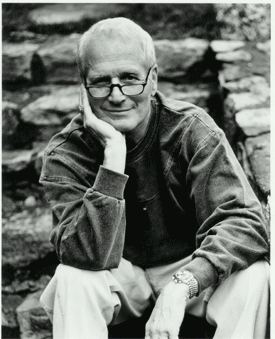
When he was born 26 January 1925 as Paul Leonard Newman, his father Arthur was already co-owner of a sporting goods store in downtown Cleveland. This history of the firm is interesting and tied to many other names which will be familiar to readers of this blog. The company began life as the Electro-Set Company in 1915, and turned quickly in 1917 into the Newman-Stern Co., a mail-order supply house specializing in electrical and radio equipment, for which they are chiefly remembered today. The principals were Paul's father Arthur and his uncle Joseph S. Newman.

The move to sporting goods was necessitated by the United States' entry into World War I. Fearing a proliferation of home-grown German spies who could radio home war secrets to the Fatherland, the government banned the sale of all wireless equipment during the war, and thus in desperation the duo turned to sporting goods to salvage their economic prosperity.


Newman-Stern sold Red Head brand trade items.
Their timing could not have been better. Surviving the war years, they were one of the few firms already in place to take advantage of the massive boom in sports and leisure that came in the wake of the war. They soon moved to spacious quarters at East 12th Street and Walnut in downtown Cleveland, and prospered in the inter-war years.

This prosperity was almost derailed by the Great Depression. In Paul Newman's own words, his father likely saved the family business from bankruptcy:
On a messy winter day in 1931, in the middle of the Great Depression, my father, Arthur Newman--looking as gray as the day itself--left house and family and headed for Chicago to try and negotiate with Spalding and Wilson, the two giant sporting goods manufacturers, to get sports equipment on consignment. My father and his brother owned The Newman-Stern Company of Cleveland, Ohio, purveyor of sports equipment since 1915, a surviving company in the “luxury” arena of retailing which would see 80 percent failure rate before the depression ended. Goods on consignment would be difficult to bargain for in good times, so it seemed almost impossible to expect success in bad, because the manufacturers would only be paid as the goods were sold and not upon delivery. A dicey deal to monitor. Money was scarce.
My father came home two days later with a letter of agreement from both manufacturers for $100,000 of goods on consignment, a staggering amount in those days, especially under the economic circumstances. But those manufacturers knew that if The Newman-Stern Company sold a baseball glove for nine dollars and ninety-five cents, the manufacturer would have a check in the mail from my father the next day for the five dollars owed them. Such was the reputation of the Newman-Stern Company and the gentlemen who ran it. The business survived and so did we.
I learned a great deal by my father’s example and have tried to measure up. I learned from him that honesty is the best medicine. It nourishes the soul, and at the same time, keeps meat and potatoes on the table.
It is a touching tribute to his father and a measure of the greatness of the son that despite his international success, he still idolized his man who plied the Cleveland masses with baseballs, tennis racquets, and fishing reels.
As Paul graduated from high school in 1943 and spent a stint in the U.S. Naval Air Corp as an aircraft radio operator and tailgunner, Newman-Stern survived its second world war. After the war Paul enrolled at Kenyon College and began to act. As the recent New York Times obituary declared, "Arthur Newman, a strict and distant man, thought acting an impractical occupation, but, perhaps persuaded by his wife, he agreed to support his son for a year while Paul acted in small theater companies."
Then, in May 1950, Arthur Newman passed away, and son Paul returned to run the sporting goods store. As The Times declared: "after 18 months Paul asked his brother to take over the business while he, his wife and their year-old son, Scott, headed for Yale University, where Mr. Newman intended to concentrate on directing."

Paul Newman fishing at one of his "Hole-in-the-Wall" camps for children.
The rest, they say, is history. Newman went on to become a legendary actor, and the firm his father founded thrived in the 1950s. In 1963, the famed Gateway Sporting Goods Co. of Kansas City, Missouri purchased Newman-Stern and soon after moved it to 634 Euclid Avenue. This store was shuttered when Gateway foundered in 1973. By then, the Newmans had opened the Newman-Adler Co., selling camping and outdoor equipment. They still operate a store in Chagrin Falls, Ohio.
Perhaps his brief foray into the sporting goods world is the major reason he was attracted to roles such as minor league hockey player Reggie Dunlop in the immortal movie Slap Shot and Fast Eddie Felson, the iconic pool hustler in The Hustler and The Color of Money. And of course, his life-long love affair with auto racing--with its connection to the sporting world--makes perfect sense for a man who understood the world of sporting goods. He was known to enjoy fishing in his spare time.
So let's remember Paul Newman today as a titan of the silver screen, and for 18 months, a sporting goods dealer who sold fishing tackle. If anyone has or has seen a marked piece of Newman-Stern fishing tackle, drop me a note!
-- Dr. Todd
The news wires were inundated last Sunday with the passing of Paul Newman, one of the greatest actors of all time. The star of such memorable movies as Cool Hand Luke, The Hustler, and Butch Cassidy and the Sundance Kid, what deserves more than just a passing mention is that he was personally involved--albeit for a short time--as a sporting goods clerk in his father's notable Cleveland store Newman-Stern.
When he was born 26 January 1925 as Paul Leonard Newman, his father Arthur was already co-owner of a sporting goods store in downtown Cleveland. This history of the firm is interesting and tied to many other names which will be familiar to readers of this blog. The company began life as the Electro-Set Company in 1915, and turned quickly in 1917 into the Newman-Stern Co., a mail-order supply house specializing in electrical and radio equipment, for which they are chiefly remembered today. The principals were Paul's father Arthur and his uncle Joseph S. Newman.
The move to sporting goods was necessitated by the United States' entry into World War I. Fearing a proliferation of home-grown German spies who could radio home war secrets to the Fatherland, the government banned the sale of all wireless equipment during the war, and thus in desperation the duo turned to sporting goods to salvage their economic prosperity.
Their timing could not have been better. Surviving the war years, they were one of the few firms already in place to take advantage of the massive boom in sports and leisure that came in the wake of the war. They soon moved to spacious quarters at East 12th Street and Walnut in downtown Cleveland, and prospered in the inter-war years.
This prosperity was almost derailed by the Great Depression. In Paul Newman's own words, his father likely saved the family business from bankruptcy:
On a messy winter day in 1931, in the middle of the Great Depression, my father, Arthur Newman--looking as gray as the day itself--left house and family and headed for Chicago to try and negotiate with Spalding and Wilson, the two giant sporting goods manufacturers, to get sports equipment on consignment. My father and his brother owned The Newman-Stern Company of Cleveland, Ohio, purveyor of sports equipment since 1915, a surviving company in the “luxury” arena of retailing which would see 80 percent failure rate before the depression ended. Goods on consignment would be difficult to bargain for in good times, so it seemed almost impossible to expect success in bad, because the manufacturers would only be paid as the goods were sold and not upon delivery. A dicey deal to monitor. Money was scarce.
My father came home two days later with a letter of agreement from both manufacturers for $100,000 of goods on consignment, a staggering amount in those days, especially under the economic circumstances. But those manufacturers knew that if The Newman-Stern Company sold a baseball glove for nine dollars and ninety-five cents, the manufacturer would have a check in the mail from my father the next day for the five dollars owed them. Such was the reputation of the Newman-Stern Company and the gentlemen who ran it. The business survived and so did we.
I learned a great deal by my father’s example and have tried to measure up. I learned from him that honesty is the best medicine. It nourishes the soul, and at the same time, keeps meat and potatoes on the table.
It is a touching tribute to his father and a measure of the greatness of the son that despite his international success, he still idolized his man who plied the Cleveland masses with baseballs, tennis racquets, and fishing reels.
As Paul graduated from high school in 1943 and spent a stint in the U.S. Naval Air Corp as an aircraft radio operator and tailgunner, Newman-Stern survived its second world war. After the war Paul enrolled at Kenyon College and began to act. As the recent New York Times obituary declared, "Arthur Newman, a strict and distant man, thought acting an impractical occupation, but, perhaps persuaded by his wife, he agreed to support his son for a year while Paul acted in small theater companies."
Then, in May 1950, Arthur Newman passed away, and son Paul returned to run the sporting goods store. As The Times declared: "after 18 months Paul asked his brother to take over the business while he, his wife and their year-old son, Scott, headed for Yale University, where Mr. Newman intended to concentrate on directing."
The rest, they say, is history. Newman went on to become a legendary actor, and the firm his father founded thrived in the 1950s. In 1963, the famed Gateway Sporting Goods Co. of Kansas City, Missouri purchased Newman-Stern and soon after moved it to 634 Euclid Avenue. This store was shuttered when Gateway foundered in 1973. By then, the Newmans had opened the Newman-Adler Co., selling camping and outdoor equipment. They still operate a store in Chagrin Falls, Ohio.
Perhaps his brief foray into the sporting goods world is the major reason he was attracted to roles such as minor league hockey player Reggie Dunlop in the immortal movie Slap Shot and Fast Eddie Felson, the iconic pool hustler in The Hustler and The Color of Money. And of course, his life-long love affair with auto racing--with its connection to the sporting world--makes perfect sense for a man who understood the world of sporting goods. He was known to enjoy fishing in his spare time.
So let's remember Paul Newman today as a titan of the silver screen, and for 18 months, a sporting goods dealer who sold fishing tackle. If anyone has or has seen a marked piece of Newman-Stern fishing tackle, drop me a note!
-- Dr. Todd
Thursday, July 31, 2008
BREAKING NEWS: CCBC's Gordon A. Dills Passes
BREAKING NEWS
Dan Basore reports on Joe's Message Board that Gordon A. Dills, former officer of the Creek Chub Bait Company of Garrett, Indiana, died at the age of 85 in Williamsport, Indiana. He was the grandson of CCBC founder Henry Dills and the son of Gordon S. Dills. His obituary is reprinted here:
Gordon A. Dills, 85, of 1405 Mansel Ave. Williamsport died Thursday July 24, 2008 at the Williamsport Hospital.
He was born in Garrett, Indiana on May 10, 1923 the son of Gordon S. and Eleanor Lee Dills. Gordon was a member of Christ Episcopal Church in Williamsport.
He was the Administrator of the Williamsport Home for 24 yrs. Gordon was a life long Mason and an avid life long fisherman He was a member of the Wheel Inn in Ralston,Pa. Gordon was a Navy veteran of the Second World War.
His first wife Marilyn J Dills preceded him in death.
He is survived by his second wife the former Eleanor L.(Confer) Knight. He and Eleanor would have celebrated their 9th wedding anniversary this coming September 11, 2008.
He is survived by his children Steven S.(Kathy) Dills of Richmond Virginia, Linda (Joseph) Alverson of West Olive, Michigan, Sally Lewis of Sugarland, Texas. Step sons Michael W. Knight of Montoursville and Matthew W. Knight of Williamsport. Gordon is also survived by 10 grandchildren and 7 great grandchildren He is survived by a sister Anita Rouff of Branson, Missouri and a brother Richard S. Dills of Garrett, Indiana.
He was preceded in death by a daughter Susan K. Dills.
A Funeral Mass will be Celebrated in Christ Episcopal Church 426 Mulberry Street in Williamsport on Tuesday afternoon at 2 p.m. The Rev. Thomas Reeder will officiate. The burial services will be held at the convenience of the family and memorial contributions may be made to Christ Episcopal Church 426 Mulberry Street Williamsport.
Crouse Funeral home is handling the arrangements.
Due to Dan's work, Gordon was presented with an Honorary Membership in the NFLCC. Another link to the golden age of tackle is now missing. Sad news indeed.
-- Dr. Todd
Dan Basore reports on Joe's Message Board that Gordon A. Dills, former officer of the Creek Chub Bait Company of Garrett, Indiana, died at the age of 85 in Williamsport, Indiana. He was the grandson of CCBC founder Henry Dills and the son of Gordon S. Dills. His obituary is reprinted here:
Gordon A. Dills, 85, of 1405 Mansel Ave. Williamsport died Thursday July 24, 2008 at the Williamsport Hospital.
He was born in Garrett, Indiana on May 10, 1923 the son of Gordon S. and Eleanor Lee Dills. Gordon was a member of Christ Episcopal Church in Williamsport.
He was the Administrator of the Williamsport Home for 24 yrs. Gordon was a life long Mason and an avid life long fisherman He was a member of the Wheel Inn in Ralston,Pa. Gordon was a Navy veteran of the Second World War.
His first wife Marilyn J Dills preceded him in death.
He is survived by his second wife the former Eleanor L.(Confer) Knight. He and Eleanor would have celebrated their 9th wedding anniversary this coming September 11, 2008.
He is survived by his children Steven S.(Kathy) Dills of Richmond Virginia, Linda (Joseph) Alverson of West Olive, Michigan, Sally Lewis of Sugarland, Texas. Step sons Michael W. Knight of Montoursville and Matthew W. Knight of Williamsport. Gordon is also survived by 10 grandchildren and 7 great grandchildren He is survived by a sister Anita Rouff of Branson, Missouri and a brother Richard S. Dills of Garrett, Indiana.
He was preceded in death by a daughter Susan K. Dills.
A Funeral Mass will be Celebrated in Christ Episcopal Church 426 Mulberry Street in Williamsport on Tuesday afternoon at 2 p.m. The Rev. Thomas Reeder will officiate. The burial services will be held at the convenience of the family and memorial contributions may be made to Christ Episcopal Church 426 Mulberry Street Williamsport.
Crouse Funeral home is handling the arrangements.
Due to Dan's work, Gordon was presented with an Honorary Membership in the NFLCC. Another link to the golden age of tackle is now missing. Sad news indeed.
-- Dr. Todd
Wednesday, July 23, 2008
Elmer "Doll" Thompson Passes Away
Elmer "Doll" Thompson dies
Wayne Mullins passes along news that Elmer "Doll" Thompson, one of the more colorful tackle makers of the twentieth century, passed away last Wednesday, July 16 after a long illness. He was the founder of Thompson Fishing Tackle Company of Knoxville, Tennessee.
Tennessee native Thompson was the inventor of some enduring lures, especially the Doll Fly, a jig that local outdoor writer Bob Hodge notes became the cornerstone of a company that was "at one time, believed to make more artificial baits a day than any other bait manufacturer. Unless you fished by yourself with only hooks and a worm, you knew what a Doll Fly was." Apparently at its height the firm made 75,000 lures per day--a staggering 27.5 million per year.

The ever-popular Doll Fly on a point-of-purchase display card.

Thompson T-Series Zing Fly from 1969 Victoria Advocate advertisement.
Thompson Fishing Tackle was founded in 1952 and became an immediate success. He would eventually add numerous other lures to the line, including the ever-popular Doll Top Secret in 1968, a Heddon Punkinseed knockoff that was popular enough that it was kept in production for almost fifteen years. Hodge noted it was "modeled after a balsa wood plug that had been popular in East Tennessee for more than a decade."

Original Thompson Top Secret ca. 1968

Later Zebco post-1972 Top Secret

A Zebco modified Super Secret with deep dive lip
Other lures would follow. The Doll Fish was a popular lure first introduced in 1972. Outdoor writer Don Carpenter declared of it in The Annapolis Evening Capital: "Something new in plugs for fishing is the 'Doll Fish' made by Thompson Fishing Tackle Co., Knoxville, Tenn. It is a sinking, fast-vibrating brilliant colored minnow with real-to-life scales that make it look like the McCoy. It emits a 'clickity chek' sound while moving, is made in three sizes, 1/4-ounce, 3/8-ounce, and 5/8-ounce--colors ranging from light to dark."

A Thompson Doll Fish in the box
In 1972, after two decades at the helm, Doll Thompson sold his company to Brunswick Corporation, venerable pool table makers who had acquired Zebco corporation in 1961. Having made a name for themselves in the fishing reel market, the Brunswick-owned Zebco found a nice match in Doll Thompson, who served on the Board of Directors of the firm until 1975. Zebco continued making most of Thompson's line into the 1980s.

A later Doll Ditch Digger deep diving crank bait
Thompson's lasting legacy will no doubt be the Doll Fly, which was so popular that before long any lead and hair jigs were called Doll Flies, whether they were made by Thompson or not. Interestingly, Thompson Doll Flies were made with Polar Bear hair, and apparently Elmer had pretty nearly cornered the market on their skins.
Today, by far the most popular of the Thompson baits are the Top Secret, both the original and later Zebco models (some painted by Heddon). But it is his Doll Fly that is Elmer Thompson's lasting legacy. So the next time you cast a jig, remember the man who was partly responsible for popularizing it and who manufactured as many (or more) than any other company for two decades.
Bob Hodge penned a nice memorial to Elmer "Doll" Thompson and his accomplishments that is well worth reading.
-- Dr. Todd
Wayne Mullins passes along news that Elmer "Doll" Thompson, one of the more colorful tackle makers of the twentieth century, passed away last Wednesday, July 16 after a long illness. He was the founder of Thompson Fishing Tackle Company of Knoxville, Tennessee.
Tennessee native Thompson was the inventor of some enduring lures, especially the Doll Fly, a jig that local outdoor writer Bob Hodge notes became the cornerstone of a company that was "at one time, believed to make more artificial baits a day than any other bait manufacturer. Unless you fished by yourself with only hooks and a worm, you knew what a Doll Fly was." Apparently at its height the firm made 75,000 lures per day--a staggering 27.5 million per year.
Thompson Fishing Tackle was founded in 1952 and became an immediate success. He would eventually add numerous other lures to the line, including the ever-popular Doll Top Secret in 1968, a Heddon Punkinseed knockoff that was popular enough that it was kept in production for almost fifteen years. Hodge noted it was "modeled after a balsa wood plug that had been popular in East Tennessee for more than a decade."
Other lures would follow. The Doll Fish was a popular lure first introduced in 1972. Outdoor writer Don Carpenter declared of it in The Annapolis Evening Capital: "Something new in plugs for fishing is the 'Doll Fish' made by Thompson Fishing Tackle Co., Knoxville, Tenn. It is a sinking, fast-vibrating brilliant colored minnow with real-to-life scales that make it look like the McCoy. It emits a 'clickity chek' sound while moving, is made in three sizes, 1/4-ounce, 3/8-ounce, and 5/8-ounce--colors ranging from light to dark."
In 1972, after two decades at the helm, Doll Thompson sold his company to Brunswick Corporation, venerable pool table makers who had acquired Zebco corporation in 1961. Having made a name for themselves in the fishing reel market, the Brunswick-owned Zebco found a nice match in Doll Thompson, who served on the Board of Directors of the firm until 1975. Zebco continued making most of Thompson's line into the 1980s.
Thompson's lasting legacy will no doubt be the Doll Fly, which was so popular that before long any lead and hair jigs were called Doll Flies, whether they were made by Thompson or not. Interestingly, Thompson Doll Flies were made with Polar Bear hair, and apparently Elmer had pretty nearly cornered the market on their skins.
Today, by far the most popular of the Thompson baits are the Top Secret, both the original and later Zebco models (some painted by Heddon). But it is his Doll Fly that is Elmer Thompson's lasting legacy. So the next time you cast a jig, remember the man who was partly responsible for popularizing it and who manufactured as many (or more) than any other company for two decades.
Bob Hodge penned a nice memorial to Elmer "Doll" Thompson and his accomplishments that is well worth reading.
-- Dr. Todd
Monday, July 21, 2008
UPDATE: The Passing of Dr. Loren Hill (1940-2008)
Bernie Schultz passes on some sad news as Dr. Loren Hill, a former University of Oklahoma zoology professor, passed away late last week in Norman at the young age of 68. Hill was the inventor of the Color-C-Lector, a device that was introduced in 1984 and originally manufactured by Lake Systems Divisions of Mt. Vernon, Missouri. They were written up (rather glowingly) in the 15th anniversary issue of The In-Fisherman in May 1985.

Dr. Hill was the former Director of the Zoology Department and Biological Research Center at the University of Oklahoma. He developed the Color-C-Lector after nine years of research. As the current ad for the C-Lector says:
[Dr. Hill] established a range of 26 colors that were best visible to the eyes of a fish. Through careful observation and patience, Dr. Hill was able to train the fish to differentiate 26 color positions under optimum conditions. He then altered those conditions to stimulate various times of day and varying degrees of water clarity. With each change, the correct responses were carefully measured and recorded. The Color-C-Lector is the result of those experiments and reflects the responses of fish to color under all conditions that anglers will encounter.
The original Color-C-Lector was intended to be used with the accompanying PH Guide. You dropped the gauge into the water, and the hands moved to the appropriate color recommended for use during the measured water conditions. While the C-Lector had its share of detractors, it also has its adherents, and many of them are die-hards. The original unit is still sought after today and many of them are purchased by anglers who have worn out one or two previous models.
Companies such as Bill Lewis, who once offered Rat-L-Trap lures in colors suggested by the C-Lector, and Ditto Lure Company, who made plastic worms in the C-Lector color scheme, offered products that helped C-Lector users easier use their units.
The unit's popularity is such that it is still available today, in a digital model made by Spike-It of Linwood, Michigan since 2004. Dr. Hill's legacy will certainly be as a pioneer in the effort to meld laboratory science and sportfishing--something so common today it is an afterthought. When the history of fishing in the later part of the 20th century is chronicled, Dr. Loren Hill will play a significant role. Loren's son Kenyon is a very succesful professional bass angler who dedicated his May 04 victory to his ailing father.
Dr. Hill also proved beyond a shadow of a doubt that professors can actually catch fish--and not just professor's children, as one gentleman so helpfully pointed out at the recent NFLCC Nationals in Peoria. Thanks to Bernie--who travels with Kenyon Hill on the pro circuit--for sending along the sad news of his passing.
-- Dr. Todd
Dr. Hill was the former Director of the Zoology Department and Biological Research Center at the University of Oklahoma. He developed the Color-C-Lector after nine years of research. As the current ad for the C-Lector says:
[Dr. Hill] established a range of 26 colors that were best visible to the eyes of a fish. Through careful observation and patience, Dr. Hill was able to train the fish to differentiate 26 color positions under optimum conditions. He then altered those conditions to stimulate various times of day and varying degrees of water clarity. With each change, the correct responses were carefully measured and recorded. The Color-C-Lector is the result of those experiments and reflects the responses of fish to color under all conditions that anglers will encounter.
The original Color-C-Lector was intended to be used with the accompanying PH Guide. You dropped the gauge into the water, and the hands moved to the appropriate color recommended for use during the measured water conditions. While the C-Lector had its share of detractors, it also has its adherents, and many of them are die-hards. The original unit is still sought after today and many of them are purchased by anglers who have worn out one or two previous models.
Companies such as Bill Lewis, who once offered Rat-L-Trap lures in colors suggested by the C-Lector, and Ditto Lure Company, who made plastic worms in the C-Lector color scheme, offered products that helped C-Lector users easier use their units.
The unit's popularity is such that it is still available today, in a digital model made by Spike-It of Linwood, Michigan since 2004. Dr. Hill's legacy will certainly be as a pioneer in the effort to meld laboratory science and sportfishing--something so common today it is an afterthought. When the history of fishing in the later part of the 20th century is chronicled, Dr. Loren Hill will play a significant role. Loren's son Kenyon is a very succesful professional bass angler who dedicated his May 04 victory to his ailing father.
Dr. Hill also proved beyond a shadow of a doubt that professors can actually catch fish--and not just professor's children, as one gentleman so helpfully pointed out at the recent NFLCC Nationals in Peoria. Thanks to Bernie--who travels with Kenyon Hill on the pro circuit--for sending along the sad news of his passing.
-- Dr. Todd
Tuesday, March 11, 2008
Memories of R. Palmer Baker, by Richard K. Lodge
R. Palmer Baker, a great old guy and an incredible philanthropist - and an avid fly fisher - died in New York City this week. I met Palmer by chance when I was fishing the upper Beaverkill River in the Catskills 3 or 4 years ago. He was ancient then, and had been fishing by himself for an hour or two when my fishing buddy and I ran into him walking back to his car.
We had a wonderful conversation and it wasn't until I got home a couple days later I realized the name Palmer Baker was very familiar. He was author of the fly fishing book The Sweet of the Year which has a certain fame in the annals of angling books. Palmer and I corresponded for a year or two but never met again on the banks of any Catskill rivers. I have a great photo of the two of us talking, taken by my fishing buddy He was an interesting character; a classic old angler with his fly rod and Hardy reel.
This photo of R. Palmer Baker Jr. (left) and me was taken by my friend Jeffrey Hill in early June 2005 along the road next to the upper Beaverkill River outside Roscoe, N.Y. Jeff and I had just parked and were stringing up our fly rods when Palmer came out of a field along the river. It wasn't until several days later that I realized this was the man who wrote and published The Sweet of the Year in 1965, a book about his love of fly fishing, mainly in the Catskills.

I found it interesting that the New York Times obituary recorded the many, many professional accomplishments of this man but didn't mention that he was the author of a fishing book.
Here's his obit it in the New York Times:
R. P. Baker, Lawyer and Humanitarian, Dies at 89
By DENNIS HEVESI
Published: March 9, 2008
R. Palmer Baker Jr., a lawyer who was instrumental in the creation of a leading cancer research institution as well as organizations involved in criminal justice issues and the treatment of addiction, died on Monday in Manhattan. He was 89 and lived in Manhattan.
Mr. Baker’s daughter, Mary Baker Eaton, said her father died moments after walking into his doctor’s office on the day before his 90th birthday. No cause was given.
From 1995 to 2005, Mr. Baker was chairman of the Ludwig Institute for Cancer Research, a Manhattan-based organization with nine research centers in seven countries. It has spent $1.2 billion on research since its founding in 1971 by Daniel K. Ludwig, a billionaire who made his fortune in shipping and real estate. He died in 1992. Mr. Baker, who worked for the law firm of Lord, Day & Lord, had been Mr. Ludwig’s lawyer.
“Palmer was the legal architect for the institute,” Dr. Lloyd J. Old, the organization’s current chairman and its former director, said on Thursday. “He played an essential role in guiding the development of the institute’s unique structure of branches and affiliates around the world.”
Mr. Baker was also involved in the creation of the Vera Institute of Justice, a nonprofit research and policy organization that looks at issues like prison violence and parole policies. Michael Jacobson, its director, said Mr. Baker drew on his expertise as a tax lawyer to help incorporate the institute, which is also based in Manhattan.
Mr. Baker also helped create and then served as chairman for the first of Vera’s 17 spinoff corporations, Manhattan Bowery, which addresses problems like addiction, Mr. Jacobson said. The corporation, now called Project Renewal, successfully lobbied for the decriminalization of public drunkenness, calling for medical detoxification as a substitute for incarceration.
In his 70s and 80s, Mr. Baker was chairman of the Argus Community, a South Bronx nonprofit group that serves people who are mentally ill, addicted or homeless. He was also a trustee of NewYork-Presbyterian Hospital and of Rensselaer Polytechnic Institute.
Ray Palmer Baker was born in Troy, N.Y., on March 4, 1918, one of three children of Ray and Mary Messinger Baker. His father was vice president of Rensselaer Polytechnic.
Mr. Baker received his bachelor’s and law degrees at Harvard and served in the Navy during World War II, rising to lieutenant commander.
Mr. Baker’s wife of 50 years, the former Alma Nicoll, died in 1992. Besides his daughter, of Newburyport, Mass., he is survived by a grandson.
-- Dr. Todd
Wednesday, February 27, 2008
Grits Gresham, Angler
Grits Gresham, Angler

Many of the outdoor web sites have been running commentary on the passing of Grits Gresham, noted television personality and outdoor enthusiast. Most of these commentaries note that he was the host (and producer) of The American Sportsman and Shooting Sports America, or that he was the shooting editor of Sports Afield magazine for over 25 years. But he was bigger than tv or magazines. He was a true personality, as famous for his Miller Lite advertisements alongside such diverse professional athletes as baseball player Bob Uecker or pool player Steve Mizerak as he was in the field with rod and gun. Most tributes have concentrated on the shooting aspects of his career, which were great indeed; this appreciation, however, is designed to illustrate what an important angler and fishing writer Grits Gresham was.
He was born Claude Hamilton Gresham, Jr. on 21 June 1922 in South Carolina and went on to graduate from Louisiana State University in his beloved Louisiana, where he would reside the remainder of his days. His college thesis was on conservation of the environment--a new field--and this subject would remain a central theme of his life. He served in the military during World War II and married his wife Mary Eleanor while on leave from the U.S. Army Air Corp.
While his hunting laurels were many, it is worth noting that he was an accomplished angler as well. His book Kiss the Land Goodbye was an early call to arms to save the wetlands of Louisiana, and he worked often with Ray Scott, the founder of B.A.S.S., to clean up cheating in bass tournaments. Scott considered Gresham's The Complete Book of Bass Fishing "the best book ever written on bass fishing."
Gresham began his writing career as the outdoor editor of a The Shreveport Times, and from the beginning, he was a consistent promoter of new fishing techniques and tackle. A 1958 article noted that the earliest proponents of Buck Perry's spoon plugging lures and methods were "Ray Bergman, Allen Corson, Grits Gresham, [and] Henry Reynolds." He was one of the first and most vocal proponents of the new-fangled contraption known as the bass boat.
In 1961, Gresham lost much of his material and tackle in a fire; as one writer noted, "Recently Grits Gresham, Louisiana outdoor writer, had...a fire. For weeks afterward he kept remembering items which had been destroyed." He took this personal loss and turned it into an opportunity to instruct American sportsmen on the importance of taking inventory and owning insurance on the fishing tackle and gunning equipment.
His greatest claim to fishing fame was The Complete Book of Bass Fishing. Outdoor writer Donnell Culpepper reviewed this work in 1967 and wrote:
Speaking of bass, Grits Gresham, famous free-lance outdoor writer who lives in Louisiana, writes me that he thinks his new book, "Complete Book of Bass Fishing," published by Harper and Row as an Outdoor Life Library book, is the best on the market. I don't blame Grits one bit for saying that. If I had written such a book, I would be proud to make the same statement. Grits has been a bass fisherman for many years, but he has taken the best thinking of experts such as Bill Adcock, Vic Myers, Buck Perry and others, and put it all into such shape that no man can help but learn many lessons on the art of bass fishing. You won't make any mistake by reading Grits' book, now on sale at your favorite bookstore.

In 1967, his television show The American Sportsman, which he and Curt Gowdy had taken over hosting duties from Governor Foss of WWII fame, was panned in a nationally syndicated column by Cleveland Amory (of cat book fame) as being "the worst show on the air" and for "assasinating weekly certain species of rare game for the dubious enjoyment of the viewing public." Richard Alden Knight and other prominent outdoor writers rushed to Grits' defense and decried the hypocrisy in Amory's arguments. The controversy only served to make the show better.
The show itself took many famous celebrities fishing, ranging from Bing Crosby to Ted Williams to Clint Walker to John Forsythe. Regulars included Lee Wulff, Joe Brooks, and other leading fishermen. From salmon fishing in Alaska to (famously) capturing an alligator in the Louisiana swamps, Gresham became a popular weekly addition to many outdoor enthusiasts' lives. As the show matured it tended to concentrate more on shooting sports, but fishing always remained an important part of its success.
Throughout all of the fame, from the Miller Lite commercials to The Tonight Show appearances, Gresham remained the same humble Southern gentleman throughout. A proficient and prolific writer, he wrote numerous free lance articles in addition to six books and, for many years, a syndicated outdoor column.
Grits Gresham's most famous Miller Lite commercial.
There are many eulogies of Gresham out and many more to come, but I think his friend and colleague Don Miller summed up Gresham best back in 1959, long before Grits had achieved national stardom. Miller wrote:
Grits is a long-time friend of mine, and an ardent, practicing fisherman. He actually has outdoor columns appearing in 35 newspapers across Louisiana, so when you mention "Grits" down there you aren't talking about a favorite Dixie Dish. You're talking about someone familiar to almost everyone in the South and Southwest.
With his trademark driftwood hat and that open, friendly grin, Grits Gresham was an appealing and likeable figure responsible for promoting field sports to nearly three generations of Americans. Perhaps the most fitting memorial of all is that his son Tom Gresham continues the family tradition with a nationally syndicated radio show "Gun Talk," taking up where his father left off. May he rest in peace.
-- Dr. Todd
Many of the outdoor web sites have been running commentary on the passing of Grits Gresham, noted television personality and outdoor enthusiast. Most of these commentaries note that he was the host (and producer) of The American Sportsman and Shooting Sports America, or that he was the shooting editor of Sports Afield magazine for over 25 years. But he was bigger than tv or magazines. He was a true personality, as famous for his Miller Lite advertisements alongside such diverse professional athletes as baseball player Bob Uecker or pool player Steve Mizerak as he was in the field with rod and gun. Most tributes have concentrated on the shooting aspects of his career, which were great indeed; this appreciation, however, is designed to illustrate what an important angler and fishing writer Grits Gresham was.
He was born Claude Hamilton Gresham, Jr. on 21 June 1922 in South Carolina and went on to graduate from Louisiana State University in his beloved Louisiana, where he would reside the remainder of his days. His college thesis was on conservation of the environment--a new field--and this subject would remain a central theme of his life. He served in the military during World War II and married his wife Mary Eleanor while on leave from the U.S. Army Air Corp.
While his hunting laurels were many, it is worth noting that he was an accomplished angler as well. His book Kiss the Land Goodbye was an early call to arms to save the wetlands of Louisiana, and he worked often with Ray Scott, the founder of B.A.S.S., to clean up cheating in bass tournaments. Scott considered Gresham's The Complete Book of Bass Fishing "the best book ever written on bass fishing."
Gresham began his writing career as the outdoor editor of a The Shreveport Times, and from the beginning, he was a consistent promoter of new fishing techniques and tackle. A 1958 article noted that the earliest proponents of Buck Perry's spoon plugging lures and methods were "Ray Bergman, Allen Corson, Grits Gresham, [and] Henry Reynolds." He was one of the first and most vocal proponents of the new-fangled contraption known as the bass boat.
In 1961, Gresham lost much of his material and tackle in a fire; as one writer noted, "Recently Grits Gresham, Louisiana outdoor writer, had...a fire. For weeks afterward he kept remembering items which had been destroyed." He took this personal loss and turned it into an opportunity to instruct American sportsmen on the importance of taking inventory and owning insurance on the fishing tackle and gunning equipment.
His greatest claim to fishing fame was The Complete Book of Bass Fishing. Outdoor writer Donnell Culpepper reviewed this work in 1967 and wrote:
Speaking of bass, Grits Gresham, famous free-lance outdoor writer who lives in Louisiana, writes me that he thinks his new book, "Complete Book of Bass Fishing," published by Harper and Row as an Outdoor Life Library book, is the best on the market. I don't blame Grits one bit for saying that. If I had written such a book, I would be proud to make the same statement. Grits has been a bass fisherman for many years, but he has taken the best thinking of experts such as Bill Adcock, Vic Myers, Buck Perry and others, and put it all into such shape that no man can help but learn many lessons on the art of bass fishing. You won't make any mistake by reading Grits' book, now on sale at your favorite bookstore.
In 1967, his television show The American Sportsman, which he and Curt Gowdy had taken over hosting duties from Governor Foss of WWII fame, was panned in a nationally syndicated column by Cleveland Amory (of cat book fame) as being "the worst show on the air" and for "assasinating weekly certain species of rare game for the dubious enjoyment of the viewing public." Richard Alden Knight and other prominent outdoor writers rushed to Grits' defense and decried the hypocrisy in Amory's arguments. The controversy only served to make the show better.
The show itself took many famous celebrities fishing, ranging from Bing Crosby to Ted Williams to Clint Walker to John Forsythe. Regulars included Lee Wulff, Joe Brooks, and other leading fishermen. From salmon fishing in Alaska to (famously) capturing an alligator in the Louisiana swamps, Gresham became a popular weekly addition to many outdoor enthusiasts' lives. As the show matured it tended to concentrate more on shooting sports, but fishing always remained an important part of its success.
Throughout all of the fame, from the Miller Lite commercials to The Tonight Show appearances, Gresham remained the same humble Southern gentleman throughout. A proficient and prolific writer, he wrote numerous free lance articles in addition to six books and, for many years, a syndicated outdoor column.
There are many eulogies of Gresham out and many more to come, but I think his friend and colleague Don Miller summed up Gresham best back in 1959, long before Grits had achieved national stardom. Miller wrote:
Grits is a long-time friend of mine, and an ardent, practicing fisherman. He actually has outdoor columns appearing in 35 newspapers across Louisiana, so when you mention "Grits" down there you aren't talking about a favorite Dixie Dish. You're talking about someone familiar to almost everyone in the South and Southwest.
With his trademark driftwood hat and that open, friendly grin, Grits Gresham was an appealing and likeable figure responsible for promoting field sports to nearly three generations of Americans. Perhaps the most fitting memorial of all is that his son Tom Gresham continues the family tradition with a nationally syndicated radio show "Gun Talk," taking up where his father left off. May he rest in peace.
-- Dr. Todd
Wednesday, November 14, 2007
Jim Chapralis has passed away
As I have had my attention elsewhere, I missed the notices that Jim Chapralis has passed away. This is very sad, as he was the pioneer of the fishing travel business.

His autobiography Fishing Passion: A Lifelong Love Affair with Fishing details--among many things--his foray into the fiberglass rod market, his time as a tournament caster, his early work as a journalist (he wrote a very early and important work on fly fishing for musky in the 1950s that I'll try to get out as a Voices from the Past article next week), and his career as the first fishing travel agent. The book is well worth reading, and my signed copy is a book I will cherish as I get older.
A nice appreciation of his life and work can be found on the web site of The American Casting Association, and Fly Anglers On-Line has a post on Jim worth reading as well.
May he rest in peace.
-- Dr. Todd
His autobiography Fishing Passion: A Lifelong Love Affair with Fishing details--among many things--his foray into the fiberglass rod market, his time as a tournament caster, his early work as a journalist (he wrote a very early and important work on fly fishing for musky in the 1950s that I'll try to get out as a Voices from the Past article next week), and his career as the first fishing travel agent. The book is well worth reading, and my signed copy is a book I will cherish as I get older.
A nice appreciation of his life and work can be found on the web site of The American Casting Association, and Fly Anglers On-Line has a post on Jim worth reading as well.
May he rest in peace.
-- Dr. Todd
Tuesday, July 31, 2007
Walter Brunner (1927-2007), European Master in Split Bamboo
News sometimes arrives slowly, especially from one continent to another. I recently heard that Walter Brunner, the Austrian bamboo fly rod master, passed away in early January, 2007. I thought some readers might be interested in learning about the universally acclaimed European Master of the Bamboo Fly Rod.
Walter Brunner was born on 2 April 1927 in the Tyrolean municipality of Pyburg in Austria. His father was a carpenter, which certainly helps explain his life-long love of wood and woodworking. He grew up fishing, but international politics intervened dramatically in the life of Brunner and all other Austrians when Hitler incorporated Austria into the Third Reich in 1938. Following an injury sustained at the end of World War II, Brunner returned to Tyrol to try and piece his life together again. Austria—reformed as an independent national state again in the wake of the war—was like all European states, crippled by the ravages of war. Brunner discovered that no fishing rods were available in Austria, so in 1946 he began to construct his own, mainly for bait fishing. Then one day, as Austrian fishing writer Michael Schremser noted in a moving appreciation of Brunner published on The Austrian Fisheries Society On-Line, in 1949 “he saw a distinguished gentleman who fished without floats and without worm, and at the end of his strange fishing line was a black fly, but he caught one fish after the other. This woke Walter’s curiosity…” After a long discussion with the man, Walter was hooked.
Having engaged in woodworking in Steyr, Austria, he naturally soon turned to constructing split bamboo fishing rods. His initial efforts were unsuccessful, but he soon learned from his mistakes and eventually “he built all the furnaces, milling, winding machines and tools and afterwards even manufactured his own rod cases, since Hardy did not supply him in time.” By 1958, he developed his famous Brunner Mill, the outline of which can be Seen Here.

Brunner in his workshop ca. 1965
By 1961, he had perfected the art of fly rod making to the point that he made it his occupation. In 1963 he founded the Brunner Fly Rod Co. of Austria that was so successful he was for many years the only rodmaker in all of Europe to make rods on par with the American masters. He did not take on partners, believing that “quality work can come only from him and only by his own experience, improvements, and developments.” He eventually sold his rods through Adalbert Grassmueck of Vienna, a major tackle merchant founded in 1880, who inaugurated a famous “Austria” line of Brunner fly rods.
He continued to make custom rods well into the 1990s, and never lost his passion for fishing. His motto was “fishing rods are not about catching fish, it is the fishing that matters.” Walter himself declared: “In the course of the last 50 years, I have learned to know many kinds of fish and I believe each one in its own way has a special appeal… Even if I sometimes come home without fish, every day fishing on beautiful water is nevertheless an experience and I am glad that I may experience it."

Walter Brunner in his later years still enjoyed fly fishing
In 1988, Dr. Michael Hofmaier, writing in the 100th Anniversary publication of The Austrian Fisheries Society in 1988, declared that “Walter Brunner has all the characteristics that distinguish the great master otherwise found only in fairy tales...”
Brunner had a number of fans here in America, including the unidentified author at Hipwader.com that penned the following passage:
Another one of my all-time favorite makers is Walter Brunner of Austria. Walter is now in his 80s and has been building rods for most of his life and has built some of the finest rods you will ever lay your eyes on, and he too uses machines. Everything from his rotating ring of fire for tempering the cane, to his custom built beveling machines.
An on-line ad for a Brunner rod reveals the esteem with which he was held: Walter Brunner, Traun Special, 7,7', #5-6, 2 pieces/2tip. Superfine all cork grip with dark blued cap and ring. Black wraps. Superb varnish and hardware. Built by one of the best known craftmen in Europe. From his workshop in Steyr, Austria near river Traun he has built outstanding bamboo rods for more than 30 years. The highest priced rods from a living legend and this rod is from the famous "Wildwasser" family of rods. An extraordinary casting machine especially in windy weather. Unfortunately master craftman Walter Brunner has stopped building rods because of his age.
Brunner pioneered the modern split bamboo fly rod in Europe, and his absence will be felt in every corner of the fly rod world.
-- Dr. Todd
For those interested in reading Schremer's article in German, Click Here.
Walter Brunner was born on 2 April 1927 in the Tyrolean municipality of Pyburg in Austria. His father was a carpenter, which certainly helps explain his life-long love of wood and woodworking. He grew up fishing, but international politics intervened dramatically in the life of Brunner and all other Austrians when Hitler incorporated Austria into the Third Reich in 1938. Following an injury sustained at the end of World War II, Brunner returned to Tyrol to try and piece his life together again. Austria—reformed as an independent national state again in the wake of the war—was like all European states, crippled by the ravages of war. Brunner discovered that no fishing rods were available in Austria, so in 1946 he began to construct his own, mainly for bait fishing. Then one day, as Austrian fishing writer Michael Schremser noted in a moving appreciation of Brunner published on The Austrian Fisheries Society On-Line, in 1949 “he saw a distinguished gentleman who fished without floats and without worm, and at the end of his strange fishing line was a black fly, but he caught one fish after the other. This woke Walter’s curiosity…” After a long discussion with the man, Walter was hooked.
Having engaged in woodworking in Steyr, Austria, he naturally soon turned to constructing split bamboo fishing rods. His initial efforts were unsuccessful, but he soon learned from his mistakes and eventually “he built all the furnaces, milling, winding machines and tools and afterwards even manufactured his own rod cases, since Hardy did not supply him in time.” By 1958, he developed his famous Brunner Mill, the outline of which can be Seen Here.
By 1961, he had perfected the art of fly rod making to the point that he made it his occupation. In 1963 he founded the Brunner Fly Rod Co. of Austria that was so successful he was for many years the only rodmaker in all of Europe to make rods on par with the American masters. He did not take on partners, believing that “quality work can come only from him and only by his own experience, improvements, and developments.” He eventually sold his rods through Adalbert Grassmueck of Vienna, a major tackle merchant founded in 1880, who inaugurated a famous “Austria” line of Brunner fly rods.
He continued to make custom rods well into the 1990s, and never lost his passion for fishing. His motto was “fishing rods are not about catching fish, it is the fishing that matters.” Walter himself declared: “In the course of the last 50 years, I have learned to know many kinds of fish and I believe each one in its own way has a special appeal… Even if I sometimes come home without fish, every day fishing on beautiful water is nevertheless an experience and I am glad that I may experience it."
In 1988, Dr. Michael Hofmaier, writing in the 100th Anniversary publication of The Austrian Fisheries Society in 1988, declared that “Walter Brunner has all the characteristics that distinguish the great master otherwise found only in fairy tales...”
Brunner had a number of fans here in America, including the unidentified author at Hipwader.com that penned the following passage:
Another one of my all-time favorite makers is Walter Brunner of Austria. Walter is now in his 80s and has been building rods for most of his life and has built some of the finest rods you will ever lay your eyes on, and he too uses machines. Everything from his rotating ring of fire for tempering the cane, to his custom built beveling machines.
An on-line ad for a Brunner rod reveals the esteem with which he was held: Walter Brunner, Traun Special, 7,7', #5-6, 2 pieces/2tip. Superfine all cork grip with dark blued cap and ring. Black wraps. Superb varnish and hardware. Built by one of the best known craftmen in Europe. From his workshop in Steyr, Austria near river Traun he has built outstanding bamboo rods for more than 30 years. The highest priced rods from a living legend and this rod is from the famous "Wildwasser" family of rods. An extraordinary casting machine especially in windy weather. Unfortunately master craftman Walter Brunner has stopped building rods because of his age.
Brunner pioneered the modern split bamboo fly rod in Europe, and his absence will be felt in every corner of the fly rod world.
-- Dr. Todd
For those interested in reading Schremer's article in German, Click Here.
Subscribe to:
Posts (Atom)